


Software-Defined Automation Is Reshaping Industrial Control Systems
Manufacturers are rethinking traditional PLC strategies as SoftPLCs, edge orchestration, and software-defined automation reshape industrial scalability, AI integration, and multi-site control manag...
Industrial Automation Is Entering a Software-Defined Era
For more than four decades, PLC systems delivered the deterministic control that modern manufacturing depends on. Their reliability established the operational foundation for factories, utilities, oil and gas facilities, and critical infrastructure worldwide.
Today, however, industrial operations demand capabilities that legacy PLC architectures were never designed to support. Manufacturers now expect centralized software deployment, AI-driven analytics, remote lifecycle management, and seamless visibility across distributed production sites.
The issue is not that traditional PLCs have become obsolete. The challenge is that proprietary hardware-centric control systems struggle to scale efficiently in modern connected environments.
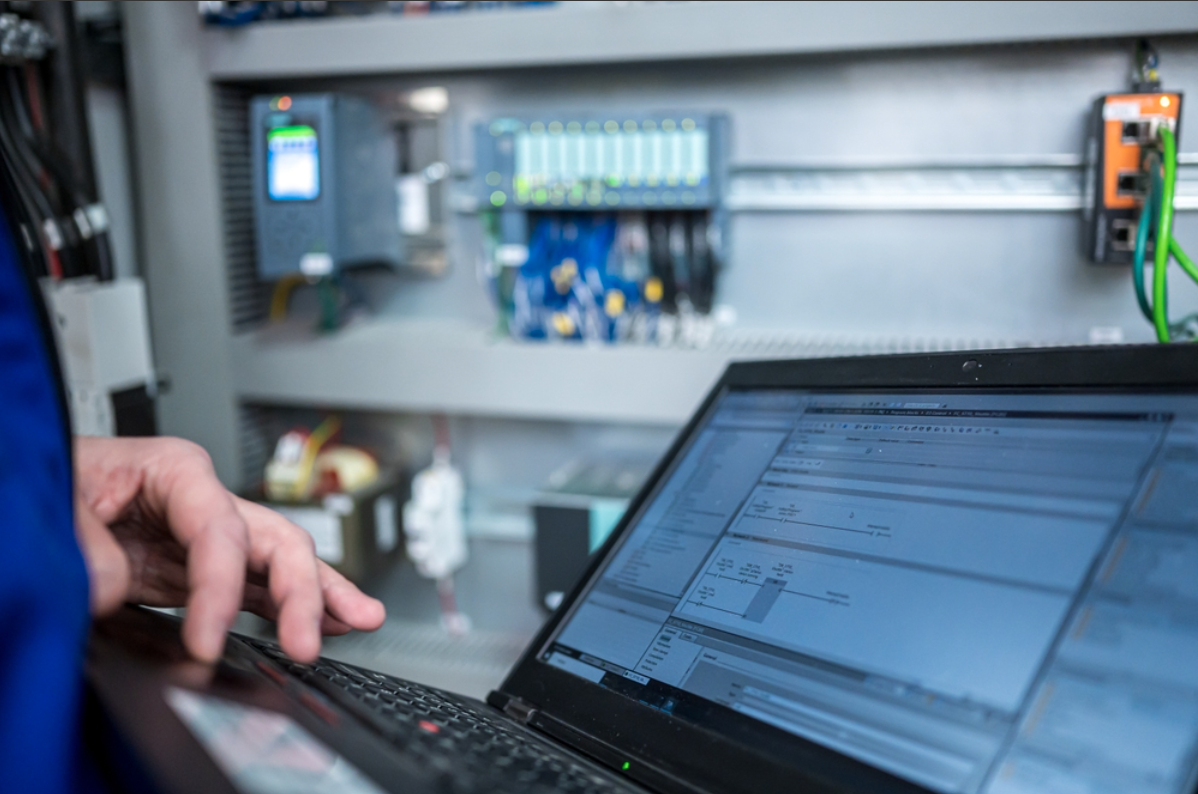
Engineering teams increasingly require centralized deployment and lifecycle management across geographically distributed automation environments.
Why Multi-Site PLC Management Has Become a Bottleneck
In many facilities, even small control logic changes still require manual deployment at each production site. Engineers must validate firmware compatibility, coordinate maintenance windows, and perform local verification before systems return to operation.
This model becomes increasingly difficult as companies expand production across regions. Minor inconsistencies in software versions or hardware configurations can create operational drift between facilities over time.
Manufacturers operating mixed automation infrastructures built around Allen-Bradley ControlLogix platforms and Siemens SIMATIC S7 systems often encounter additional integration complexity when scaling production or modernizing infrastructure.
The Operational Cost of Vendor Fragmentation
Traditional PLC ecosystems typically rely on proprietary engineering software, vendor-specific communication protocols, and closed licensing models. These limitations reduce interoperability and complicate long-term modernization strategies.
When hardware reaches end-of-life, manufacturers frequently face expensive migration projects that require both control redesign and infrastructure replacement. Vendor lock-in also weakens procurement flexibility and slows adoption of emerging software technologies.
For engineering organizations managing hundreds of distributed assets, the operational burden grows rapidly as infrastructure diversity increases.
SoftPLCs Shift Control Logic Into Portable Software
SoftPLC architecture fundamentally changes the relationship between hardware and control applications. Instead of embedding logic directly into dedicated controllers, automation workloads operate as software applications running on industrial computing platforms.
Containerized deployment models further improve portability. The same validated control application can move from development to production without extensive reconfiguration, reducing deployment inconsistencies between facilities.
This approach transforms upgrades from hardware-centric maintenance events into software-defined deployments managed from centralized environments.

Modern industrial edge platforms allow multiple automation applications to operate simultaneously while supporting centralized orchestration.
Improving Scalability Through Hardware Abstraction
Hardware-independent control applications provide manufacturers with greater flexibility in lifecycle planning and infrastructure expansion. Engineering teams can deploy applications across multiple computing platforms without rewriting control logic for each hardware vendor.
This flexibility also improves resource utilization. Traditional PLC systems often dedicate large amounts of unused computing capacity to isolated control tasks. Edge-based SoftPLC environments allow multiple applications to share processing resources more efficiently.
Facilities investing in scalable industrial computing platforms increasingly view software-defined automation as a long-term strategy for operational expansion.
Unified Edge Management Changes Distributed Operations
As industrial operations become more distributed, centralized orchestration platforms are emerging as a critical operational layer. These systems allow engineering teams to deploy, monitor, update, and rollback applications remotely across multiple facilities.
Unlike traditional centralized IT management, industrial edge orchestration must preserve local autonomy. Production systems cannot depend entirely on cloud connectivity because uptime requirements remain absolute in critical operations.
Modern orchestration platforms balance centralized visibility with local execution reliability. Applications continue operating independently even during network interruptions, while engineering teams maintain centralized lifecycle control.
Bridging Industrial OT and Enterprise IT
The divide between operational technology and enterprise IT infrastructure has historically slowed industrial modernization. Manufacturing systems prioritize deterministic control and availability, while enterprise IT focuses on scalability, cybersecurity, and software agility.
Edge computing platforms reduce this gap by supporting industrial protocols such as Modbus, EtherCAT, and PROFINET alongside modern APIs and containerized workloads.
The result is a more unified infrastructure capable of supporting AI analytics, predictive maintenance, and plant-wide operational visibility without relying on layers of custom middleware.
Facilities modernizing distributed industrial networking infrastructure increasingly rely on edge-native architectures to simplify integration and improve cybersecurity management.
The Future of Automation Will Be Software-Orchestrated
The transition toward software-defined automation mirrors the transformation that reshaped enterprise computing years ago. Industrial organizations now expect the same deployment speed, scalability, and centralized orchestration capabilities found in cloud-native environments.
Traditional PLCs will continue serving critical deterministic applications for years to come. However, the broader direction of industrial automation is becoming increasingly clear. Competitive manufacturers are moving toward architectures where control applications are modular, portable, centrally managed, and tightly integrated with AI-driven analytics.
The companies modernizing early are likely to gain measurable advantages in deployment efficiency, operational consistency, and scalability across global production networks.

Centralized orchestration platforms are becoming essential for managing distributed industrial applications at enterprise scale.
From an engineering perspective, the most important shift is not simply replacing hardware PLCs with SoftPLCs. The larger transformation is operational. Industrial control is evolving from isolated machine-level logic into centrally orchestrated software infrastructure capable of supporting AI, analytics, and globally distributed manufacturing.
Author: Nathan Cole | Senior Industrial Systems Analyst
Nathan Cole has over 13 years of experience covering industrial automation infrastructure, distributed control systems, and edge computing technologies. His background includes field integration projects involving Siemens, Emerson, Beckhoff Automation, Yokogawa, and Schneider Electric platforms across manufacturing, power generation, and process industries.