


What Is an HVAC System and How Do Control Systems Optimize Performance?
Modern HVAC systems do far more than heat and cool buildings. This article explores how automation, sensors, PLCs, and intelligent control systems improve energy efficiency, air quality, equipment ...
Behind Every Comfortable Building Is a Control System
Walk into a modern office tower, hospital, data center, or production facility, and one thing becomes immediately noticeable: the environment feels stable. Temperature remains controlled, airflow feels balanced, and humidity rarely becomes uncomfortable. Behind that invisible layer of comfort sits an HVAC system operating continuously in the background.
HVAC stands for heating, ventilation, and air conditioning, but modern HVAC infrastructure extends far beyond simple climate control. Today’s systems integrate intelligent automation, sensor networks, electrical protection devices, and advanced control logic to optimize both comfort and energy efficiency.
As buildings become smarter and sustainability targets become stricter, HVAC systems are increasingly evolving into fully connected operational platforms rather than standalone mechanical equipment.
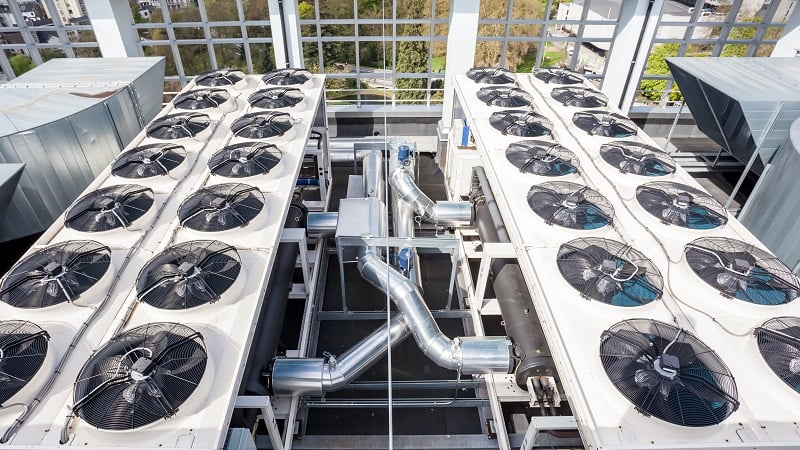
Figure 1. Modern HVAC infrastructure combines mechanical equipment with automation and centralized building controls.
From Mechanical Ventilation to Intelligent Climate Automation
The foundations of HVAC systems stretch back centuries. Ancient civilizations experimented with passive cooling methods, under-floor heating systems, and natural airflow management long before electricity transformed building infrastructure.
The industrial era accelerated demand for centralized heating and ventilation as factories, offices, and large public buildings expanded in size. The breakthrough arrived in the early 20th century when mechanical air conditioning introduced precise temperature and humidity control into commercial environments.
What began as standalone heating and cooling equipment eventually evolved into integrated HVAC networks supported by electrical controls, automation systems, and centralized monitoring platforms.
Why HVAC Became a Major Automation Sector
Energy costs, sustainability regulations, and occupant comfort expectations fundamentally changed HVAC design priorities. Modern facilities no longer measure HVAC performance solely by temperature output. Operators now evaluate efficiency, uptime, indoor air quality, carbon reduction, and predictive maintenance capabilities.
This shift pushed the HVAC industry toward industrial automation technologies commonly found in manufacturing and process control environments.
Today, many commercial systems rely on advanced HMI and industrial computing platforms to centralize visualization, diagnostics, and building performance analytics across multiple HVAC assets.
Understanding the Core Functions of an HVAC System
Every HVAC system performs three essential tasks: heating, ventilation, and cooling. However, the interaction between these functions depends heavily on automation and coordinated control strategies.
Heating Systems
Heating equipment raises indoor temperature during cold operating conditions. Depending on the facility, this may involve boilers, electric heaters, gas furnaces, or heat pumps.
Industrial facilities often integrate heating systems with process controls to maintain environmental consistency around sensitive equipment or production operations.
Ventilation and Air Quality
Ventilation manages airflow throughout a building while removing contaminants, excess humidity, and stale air. This function became increasingly important after stricter indoor air quality standards emerged in healthcare, pharmaceuticals, semiconductor manufacturing, and commercial office environments.
Ventilation systems also help stabilize pressure conditions and maintain safe operating environments inside industrial facilities.
Cooling Infrastructure
Cooling systems remove heat and humidity using compressors, refrigerants, evaporator coils, and condenser assemblies. In large facilities, chillers and rooftop systems often support multiple climate zones simultaneously.
Modern variable-frequency drive technologies now allow cooling systems to dynamically adjust performance based on real-time demand rather than operating at fixed speeds.

Figure 2. Heat pumps and outdoor conditioning units form the front line of residential and commercial HVAC efficiency.
Where Control Systems Become Critical
Mechanical HVAC hardware alone cannot deliver modern performance expectations. The true intelligence of an HVAC system comes from the control architecture coordinating every operational decision.
Sensors continuously measure airflow, humidity, temperature, occupancy, pressure, and equipment status. Controllers interpret these inputs and adjust fans, dampers, compressors, valves, and pumps accordingly.
Industrial Controllers and HVAC Automation
Large commercial buildings increasingly use PLC-based and distributed automation architectures similar to those deployed in manufacturing facilities. These systems improve scalability, diagnostics, and centralized management.
Facilities integrating advanced PLC and PAC control systems gain better coordination between HVAC equipment, lighting systems, safety infrastructure, and energy optimization platforms.
Modern HVAC automation also depends heavily on relays, power supplies, contactors, communication gateways, and distributed I/O systems that maintain reliable operation under varying load conditions.
Smart HVAC Is Driven by Data
Connected HVAC systems now generate enormous volumes of operational data. Building operators can analyze fan performance, compressor efficiency, filter conditions, and energy usage trends from centralized dashboards.
This visibility supports predictive maintenance strategies that identify performance degradation before failures occur.
Many industrial operators also integrate HVAC monitoring into broader machinery monitoring systems to improve facility-wide reliability and reduce unplanned downtime.

Figure 3. Industrial HVAC platforms increasingly rely on centralized automation and real-time performance monitoring.
Different HVAC Architectures Serve Different Facilities
No single HVAC design fits every environment. Residential applications prioritize affordability and simplicity, while industrial and commercial systems emphasize scalability, redundancy, and energy optimization.
Residential and Commercial Split Systems
Split systems remain common in homes and light commercial facilities because they separate indoor air handling equipment from outdoor condensing units. These systems offer relatively straightforward maintenance and installation.
Industrial HVAC Networks
Large facilities often deploy centralized chillers, rooftop units, variable air volume systems, and distributed automation layers across multiple zones.
Data centers, pharmaceutical facilities, semiconductor plants, and manufacturing operations require especially precise environmental control because even small temperature or humidity deviations can disrupt operations.
Hybrid and Energy-Efficient Systems
Hybrid systems combine multiple heating and cooling technologies to reduce operating costs and improve seasonal efficiency. Heat pumps, variable-speed drives, and intelligent load balancing are increasingly common across both commercial and industrial sectors.
The Industry Is Moving Toward Predictive Building Control
The HVAC industry is rapidly transitioning from reactive maintenance toward predictive operational management. AI-assisted analytics, IoT connectivity, and cloud-based building platforms are reshaping how facilities manage environmental systems.
Control systems can now adjust HVAC performance based on occupancy patterns, weather forecasts, utility pricing, and real-time energy demand.
This evolution mirrors broader industrial automation trends where software-defined infrastructure, edge analytics, and connected devices replace isolated mechanical systems.
Why HVAC Reliability Matters More Than Ever
In modern facilities, HVAC downtime affects far more than comfort. Hospitals risk patient safety, data centers face thermal instability, and industrial plants may experience process interruptions or product quality issues.
Reliable HVAC control has therefore become a strategic operational concern tied directly to energy efficiency, sustainability, compliance, and business continuity.
The organizations investing early in intelligent HVAC automation will likely achieve measurable advantages in operational efficiency, maintenance costs, and long-term infrastructure reliability.
Author: Nathan Cole Senior Industrial Systems Reporter Nathan Cole has over 14 years of experience covering industrial automation, building infrastructure, and energy-efficient control systems. His background includes field integration projects involving Siemens, Honeywell, Schneider Electric, Emerson, and ABB automation platforms across commercial buildings, pharmaceutical facilities, and mission-critical industrial environments.