ABB

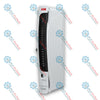
ABB SPIIT13 Symphony Plus INFI-NET to INFI-NET Local Transfer Module

SKU SPIIT13

Disponibile
  • 12-month warranty
  • Free returns within 30 days
  • Manufacturer: ABB
  • Product No.: SPIIT13
  • Origin United States
  • Product Type: Local Control Module
  • Barcode: 8537101190
  • Payment: T/T, Western Union
  • Weight: 0.95 kg
  • Dimensions: 73.66 mm x 358.14 mm x 271.78 mm
  • Shipping port: Xiamen
  • Warranty: 12 months

Tags

Product Documentation

Technical Datasheet (PDF) Complete specifications and technical drawings.

Technical Datasheet

ABB SPIIT13 Symphony Plus INFI-NET to INFI-NET Local Transfer Module

Quantità

Product Description

Description

The ABB SPIIT13 is a high-performance communication module built for the Symphony Plus and Harmony Rack automation series to execute direct communication routing between discrete rings or networks. Functioning as an INFI-NET to INFI-NET Local Transfer Module, this unit establishes a deterministic data bridge that transfers time-critical process values, control commands, and system diagnostics locally between separate system rings without routing latency. Equipped with an onboard lithium button cell battery to maintain volatile configuration memory during master power cycling, this module provides the dependable backplane-to-network data bridging required to keep large-scale distributed control systems fully synchronized and operational.

Features

  • Local Ring Bridging: Enables native high-throughput data transfer between distinct INFI-NET communication segments.
  • Integrated Symphony Plus Compatibility: Form-factor optimized for direct slot insertion inside standard Harmony Rack (S+ HR) enclosures.
  • Onboard Battery Backup: Features an integrated 5-gram lithium button cell battery to preserve volatile configuration records during power isolation.
  • Hardware Determinism: Provides secure data processing parameters to prevent packet loss across continuous control networks.

Applications

  • Interfacing adjacent network communication zones in subcritical power plant control architectures.
  • Managing distributed controller data exchanges within municipal water treatment facilities and petrochemical plants.
  • Expanding Harmony Rack network topologies by safely linking distinct data rings localized to the same hardware suite.

Technical Specifications

Parameter Value
Manufacturer ABB
System Series Symphony Plus / Harmony Rack (S+ HR)
Model Number SPIIT13
Product ID SPIIT13
Product Type Communication Module
Customs Tariff Number / HS Code 85176200
Battery Profile 1 x Lithium Button Cell (5 g)
Product Net Depth / Length 73.66 mm
Product Net Height 358.14 mm
Product Net Width 271.78 mm
Product Net Weight 0.95 kg (Estimated, OEM specifies base 0.00 kg skeleton weight)
Shipping Weight (Calculated) 1.45 kg
Package Dimensions (Calculated) 410 x 320 x 110 mm
Country of Origin United States (US)

Installation Guidelines

CRITICAL WARNING:

Isolate the rack housing assembly from all live power paths before attempting insertion or extraction of the communication card. Live insertion risks causing instantaneous backplane bus disruptions, data frame loss across the broader INFI-NET loop, and structural hardware degradation due to transient electrical spikes.

1
Attach an anti-static grounding strap securely to your forearm, ensuring the grounding clip is bonded directly to an unpainted metal surface on the instrument cabinet frame.
2
Inspect the battery compartment to ensure the 5g lithium button cell is installed securely and positioned with correct polarity prior to inserting the card into the rack guides.
3
Align the edges of the module with the card tracks inside the Harmony Rack chassis slot, pushing the unit inward using balanced, steady pressure until the rear connection array mates fully with the backplane.
4
Fasten the top and bottom mechanical faceplate screws to guarantee proper ground continuation, hook up the local network coaxial or twinaxial lines, and restore system power to initialize runtime configurations.
Shipping & Returns

Global Express Shipping

  • Standard Delivery: 4–6 business days via DHL, FedEx, and UPS.
  • Express Dispatch: Same-day dispatch for in-stock orders placed before 2:00 PM (GMT+8).
  • Worldwide Coverage: Serving over 150 countries.

Returns & Warranty

  • 30-Day Guarantee: Returns accepted for in-stock products in original, factory-sealed packaging.
  • 12-Month Warranty: Every industrial component is backed by our technical warranty.
FAQ
What is the primary function of the internal lithium button cell battery?
The onboard 5-gram lithium button cell battery provides constant power to the volatile memory registers when the main system rack is unpowered, preventing the loss of local address maps and hardware settings.
Can this module bridge networks that are running completely different high-level field protocols?
No, it is specifically engineered as an INFI-NET to INFI-NET local transfer interface, meaning it bridges data natively between corresponding segments of matching network types within the Harmony Rack ecosystem.
Does this module support online hot-swapping while active communications are running?
No, the rack must be fully powered down before pulling or placing the card. Interfacing this hardware while live can break active network loops and trigger immediate controller error routines.
Reviews

SPIIT13

Stock & lead time on request

Call
1 su 3

ABB SPIIT13 Symphony Plus INFI-NET to INFI-NET Local Transfer Module

Only 7 item(s) left in stock
  • Manufacturer: ABB

  • Product No.: SPIIT13

  • Country of origin:United States

  • Product Type: Local Control Module

  • Barcode: 8537101190

  • Payment: T/T, Western Union

  • Weight: 950g

  • Dimensions: 73.66 mm x 358.14 mm x 271.78 mm

  • Shipping port: Xiamen

  • Warranty: 12 months

Quantità
Visualizza dettagli completi

Product Description

Description

The ABB SPIIT13 is a high-performance communication module built for the Symphony Plus and Harmony Rack automation series to execute direct communication routing between discrete rings or networks. Functioning as an INFI-NET to INFI-NET Local Transfer Module, this unit establishes a deterministic data bridge that transfers time-critical process values, control commands, and system diagnostics locally between separate system rings without routing latency. Equipped with an onboard lithium button cell battery to maintain volatile configuration memory during master power cycling, this module provides the dependable backplane-to-network data bridging required to keep large-scale distributed control systems fully synchronized and operational.

Features

  • Local Ring Bridging: Enables native high-throughput data transfer between distinct INFI-NET communication segments.
  • Integrated Symphony Plus Compatibility: Form-factor optimized for direct slot insertion inside standard Harmony Rack (S+ HR) enclosures.
  • Onboard Battery Backup: Features an integrated 5-gram lithium button cell battery to preserve volatile configuration records during power isolation.
  • Hardware Determinism: Provides secure data processing parameters to prevent packet loss across continuous control networks.

Applications

  • Interfacing adjacent network communication zones in subcritical power plant control architectures.
  • Managing distributed controller data exchanges within municipal water treatment facilities and petrochemical plants.
  • Expanding Harmony Rack network topologies by safely linking distinct data rings localized to the same hardware suite.

Technical Specifications

Parameter Value
Manufacturer ABB
System Series Symphony Plus / Harmony Rack (S+ HR)
Model Number SPIIT13
Product ID SPIIT13
Product Type Communication Module
Customs Tariff Number / HS Code 85176200
Battery Profile 1 x Lithium Button Cell (5 g)
Product Net Depth / Length 73.66 mm
Product Net Height 358.14 mm
Product Net Width 271.78 mm
Product Net Weight 0.95 kg (Estimated, OEM specifies base 0.00 kg skeleton weight)
Shipping Weight (Calculated) 1.45 kg
Package Dimensions (Calculated) 410 x 320 x 110 mm
Country of Origin United States (US)

Installation Guidelines

CRITICAL WARNING:

Isolate the rack housing assembly from all live power paths before attempting insertion or extraction of the communication card. Live insertion risks causing instantaneous backplane bus disruptions, data frame loss across the broader INFI-NET loop, and structural hardware degradation due to transient electrical spikes.

1
Attach an anti-static grounding strap securely to your forearm, ensuring the grounding clip is bonded directly to an unpainted metal surface on the instrument cabinet frame.
2
Inspect the battery compartment to ensure the 5g lithium button cell is installed securely and positioned with correct polarity prior to inserting the card into the rack guides.
3
Align the edges of the module with the card tracks inside the Harmony Rack chassis slot, pushing the unit inward using balanced, steady pressure until the rear connection array mates fully with the backplane.
4
Fasten the top and bottom mechanical faceplate screws to guarantee proper ground continuation, hook up the local network coaxial or twinaxial lines, and restore system power to initialize runtime configurations.

Product Documentation

Technical Datasheet (PDF) Complete specifications and technical drawings.

Technical Datasheet

ABB SPIIT13 Symphony Plus INFI-NET to INFI-NET Local Transfer Module

What is the primary function of the internal lithium button cell battery?

The onboard 5-gram lithium button cell battery provides constant power to the volatile memory registers when the main system rack is unpowered, preventing the loss of local address maps and hardware settings.

Can this module bridge networks that are running completely different high-level field protocols?

No, it is specifically engineered as an INFI-NET to INFI-NET local transfer interface, meaning it bridges data natively between corresponding segments of matching network types within the Harmony Rack ecosystem.

Does this module support online hot-swapping while active communications are running?

No, the rack must be fully powered down before pulling or placing the card. Interfacing this hardware while live can break active network loops and trigger immediate controller error routines.

Global Express Shipping

  • Standard Delivery: 4-6 Business Days via DHL, FedEx, and UPS.
  • Express Dispatch: Same-day dispatch for in-stock orders placed before 2:00 PM (GMT+8).
  • Worldwide Coverage: Serving over 150 countries, including rapid delivery to Saudi Arabia and UAE.

Returns & Warranty

  • 30-Day Guarantee: Returns accepted for in-stock products in original, factory-sealed packaging.
  • 12-Month Warranty: Every industrial component is backed by our professional technical warranty.

Orders are processed and delivered Monday-Friday (excluding public holidays).


For full eligibility, restocking fees, and international return details, please view our official Refund & Return Policy .

TECHNICAL SPECIFICATIONS

Color pattern
Green Black
Country of origin
United States
Power source
DC Power

Technical knowledge

1756-L73 Firmware Upgrade Guide: v19 vs v21/v31 Decision

Replacing a 1756-L73 does not automatically mean upgrading its firmware. This guide compares v19.013, v21.011 and v31.011, focusing on project compatibility, HMI communications, legacy networks and...

Implementing 3-Switch XOR Ladder Logic with Internal Bit

Implement a 3-SPST switch XOR light circuit in LogixPro or RSLogix 500 using an internal relay bit. Includes truth tables, boolean equations, and verified.

Creazione di una rete Modbus RTU con CompactLogix e DeltaV

Integra Allen-Bradley CompactLogix, Caterpillar ATS e generatori nel DCS DeltaV tramite Modbus RTU. Include i gateway ProSoft MVI69-MCM e Miille DIN266.

Istruzione ONS che non attiva l’OTE nella logica ladder di Studio 5000

L’istruzione ONS si attiva, ma la bobina OTE non rimane mai eccitata in Studio 5000 perché il one-shot è vero solo per una scansione. Usa OTL/OTU oppure una logica di autoritenuta.

Requisiti e topologia dello switch di rete EtherNet/IP Kinetix 5500

Configura i servoazionamenti Allen-Bradley Kinetix 5500 su EtherNet/IP. Include CIP Sync, la temporizzazione IEEE 1588 V2, la selezione degli switch Stratix, la topologia DLR e l’HMI.

Moving Average Filtering in DCS and PLC Analog Control

A moving-average filter is the sliding-window smoother most instrument engineers drop into DCS and PLC analog paths. Here is how the window works, how N and sample time set lag, and when a...