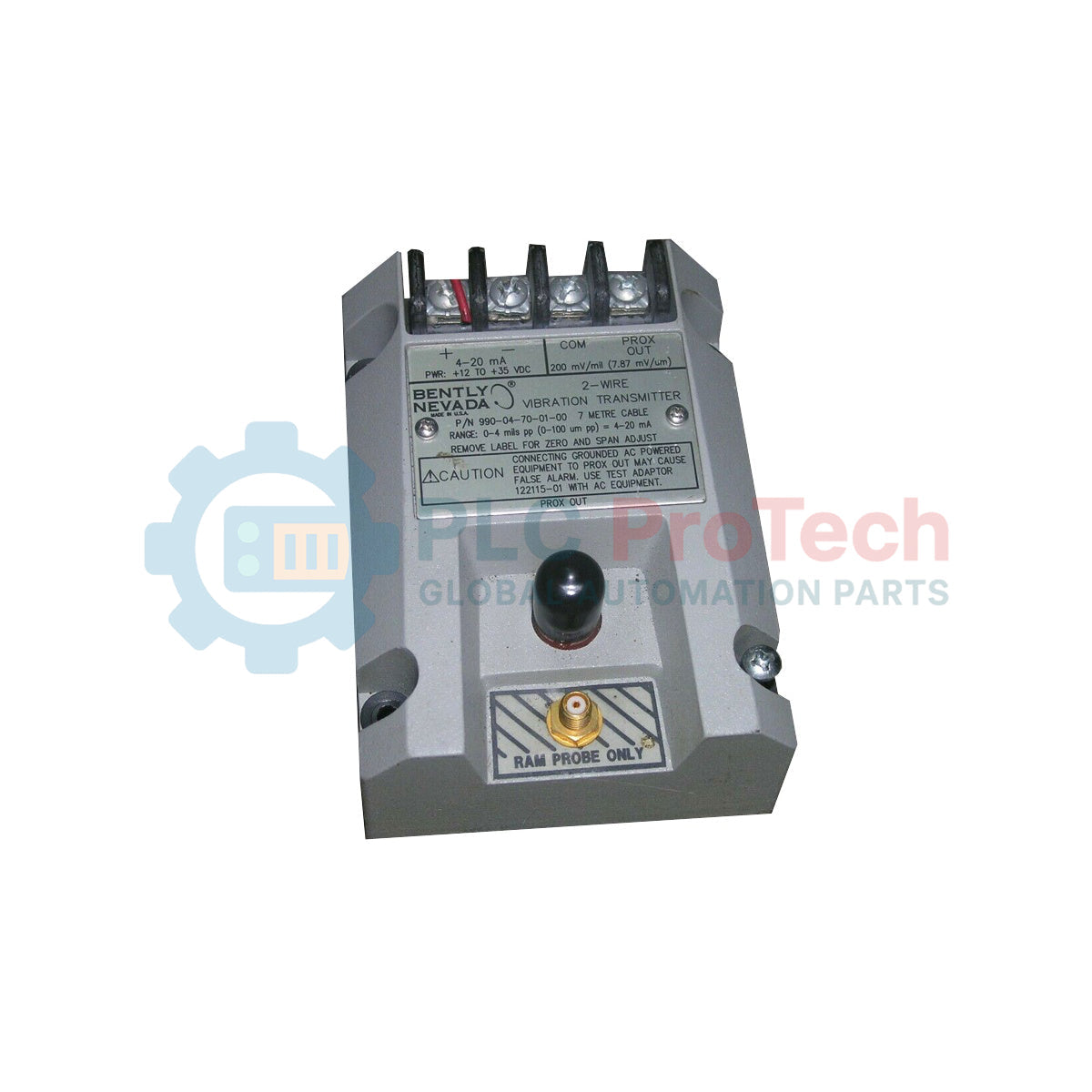
Przetwornik drgań 990-04-70-01-00 zapewnia uproszczoną metodę integracji monitorowania drgań wału z przemysłowymi systemami automatyki. Opracowane przez firmę Bently Nevada urządzenie przekształca pomiary drgań z sondy zbliżeniowej 3300 NSv w liniowy sygnał wyjściowy 4–20 mA na potrzeby ochrony maszyn i monitorowania ich stanu.
Ta konfiguracja przetwornika jest powszechnie instalowana na urządzeniach obrotowych, gdzie wymagane jest ciągłe monitorowanie trendów drgań bez wdrażania pełnego systemu monitorowania opartego na szafie rackowej. Kompaktowa obudowa i możliwość montażu na szynie DIN ułatwiają instalację wewnątrz szaf sterowniczych OEM, na ramach sprężarek oraz w panelach maszyn pakietowych.
Przetwornik jest zasilany ze standardowej pętli prądu stałego i łączy elektronikę Proximitor oraz układ kondycjonowania sygnału w jednym hermetyzowanym module. Podczas uruchamiania i diagnostyki personel utrzymania ruchu może również uzyskać dostęp do informacji o dynamicznych drganiach przez złącze PROX OUT.
Zakres pełnej skali 0–4 mil pp sprawia, że ta wersja nadaje się do zastosowań maszynowych wymagających większej rozdzielczości pomiaru drgań.
Funkcje użytkowe
Ciągła konwersja sygnału drgań
Liniowa transmisja wyjściowa 4–20 mA
Kompatybilność z systemami przetworników 3300 NSv
Zintegrowana funkcjonalność Proximitor
Konstrukcja przystosowana do montażu na szynie DIN
1 bezstykowa sonda zbliżeniowa 3300 NSv i kabel przedłużający
Zasilanie
+12 do +35 V DC
Wyjście sygnałowe
4–20 mA
Zakres pełnej skali
0–4 mil pp (0–100 µm pp)
Długość systemu
7,0 metra
Sposób montażu
Zaciski do montażu na szynie DIN 35 mm
Temperatura pracy
-35°C do +85°C
Temperatura przechowywania
-51°C do +100°C
Masa netto
0,82 kg
Masa wysyłkowa
2 kg
Przegląd połączeń
Interfejs
Opis
Wejście sondy
Złącze do systemu sond 3300 NSv
Zacisk zasilania DC
Wejście zasilania pętli
Wyjście analogowe
Sygnał drgań od 4 do 20 mA
PROX OUT
Dynamiczne wyjście diagnostyczne
COM
Wspólna masa sygnałowa
Zalecenia dotyczące instalacji
Zainstaluj przetwornik w zabezpieczonej przed drganiami obudowie sterowniczej, stosując odpowiednie zasady uziemienia i ekranowania kabli. Konstrukcja do montażu na szynie DIN umożliwia szybką integrację z istniejącymi panelami automatyki.
Oddziel przewody przetworników niskopoziomowych od kabli silnikowych przewodzących duży prąd, aby ograniczyć zakłócenia elektromagnetyczne. Podczas rozruchu sprawdź szczelinę sondy i potwierdź stabilny prąd pętli przed wprowadzeniem maszyny do eksploatacji.
Do pomiarów diagnostycznych przebiegów falowych należy używać odpowiedniego izolowanego urządzenia monitorującego podłączonego do interfejsu PROX OUT. W środowiskach procesowych o wysokiej wilgotności należy chronić odsłonięte złącza przed nadmierną wilgocią i zanieczyszczeniami.
Najczęściej zadawane pytania
Jaki zakres pomiarowy wykorzystuje ta konfiguracja? Ten model wykorzystuje zakres drgań od 0 do 4 milsów międzyszczytowo.
Która seria sond jest kompatybilna z przetwornikiem? Jest przeznaczony do systemów sond zbliżeniowych Bently Nevada 3300 NSv.
Czy urządzenie można zamontować wewnątrz standardowej szafy sterowniczej? Tak. Przetwornik zawiera zaciski do montażu na szynie DIN, przeznaczone do instalacji w panelu.
Jaki sygnał wyjściowy jest dostarczany do systemu sterowania? Przetwornik dostarcza proporcjonalny sygnał drgań od 4 do 20 mA.
Czy przetwornik nadaje się do monitorowania sprężarek? Tak. Jest powszechnie stosowany w sprężarkach odśrodkowych i pomocniczych urządzeniach wirujących.
Czy ta wersja obejmuje certyfikację do stref zagrożonych? Nie. Opcja zatwierdzenia -00 oznacza standardową konfigurację do stref niezagrożonych.
Jaki zakres napięcia zasilania jest wymagany? Przetwornik działa w zakresie od +12 do +35 V DC.
Czy zespoły utrzymania ruchu mogą uzyskać dostęp do dynamicznych sygnałów drgań? Tak. Sygnały diagnostyczne są dostępne przez złącze PROX OUT.
Jaka jest długość dostarczonego przewodu systemowego? Ta konfiguracja wykorzystuje przewód systemowy o długości 7,0 metra.
Jak instaluje się przetwornik? Urządzenie montuje się bezpośrednio na szynie DIN 35 mm.
Czy przetwornik jest przeznaczony do ciągłego monitorowania? Tak. Obsługuje bieżące monitorowanie trendów drgań w systemach maszyn przemysłowych.
Jakie warunki środowiskowe może wytrzymać urządzenie? Przetwornik działa w temperaturach od -35°C do +85°C.
Shipping & Returns
Global Express Shipping
Standard Delivery: 4–6 business days via DHL, FedEx, and UPS.
Express Dispatch: Same-day dispatch for in-stock orders placed before 2:00 PM (GMT+8).
Worldwide Coverage: Serving over 150 countries.
Returns & Warranty
30-Day Guarantee: Returns accepted for in-stock products in original, factory-sealed packaging.
12-Month Warranty: Every industrial component is backed by our technical warranty.
Przetwornik drgań 990-04-70-01-00 zapewnia uproszczoną metodę integracji monitorowania drgań wału z przemysłowymi systemami automatyki. Opracowane przez firmę Bently Nevada urządzenie przekształca pomiary drgań z sondy zbliżeniowej 3300 NSv w liniowy sygnał wyjściowy 4–20 mA na potrzeby ochrony maszyn i monitorowania ich stanu.
Ta konfiguracja przetwornika jest powszechnie instalowana na urządzeniach obrotowych, gdzie wymagane jest ciągłe monitorowanie trendów drgań bez wdrażania pełnego systemu monitorowania opartego na szafie rackowej. Kompaktowa obudowa i możliwość montażu na szynie DIN ułatwiają instalację wewnątrz szaf sterowniczych OEM, na ramach sprężarek oraz w panelach maszyn pakietowych.
Przetwornik jest zasilany ze standardowej pętli prądu stałego i łączy elektronikę Proximitor oraz układ kondycjonowania sygnału w jednym hermetyzowanym module. Podczas uruchamiania i diagnostyki personel utrzymania ruchu może również uzyskać dostęp do informacji o dynamicznych drganiach przez złącze PROX OUT.
Zakres pełnej skali 0–4 mil pp sprawia, że ta wersja nadaje się do zastosowań maszynowych wymagających większej rozdzielczości pomiaru drgań.
Funkcje użytkowe
Ciągła konwersja sygnału drgań
Liniowa transmisja wyjściowa 4–20 mA
Kompatybilność z systemami przetworników 3300 NSv
Zintegrowana funkcjonalność Proximitor
Konstrukcja przystosowana do montażu na szynie DIN
1 bezstykowa sonda zbliżeniowa 3300 NSv i kabel przedłużający
Zasilanie
+12 do +35 V DC
Wyjście sygnałowe
4–20 mA
Zakres pełnej skali
0–4 mil pp (0–100 µm pp)
Długość systemu
7,0 metra
Sposób montażu
Zaciski do montażu na szynie DIN 35 mm
Temperatura pracy
-35°C do +85°C
Temperatura przechowywania
-51°C do +100°C
Masa netto
0,82 kg
Masa wysyłkowa
2 kg
Przegląd połączeń
Interfejs
Opis
Wejście sondy
Złącze do systemu sond 3300 NSv
Zacisk zasilania DC
Wejście zasilania pętli
Wyjście analogowe
Sygnał drgań od 4 do 20 mA
PROX OUT
Dynamiczne wyjście diagnostyczne
COM
Wspólna masa sygnałowa
Zalecenia dotyczące instalacji
Zainstaluj przetwornik w zabezpieczonej przed drganiami obudowie sterowniczej, stosując odpowiednie zasady uziemienia i ekranowania kabli. Konstrukcja do montażu na szynie DIN umożliwia szybką integrację z istniejącymi panelami automatyki.
Oddziel przewody przetworników niskopoziomowych od kabli silnikowych przewodzących duży prąd, aby ograniczyć zakłócenia elektromagnetyczne. Podczas rozruchu sprawdź szczelinę sondy i potwierdź stabilny prąd pętli przed wprowadzeniem maszyny do eksploatacji.
Do pomiarów diagnostycznych przebiegów falowych należy używać odpowiedniego izolowanego urządzenia monitorującego podłączonego do interfejsu PROX OUT. W środowiskach procesowych o wysokiej wilgotności należy chronić odsłonięte złącza przed nadmierną wilgocią i zanieczyszczeniami.
Najczęściej zadawane pytania
Jaki zakres pomiarowy wykorzystuje ta konfiguracja? Ten model wykorzystuje zakres drgań od 0 do 4 milsów międzyszczytowo.
Która seria sond jest kompatybilna z przetwornikiem? Jest przeznaczony do systemów sond zbliżeniowych Bently Nevada 3300 NSv.
Czy urządzenie można zamontować wewnątrz standardowej szafy sterowniczej? Tak. Przetwornik zawiera zaciski do montażu na szynie DIN, przeznaczone do instalacji w panelu.
Jaki sygnał wyjściowy jest dostarczany do systemu sterowania? Przetwornik dostarcza proporcjonalny sygnał drgań od 4 do 20 mA.
Czy przetwornik nadaje się do monitorowania sprężarek? Tak. Jest powszechnie stosowany w sprężarkach odśrodkowych i pomocniczych urządzeniach wirujących.
Czy ta wersja obejmuje certyfikację do stref zagrożonych? Nie. Opcja zatwierdzenia -00 oznacza standardową konfigurację do stref niezagrożonych.
Jaki zakres napięcia zasilania jest wymagany? Przetwornik działa w zakresie od +12 do +35 V DC.
Czy zespoły utrzymania ruchu mogą uzyskać dostęp do dynamicznych sygnałów drgań? Tak. Sygnały diagnostyczne są dostępne przez złącze PROX OUT.
Jaka jest długość dostarczonego przewodu systemowego? Ta konfiguracja wykorzystuje przewód systemowy o długości 7,0 metra.
Jak instaluje się przetwornik? Urządzenie montuje się bezpośrednio na szynie DIN 35 mm.
Czy przetwornik jest przeznaczony do ciągłego monitorowania? Tak. Obsługuje bieżące monitorowanie trendów drgań w systemach maszyn przemysłowych.
Jakie warunki środowiskowe może wytrzymać urządzenie? Przetwornik działa w temperaturach od -35°C do +85°C.
Technical Datasheet (PDF)Complete specifications and technical drawings.
Globalna ekspresowa wysyłka
Standardowa dostawa: 4-6 dni roboczych za pośrednictwem DHL, FedEx i UPS.
Ekspresowa wysyłka: Wysyłka tego samego dnia dla zamówień dostępnych w magazynie złożonych przed godziną 14:00 (GMT+8).
Globalne pokrycie: Obsługujemy ponad 150 krajów, w tym szybką dostawę do Arabii Saudyjskiej i ZEA.
Zwroty i gwarancja
30-dniowa gwarancja: Zwroty przyjmowane są dla produktów dostępnych w magazynie, w oryginalnym, fabrycznie zapieczętowanym opakowaniu.
12-miesięczna gwarancja: Każdy komponent przemysłowy objęty jest naszą profesjonalną gwarancją techniczną.
Zamówienia są przetwarzane i dostarczane od poniedziałku do piątku (z wyłączeniem dni świątecznych).
Aby poznać pełne warunki kwalifikowalności, opłaty za przyjęcie towaru z powrotem oraz szczegóły dotyczące zwrotów międzynarodowych, prosimy zapoznać się z naszym oficjalnym
Polityka zwrotów i zwrotu pieniędzy
.
Przemysłowy joystick jest tylko pierwszym elementem bezpiecznego łańcucha sterowania ruchem. Ten przewodnik obejmuje wybór czujników, okablowanie, walidację sygnałów, logikę PLC, zachowanie podczas...
Strojenie PID staje się bezpieczniejsze, gdy inżynierowie mogą obserwować, jak działania proporcjonalne, całkujące i różniczkujące kształtują uchyb, sygnał wyjściowy oraz odpowiedź w czasie. Ten...
Oś liniową należy najpierw sprawdzić mechanicznie, zanim rozpocznie się intensywne strojenie. Ten proces uruchomieniowy obejmuje skalowanie, kierunek ruchu, ograniczenia, bazowanie, STO, testy przy...
Filtrowanie danych wejściowych może stabilizować dane z PLC, ale nadmierne wygładzanie opóźnia alarmy i maskuje zmiany procesu. Dowiedz się, jak diagnozować zakłócenia, wybierać filtry sprzętowe lub...
Napędy SCR i PWM w różny sposób sterują szczotkowymi silnikami prądu stałego. Przed wyborem sterownika porównaj tętnienia prądu, moment obrotowy przy niskiej prędkości, regulację pola magnetycznego,...
Zaznaczenie wyboru powoduje całkowite odświeżenie strony.