


Replacing a Beckhoff EL4032: Wiring and Output Checks
A field checklist for replacing a Beckhoff EL4032, covering the ±10 V load, terminal map, power contacts, EtherCAT state, and watchdog behavior.
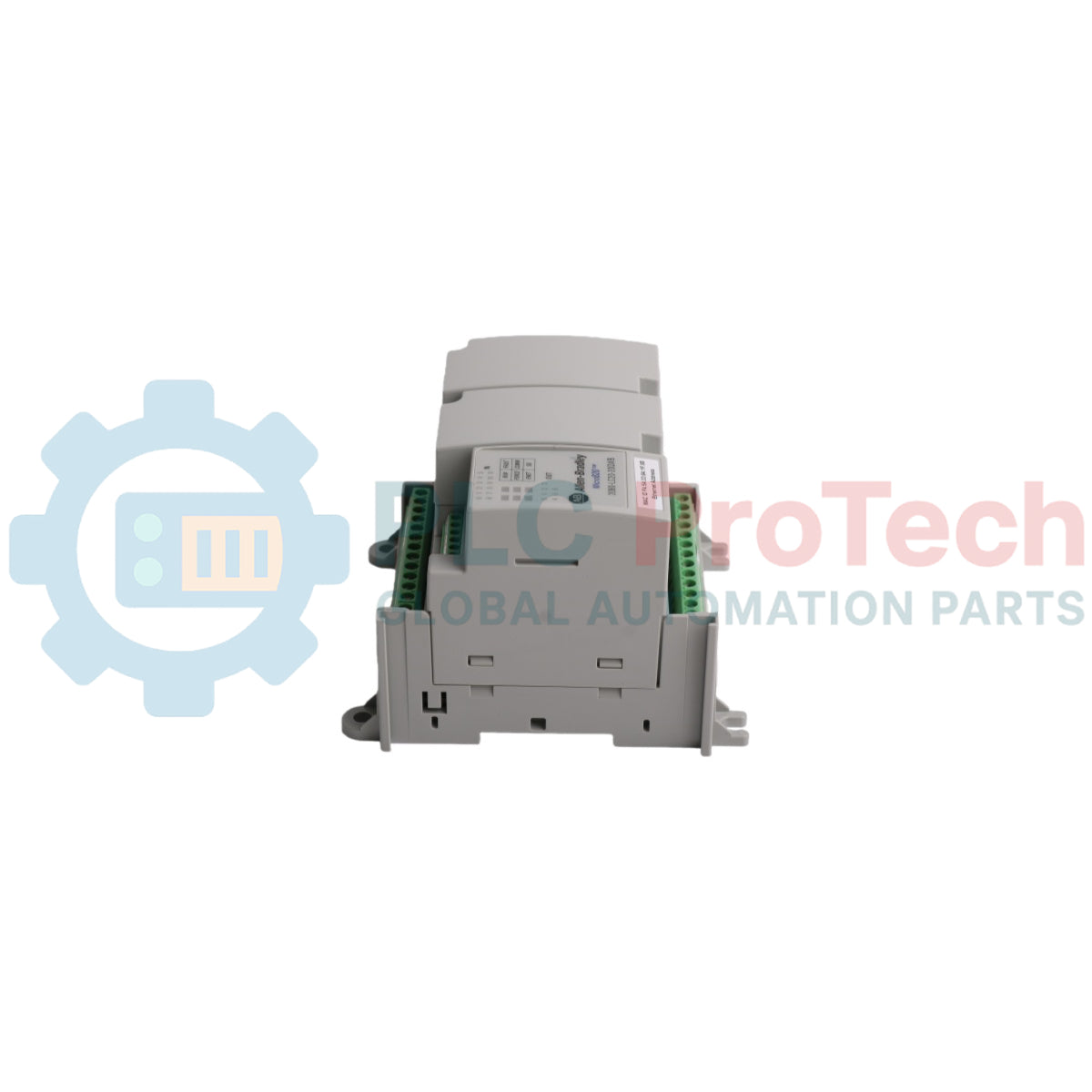
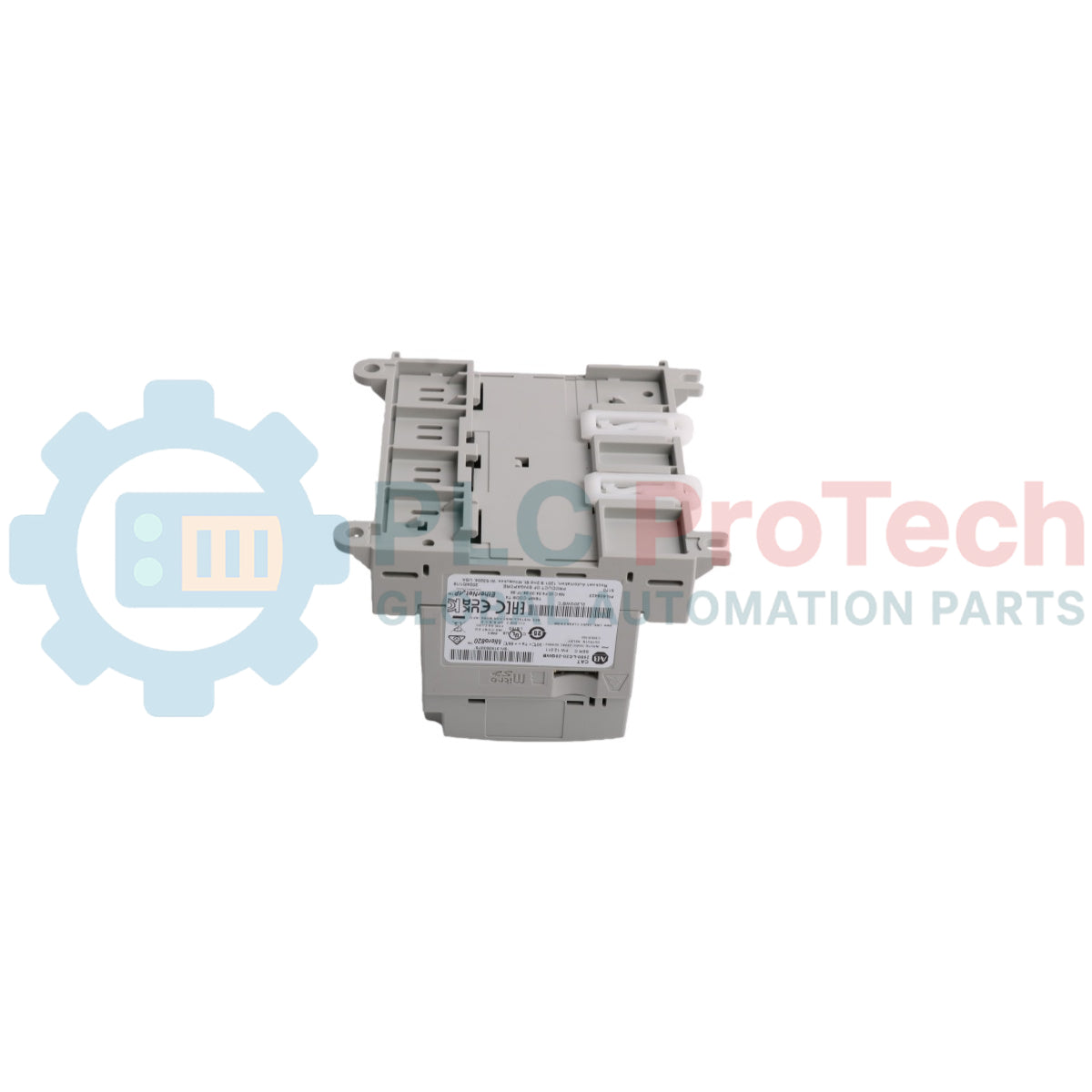
Manufacturer: Allen-Bradley
Product No.: 2080-LC20-20QWB
Country of origin:United States
Product Type: Programmable Controller
Barcode: 8537101190
Payment: T/T, Western Union
Weight: 900g
Dimensions: 3.5cm x 13cm x 14.5cm
Shipping port: Xiamen
Warranty: 12 months
The 2080-LC20-20QWB (2080LC2020QWB) is a compact yet powerful programmable logic controller (PLC) within the Micro820 family, specifically engineered for standalone machines and remote automation projects. Featuring 20 integrated I/O points, this controller is a cost-effective solution for applications such as solar array tracking, pump control, and HVAC systems. The Micro820 platform bridges the gap between smart relays and high-end PLCs, offering a built-in Ethernet port and a microSD card slot for data logging and recipe management. Its small footprint and support for Connected Components Workbench (CCW) software make it the industry standard for OEMs looking to maximize functionality in space-constrained enclosures.
The 2080-LC20-20QWB architecture is designed for versatility, combining digital and analog capabilities in a single base unit.
Digital I/O Configuration: Equipped with 12 points of 24 VDC/VAC inputs and 7 relay outputs, allowing for direct control of contactors, solenoids, and small motors.
Integrated Analog: Includes 4 non-isolated 0-10 V inputs and 1 non-isolated 0-10 V output, eliminating the need for expensive expansion modules in basic speed control or sensor monitoring tasks.
Connectivity Suite: Features an embedded 10/100 Base-T Ethernet port and an RS-232/RS-485 non-isolated combo serial port for Modbus TCP/RTU communication.
Expansion Potential: Supports up to two plug-in modules, allowing users to add specialized functions like high-speed counters, additional I/O, or a memory backup module without increasing the controller's width.
| Specification | Details |
| Model | 2080-LC20-20QWB |
| Manufacturer | Allen-Bradley / Rockwell Automation |
| I/O Count | 20 Total (12 Input / 7 Relay Output / 1 Analog Output) |
| Input Type | 24 VDC / VAC |
| Output Type | Relay (2 A per point) |
| Analog Inputs | 4 (0 to 10 VDC) |
| Embedded Ports | Ethernet (RJ45) and Serial (Combo) |
| Memory | 20 KB User Data / 10 KB Program |
| Real-Time Clock | Integrated (Standard) |
| Mounting | DIN Rail or Panel Mount |
| Shipping Weight | 0.8 kg |
How can I log production data without a permanent PC connection?
The 2080-LC20-20QWB features an integrated microSD card slot. You can use the data logging function in CCW to write process variables and timestamps directly to a standard microSD card (up to 32 GB) for later analysis in Excel.
Does this controller support remote monitoring via HMI?
Yes. The built-in Ethernet port supports EtherNet/IP (Client/Server) and Modbus TCP. It is fully compatible with the Allen-Bradley 2080-REMLCD Remote LCD module, as well as PanelView 800 terminals for comprehensive operator visualization.
What is the advantage of using "Plug-in" modules versus "Expansion" modules?
Plug-ins (like the 2080-IQ4) are inserted directly into the front of the 2080-LC20-20QWB. This allows you to customize the controller's I/O mix while maintaining the exact same physical footprint on the DIN rail.
Power Supply Integrity: The module requires a 24 VDC power source. Ensure the power supply is sized to handle both the base unit (approx. 5 W) and the inrush current of the 7 relay outputs. Using a dedicated Class 2 power supply is recommended for noise sensitive environments.
Relay Output Lifespan: To protect the relay outputs from inductive kickback when driving solenoids or motor starters, always install an external surge suppressor (RC network for AC, Diode for DC) across the load.
Analog Shielding: The 0-10 V analog inputs are non-isolated. To prevent signal noise, use shielded twisted-pair cabling for all analog runs and ensure the shield is grounded at the controller's ground terminal.
The 2080-LC20-20QWB stands out for its "All-in-One" efficiency. It simplifies the control of small systems by integrating Ethernet, Serial, and Analog I/O into a single SKU. With the ability to perform basic PID control and support for standard IEC 61131-3 programming languages (Ladder Diagram, Function Block, Structured Text), it provides high-level logic capabilities previously reserved for much larger, more expensive PLCs. This makes it an ideal platform for Industrial Internet of Things (IIoT) edge applications where data must be collected locally and transmitted to the cloud.


Global Express Shipping
Returns & Warranty

Global Express Shipping
Returns & Warranty
Orders are processed and delivered Monday-Friday (excluding public holidays).
For full eligibility, restocking fees, and international return details, please view our official Refund & Return Policy .
| Color pattern |
Greyish White
|
| Country of origin |
United States
|
| Power source |
DC Power
|

A field checklist for replacing a Beckhoff EL4032, covering the ±10 V load, terminal map, power contacts, EtherCAT state, and watchdog behavior.

Before replacing a Yokogawa AAI835, verify the 4-in/4-out channel map, power-loss loop behavior, barrier type, output load, cable, and redundancy.

ABB PM891K01 article 3BSE053241R1 is the non-redundant AC 800M processor kit. Use this field checklist before replacement.

Replacement checks for ABB TP853 3BSE018126R1: identify the installed CI853, CI855, CI857, or CI861 interface, record wiring, and verify communication after installation.

Engineering checks for the Allen-Bradley 5069-L330ERMS2: controller capacity, separate RTB kits, local I/O limits, network-node limits, and motion-axis count.

Checks to record before replacing ABB 3HNE 00006-1 DSQC 351: controller generation, X3/X5/X20/X21 wiring, DeviceNet settings, INTERBUS mapping, and LED states.