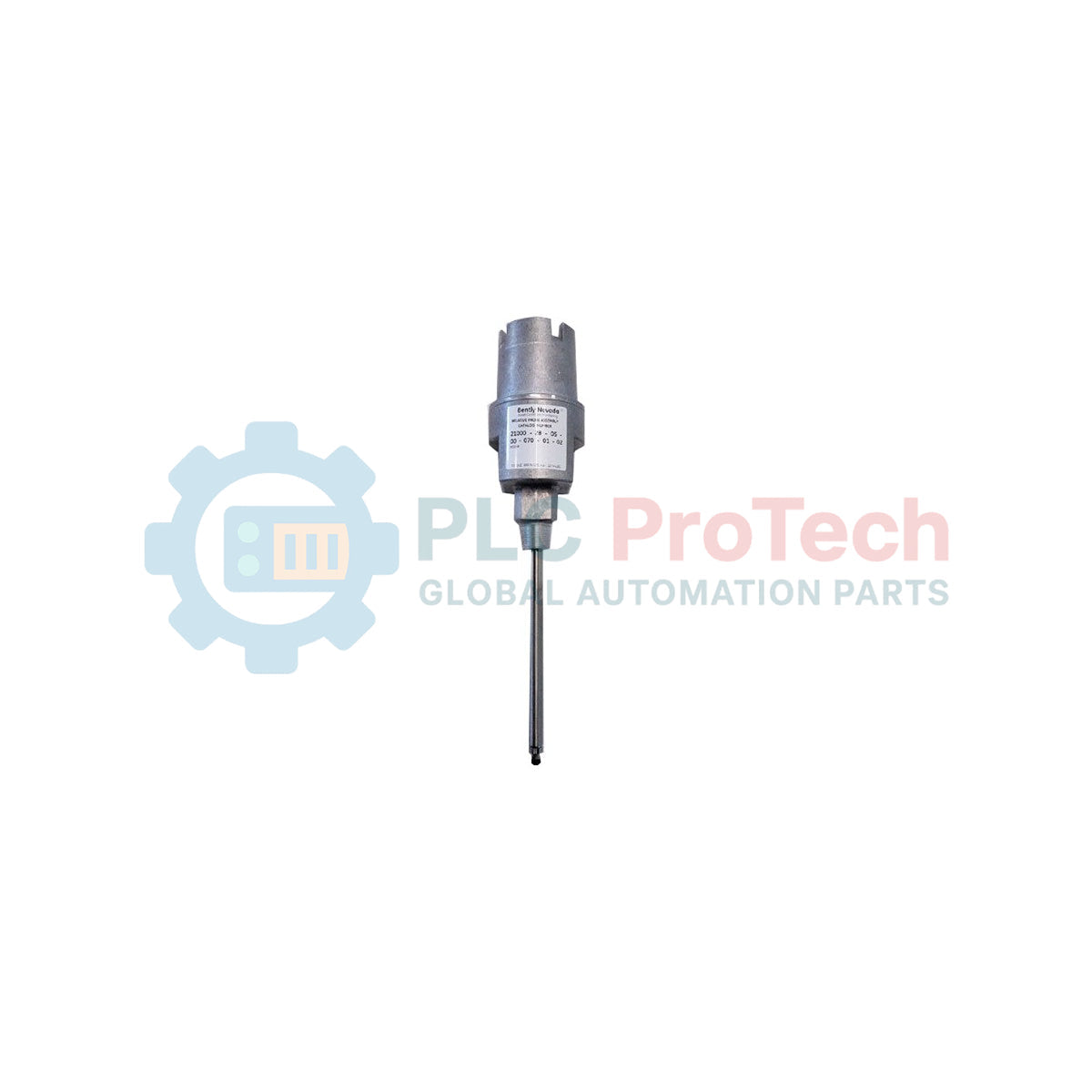
Product Summary
The 21000-34-05-00-028-01-02 (21000-34-05-00-028-01-02) by Bently Nevada is a high-precision sensor enclosure designed for critical machinery protection in harsh industrial environments such as oil refineries, petrochemical plants, and power generation facilities. This assembly provides a robust, explosion-proof interface for the 3300 XL 8 mm proximity probe, ensuring reliable vibration and position monitoring of rotating shafts. By protecting the sensitive transducer components from mechanical damage and environmental contaminants, this housing assembly plays a vital role in preventing catastrophic machine failure and minimizing unscheduled downtime in high-stakes asset management programs.
Model Suffix Breakdown
The alphanumeric string for this assembly defines specific physical and certification parameters essential for field installation:
-
21000: Base model for the Proximity Probe Housing Assembly.
-
34: Probe Option. Integrated with a 3300 XL 8 mm probe, featuring a connector protector and multiple hazardous area approvals.
-
05: Probe Cable Length. Equipped with a 0.5 meter (20 inch) cable.
-
00: Standoff Adapter Option. Indicates no standoff adapter is used in this configuration.
-
028: Probe Penetration. Specifies a total penetration depth of 2.8 inches into the machine case.
-
01: Fittings Option. Configured with one explosion-proof fitting and one sealing plug.
-
02: Mounting Thread. Features 3/4-14 NPT threads, engineered for secure mechanical coupling.
Key Technical Specifications
| Feature |
Specification Details |
| Model |
21000-34-05-00-028-01-02 |
| Brand |
Bently Nevada |
| Country of Origin |
U.S.A |
| Probe Type |
3300 XL 8 mm Proximity Probe |
| Cable Length |
0.5 meter (20 inches) |
| Penetration Depth |
2.8 inches (71.1 mm) |
| Mounting Thread |
3/4-14 NPT |
| Fittings |
1 Explosion-proof Fitting / 1 Plug |
| Shipping Weight |
3.0 kg |
| Operating Temp Range |
-35 to 177 deg C (Probe Tip) |
| Hazardous Area Rating |
Multiple Approvals (ATEX, CSA, IECEx) |
Technical FAQs
How do I adjust the probe gap within this housing?
The probe gap must be set by loosening the internal locking mechanisms and rotating the probe until the desired DC gap voltage is achieved (typically -9.0 VDC for a mid-scale setting on 3300 XL systems). Always use a calibrated voltmeter for this procedure.
Can this assembly be used in Class I, Division 1 environments?
Yes, the 01 fitting option provides the necessary explosion-proof housing integrity required for hazardous locations, provided the installation follows the specified wiring and conduit sealing codes.
What is the significance of the connector protector in the 34 option?
The connector protector prevents the coaxial connection between the probe and the extension cable from loosening due to vibration and protects it from moisture ingress, which is a common cause of signal drift or failure.
Engineering & Installation Guide
Field Gap Calibration and Voltage Settings
During installation, engineers must ensure the probe is gapped correctly relative to the target material (typically 4140 steel). For the Bently Nevada 3300 XL 8 mm probe, the standard linear range is 2.0 mm (80 mils). A mechanical feeler gauge or the "Gap Voltage" method via the Proximitor Sensor output is required. Ensure the locknut is torqued to specification after gapping to prevent drift caused by thermal expansion or machine vibration.
Environmental Durability and Sealing
The 21000 series housing is designed for extreme durability. However, in applications involving high chemical volatility or steam, ensure the NPT mounting threads are treated with a suitable conductive anti-seize compound. The explosion-proof fitting must be sealed with certified potting compound or glands to maintain the hazardous area rating integrity of the enclosure.