Product Overview
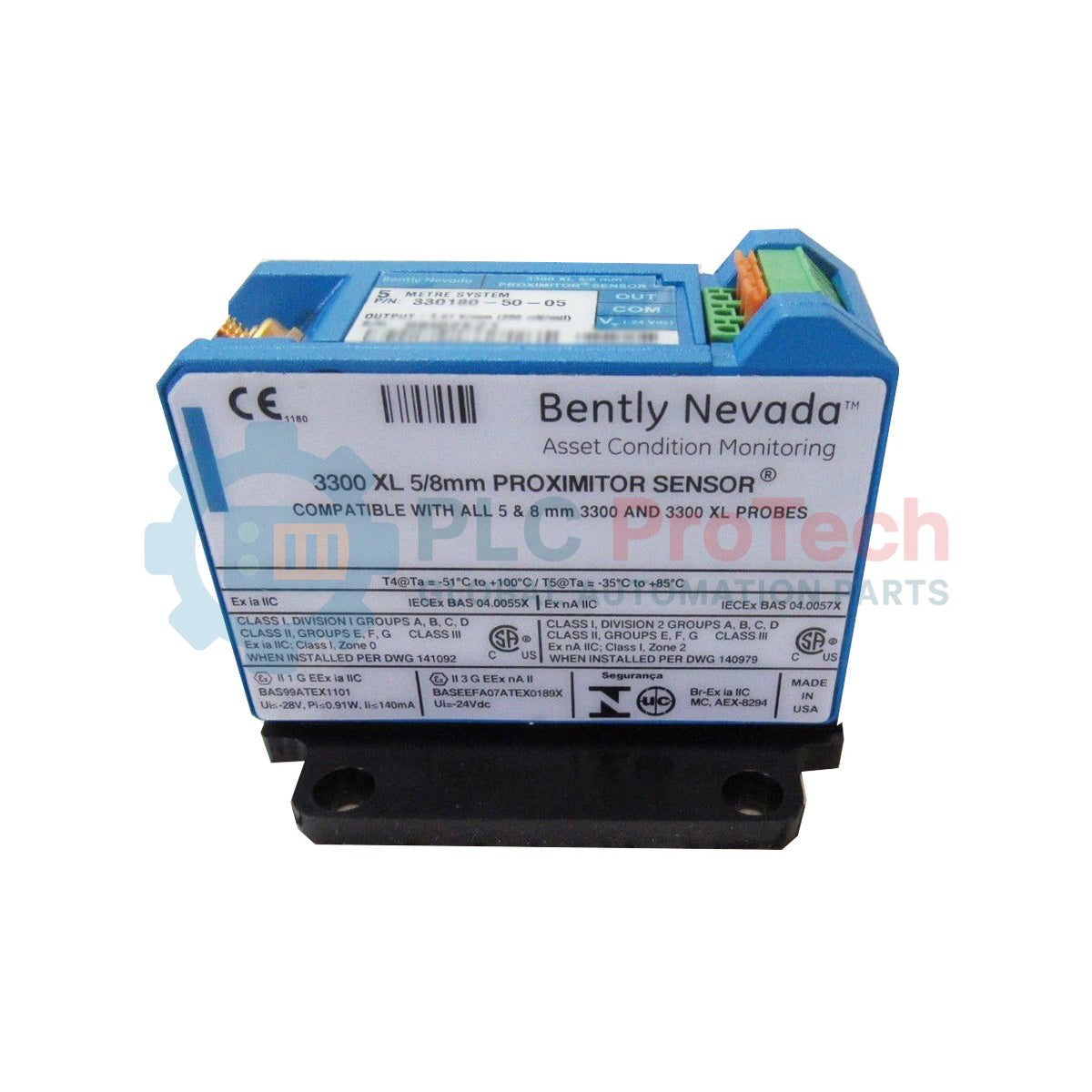
The 330180-X1-CN MOD 145004-39 (330180-X1-CN) is a specialized high-performance Proximitor Sensor within the Bently Nevada 3300 XL series. As the core signal processing unit of an eddy-current proximity probe system, this sensor converts the complex radio frequency (RF) signal from the probe into a linear voltage proportional to the distance between the probe tip and the target shaft. This specific MOD 145004-39 variant is factory-calibrated for 42 Cr Mo 4 (Chromium-Molybdenum steel), ensuring superior linearity and accuracy for turbine and compressor monitoring where non-standard shaft materials are utilized. By providing precision vibration and position data to a 3500 rack or DCS, it serves as a frontline defense against catastrophic machine failure in oil and gas, power generation, and heavy manufacturing sectors.
Technical Configuration
The 330180-X1-CN MOD 145004-39 is defined by its unique calibration and certification parameters:
-
3300 XL Series: The industry standard for proximity sensing, offering improved EMI/RFI immunity and better thermal stability over previous generations.
-
X1 (Total Length & Mounting): Configured for specific system length requirements (standard 5.0 or 9.0 meters) to ensure impedance matching with the probe and extension cable.
-
MOD 145004-39: A critical factory modification. While standard sensors are calibrated for AISI 4140 steel, this unit is specifically tuned for the electromagnetic properties of 42 Cr Mo 4 alloy.
-
CN (Agency Approval): Fully certified for explosive atmospheres, carrying ATEX, IECEx, and Chinese NEPSI hazardous area markings.
Technical Specifications
| Parameter |
Specification Details |
| Brand |
Bently Nevada |
| Model |
330180-X1-CN MOD 145004-39 |
| Target Material |
42 Cr Mo 4 (Special Calibration) |
| Input Voltage |
-17.5 VDC to -26 VDC |
| Output Sensitivity |
7.87 V/mm (200 mV/mil) typical |
| Linear Range |
2.0 mm (80 mils) |
| Operating Temp |
-51 to +100 Celsius |
| Enclosure Material |
PBT (Polybutylene Terephthalate) / A380 Aluminum |
| Hazardous Certification |
ATEX, IECEx, NEPSI |
| Shipping Weight |
2.0 kg |
Technical FAQs
Can I use this sensor with a shaft made of AISI 4140 steel?While it will function, the calibration is specifically tuned for 42 Cr Mo 4. Using it with 4140 steel will result in a scale factor error. For maximum accuracy, the Proximitor calibration must match the metallurgical properties of the target material.
What is the significance of the "CN" approval for my facility?The "CN" suffix ensures the device is legally compliant for installation in hazardous zones within China (NEPSI) as well as international projects requiring ATEX/IECEx certification. It confirms the device will not act as an ignition source in explosive gas atmospheres.
Does this Proximitor require a specific probe type?Yes, it must be used with a 3300 XL 8mm proximity probe and a matching 3300 XL extension cable. Ensure the total system length (Probe + Cable) matches the Proximitor's electrical length (X1 option).
Engineering & Installation Guide
Calibration and Material MatchingSince this unit features the MOD 145004-39 for 42 Cr Mo 4, it is vital that the maintenance team marks the junction box clearly. Installing a standard Proximitor on a 42 Cr Mo 4 shaft—or vice versa—will cause an error in the vibration amplitude readings, potentially leading to missed alarms or false trips.
Mounting and GroundingThe Proximitor can be DIN-rail mounted or installed on a traditional bulkhead. Ensure the Proximitor is housed in an environmental enclosure (such as a 3300 XL fiberglass housing) if located near the cooling tower or in an area with high chemical exposure. The sensor base should be electrically isolated from the cabinet backplate unless a common ground strategy is explicitly required by your site's engineering standards.
Lead Wire IntegrityWhen connecting the field wiring to the Proximitor terminals (Signal, COM, and VT), ensure the wires are stripped to the correct length and tightly secured. Loose connections are the primary cause of "Signal Spiking" in TSI (Turbine Supervisory Instrumentation) systems. Avoid routing Proximitor output cables in the same conduit as high-voltage AC power lines to prevent electromagnetic interference.