Description
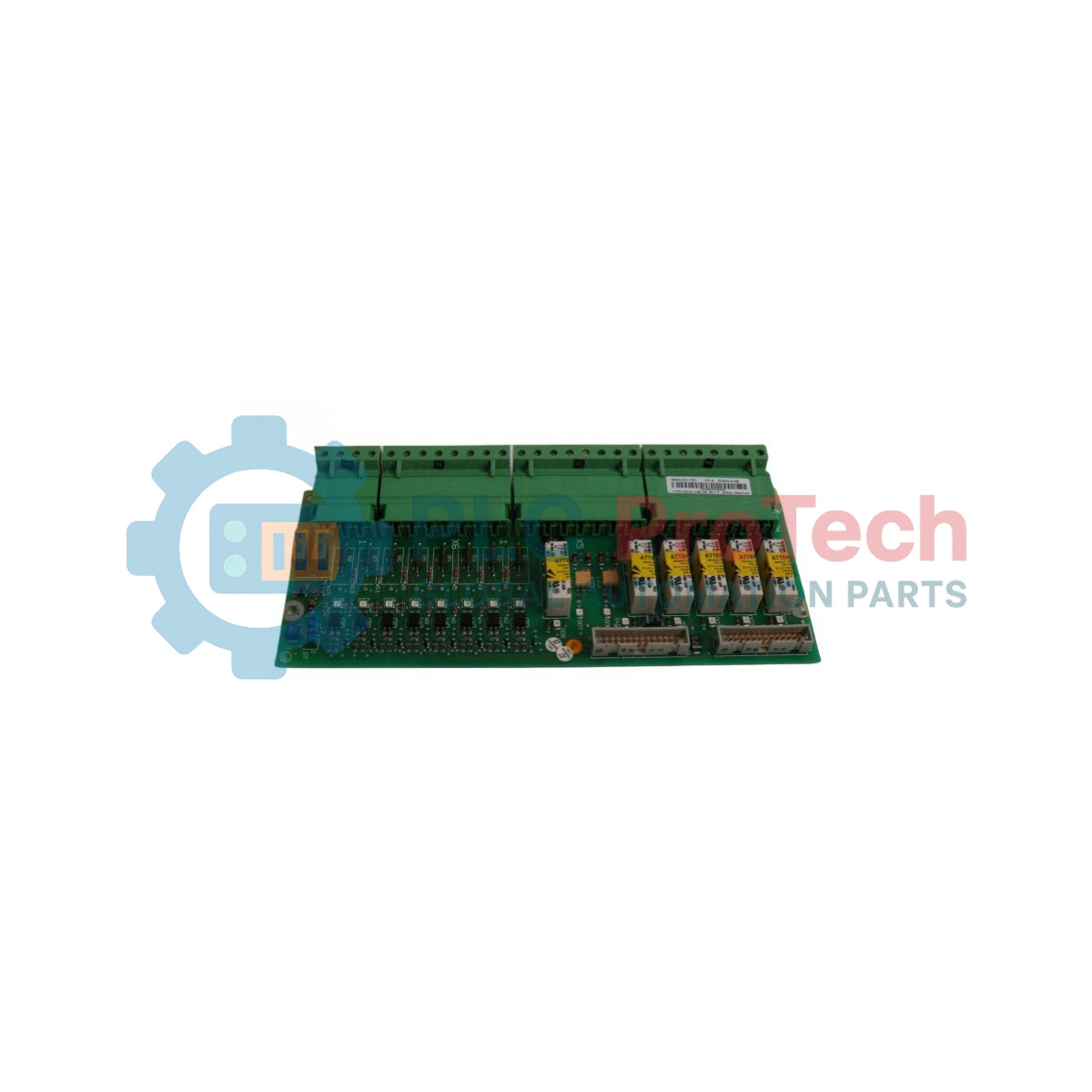
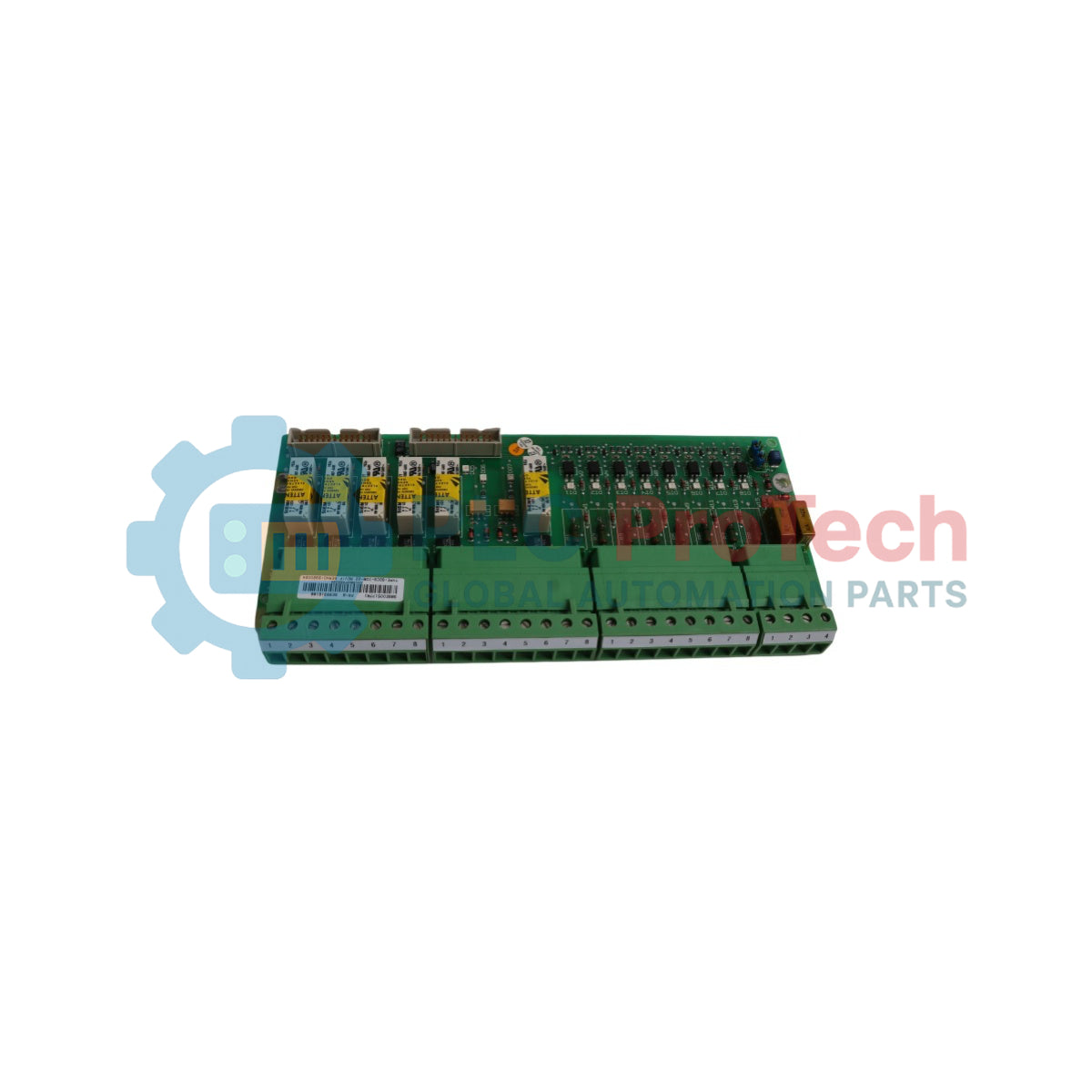
The ABB SDCS-IOB-22 is an auxiliary digital input and output interface card engineered for industrial multi-drive power converters and heavy-duty thyristor power units. Operating as a specialized digital connection board configured for 115V AC application control signals, this module provides safe logic separation, signal conditioning, and connection routing between external plant limit switches, pilot devices, or interlock relays and the drive control board.
To safeguard internal control processing layers from critical field faults, the SDCS-IOB-22 incorporates robust optocoupler circuits to filter high-voltage line spikes and isolate transient ground loops typical in mill Environments. The 3BSE005177R1 architecture handles high-potential binary tracking and status distribution, enabling continuous digital telemetry inside drive control bays without sacrificing logic speed or incurring thermal load overruns.
Features
-
115V AC Signal Interfacing: Native processing for 115V AC discrete digital control pathways, eliminating external step-down isolation hardware.
-
Galvanic Logic Separation: Integrates dedicated multi-channel optical isolation paths to decouple field contact logic from low-voltage internal electronics.
-
Coated Board Protection: Built with defensive protective industrial coatings to withstand conductive particulate accumulation, airborne moisture, and chemical stresses.
Applications
- Discrete input tracking, sequence interlocks, and digital safety monitoring inside ABB DCS500 and DCS600 converter installations.
- Industrial automation configurations including paper machine section drives, mining hoist lines, and primary pump control stations.
Technical Specifications
| Parameter |
Specification |
| Manufacturer |
ABB |
| Model Designation |
SDCS-IOB-22 |
| Product ID / Order Number |
3BSE005177R1 |
| Functional Group Designation |
DI/DO connection board 1 (A9) |
| Voltage Compatibility |
115V AC digital signals |
| Circuit Protection |
Coated board version |
| Part Type Status |
Original / New |
| Country of Origin |
Germany (DE) / Sweden (SE) |
| Shipping Weight (Calculated) |
0.35 kg |
| Package Dimensions (Calculated) |
240 mm x 150 mm x 60 mm |
Empirical Engineering Insights
Alternative Models & Compatibility
The SDCS-IOB-22 (3BSE005177R1) is engineered specifically for 115V AC logic voltage loops. It cannot be used as a direct hot-swap replacement for the sister board variants SDCS-IOB-21 (which handles 24V DC logic inputs) or SDCS-IOB-23 (which is designed for 230V AC applications). Attempting to cross-wire these variants will permanently damage the on-board optocouplers or cause logic recognition threshold dropouts.
Application Pitfalls & Engineering Notes
When replacing components in older legacy converter setups, check the flat unscreened or screened flat ribbon cable running from the SDCS-CON-4 controller card to the card interface plug. If the ribbon cable path is run too close to heavy AC busbars, electrical noise can corrupt binary tracking signals. Field failures are minimized by ensuring proper placement away from armature fields.
Installation Guidelines
CRITICAL WARNING: LIVE 115V AC LETHAL VOLTAGE HAZARD
Isolate, decouple, and lock out all primary power lines and separate 115V AC external control voltage feeds connected to the terminal assembly block. Drive capacitors retain substantial energy charges after main line isolation. Wait a minimum of 15 minutes for complete discharge bleed down, and measure with a calibrated multi-meter to confirm a zero-voltage state before performing any service work.
1
Fasten an approved ESD wrist strap to your forearm and link the grounding clip to an unpainted metal surface of the grounded cabinet chassis frame.
2
Carefully map, label, and disconnect the external 115V AC field cables from the screw terminals to prevent cross-wiring faults when fitting the replacement module.
3
Mount the board onto the structural positioning standoffs, fasten the mounting screws tightly to secure physical grounding, attach the ribbon connector, and terminate the discrete signal lines.