Product Overview
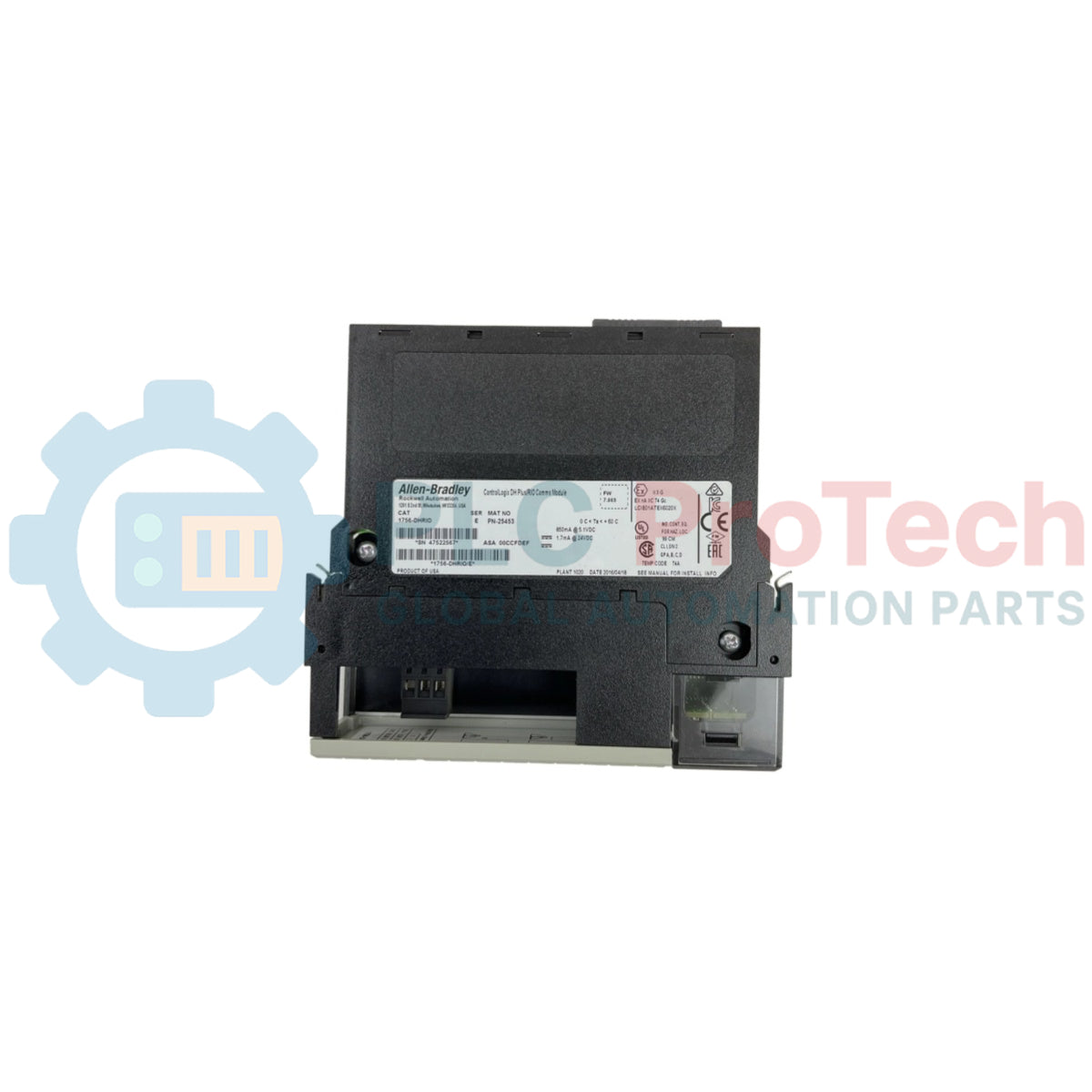
The 1756-DHRIO functions as a high-integrity, dual-channel communication bridge within the Allen-Bradley ControlLogix architecture. Engineered specifically to protect capital investments in legacy plant infrastructure across industries like petroleum refining, continuous automotive assembly, and municipal water treatment, this module provides native physical-layer translation between modern ControlLogix networks and legacy industrial links. By facilitating real-time data migration and interface routing without the high costs of rewiring existing distributed racks, the module dramatically reduces project commissioning risks and avoids catastrophic facility downtime.
Technical Configuration
The internal processing hardware of the 1756-DHRIO incorporates two isolated communication channels (Channel A and Channel B) that operate independently from one another. Each channel can be configured via physical switches or software parameters to run as either a Data Highway Plus (DH+) network interface or a Universal Remote I/O (RIO) scanner.
-
Data Highway Plus (DH+) Mode: The module acts as a smart routing gateway that handles token rotation, peer-to-peer messaging, and global data shares between legacy SLC 500 or PLC-5 controllers and standard ControlLogix processors.
-
Universal Remote I/O (RIO) Mode: The module executes remote network scanning tasks, transmitting discrete I/O states and managing block transfer data up to 64 words per transaction with legacy distributed devices, including 1771-ASB chassis, 1794 FLEX I/O adapters, and PanelView operator terminals.
The processing engine natively encapsulates legacy PCCC (Programmable Controller Communication Commands) within the modern Control and Information Protocol (CIP) framework, allowing explicit, multi-hop message routing through up to four independent communication networks and three separate chassis layers.
Technical Specifications
| Parameter Metric |
Certified Product Specification Data |
| Model |
1756-DHRIO |
| Brand |
Allen-Bradley |
| Series Platform |
ControlLogix (Bulletin 1756)
|
| Module Type |
DH+ / Universal Remote I/O Interface
|
| Channels Available |
2 isolated ports, independently configurable
|
| Baud Rate Options (DH+/RIO) |
57.6 kbps, 115.2 kbps, 230.4 kbps
|
| Maximum Physical Node Count |
32 physical devices per RIO scanner channel
|
| Maximum Logical Rack Address |
32 full or partial racks scanned per RIO channel
|
| Block Transfer Capacity |
Up to 64 data words per read/write message
|
| Backplane Current Draw @ 5.1V DC |
850 mA |
| Backplane Current Draw @ 24V DC |
1.7 mA |
| Power Dissipation (Max) |
4.3 W @ 60 deg C |
| Thermal Dissipation Loading |
14.67 BTU/hour |
| Continuous Isolation Voltage |
30 V continuous (Functional insulation type, channels-to-system/channel-to-channel) |
| Network Physical Media |
1770-CD (Belden 9463) "Blue Hose" shielded twisted-pair
|
| Onboard Diagnostic Readout |
Front-panel 4-character alphanumeric scrolling display
|
| Local Programming Interface |
Integrated 8-pin mini-DIN programming terminal connector
|
| Slot Width Occupancy |
1 standard ControlLogix chassis slot |
| Operating Temperature Envelope |
0 to 60 deg C (32 to 140 deg F) |
| Storage Temperature Limits |
-40 to 85 deg C (-40 to 185 deg F) |
| Relative Humidity Boundaries |
5 to 95 percent non-condensing |
| Manufacturing Origin |
USA |
FAQs
What is the purpose of the 4-character alphanumeric display on the front panel of the 1756-DHRIO?
The integrated alphanumeric status display delivers instantaneous real-time network diagnostics and error reporting directly on the module enclosure. During normal runtime, it scrolls through configured channel network types, baud rates, and station node addresses. If a system or media error occurs, it flashes precise fault signatures to help engineers pinpoint duplicate node faults or wiring disruptions without needing an active computer connection.
Can Channel A operate on DH+ while Channel B simultaneously scans a Universal RIO network?
Yes. Channel A and Channel B feature separate physical and electronic isolation boundaries. You can configure one channel to handle peer-to-peer supervisor messaging over a DH+ token-ring network while assigning the other channel to act as an active RIO scanner controlling legacy distributed I/O racks.
Are external termination resistors required for the 1756-DHRIO network plugs?
Yes, proper electrical termination is required at both physical ends of each DH+ or Universal RIO network line to prevent signal reflection errors. Depending on the specific network hardware layout and communication speed, you must connect either an 82 Ohm or a 150 Ohm termination resistor across the data lines at the furthest physical end-nodes.
Field Commissioning and Maintenance Guidelines
-
Trunk Line Shielding and Grounding Protocol: Use high-grade 1770-CD (Belden 9463) shielded twisted-pair cable for all network wiring. The continuous copper shield drain wire must be carried through all intermediary terminal plugs along the daisy chain and bonded to an absolute plant earth ground station at one end of the network segment only. Grounding the shield at multiple spots will generate ground loops that distort data packets, leading to bad CRC error codes.
-
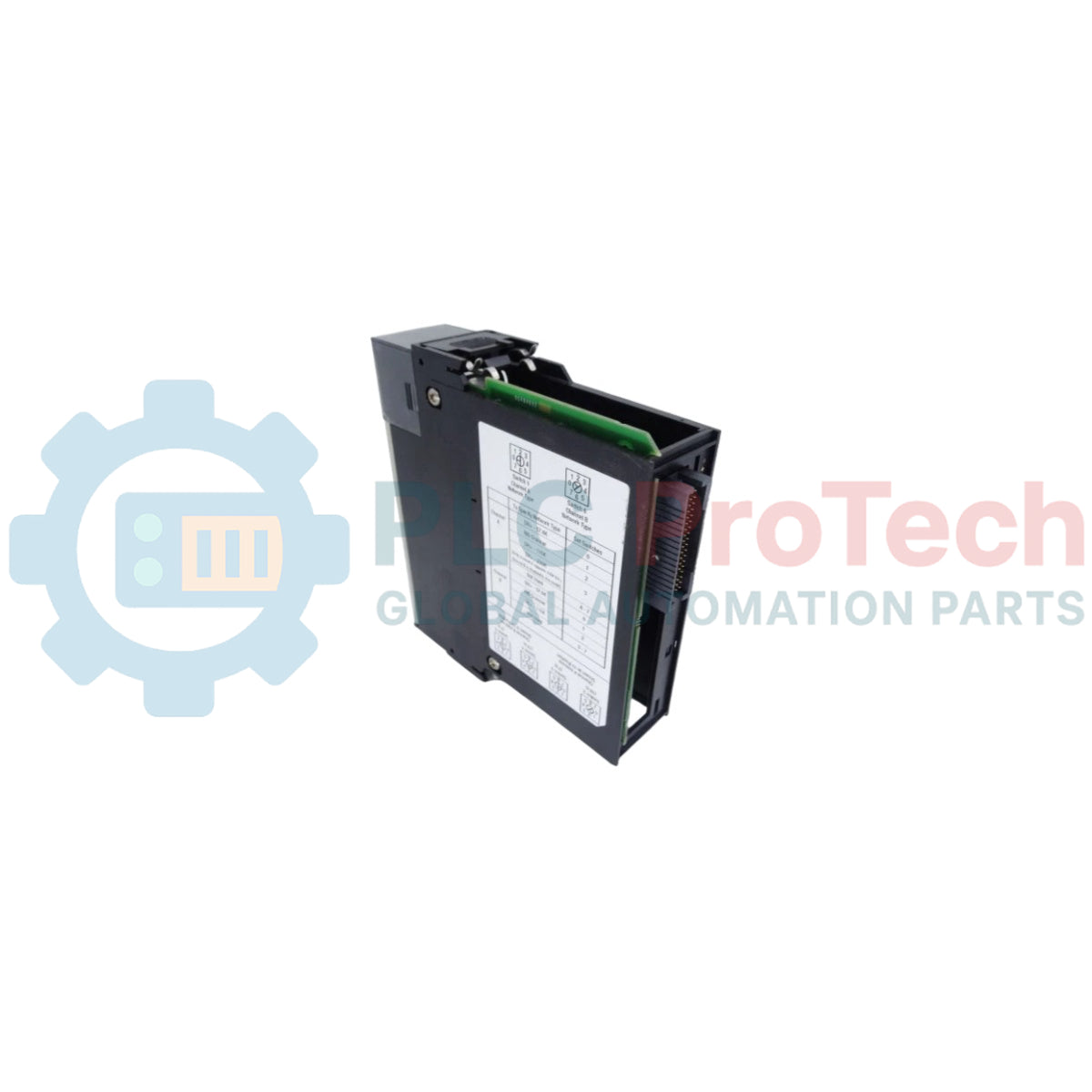
Node Addressing and Network Configuration: Set the physical node address switches and channel type selectors on the side panel of the module prior to inserting it into the ControlLogix backplane. Ensure that all devices connected to an individual channel are programmed to identical baud rates (57.6k, 115.2k, or 230.4k bps). Overlapping rack addresses or node mismatch values will disrupt data polling cycles across the network.
-
Live-Insertion (RIUP) Safety Constraints: The 1756-DHRIO hardware is fully certified for Removal and Insertion Under Power (RIUP) within an active ControlLogix chassis. However, if the control panel is deployed in a hazardous area classification (Class I Division 2 explosive atmospheres), you must completely isolate line power or confirm the area is non-hazardous before extracting the module or disconnecting the network terminal block plugs to prevent electrical arcing.