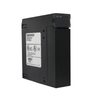
Product Overview
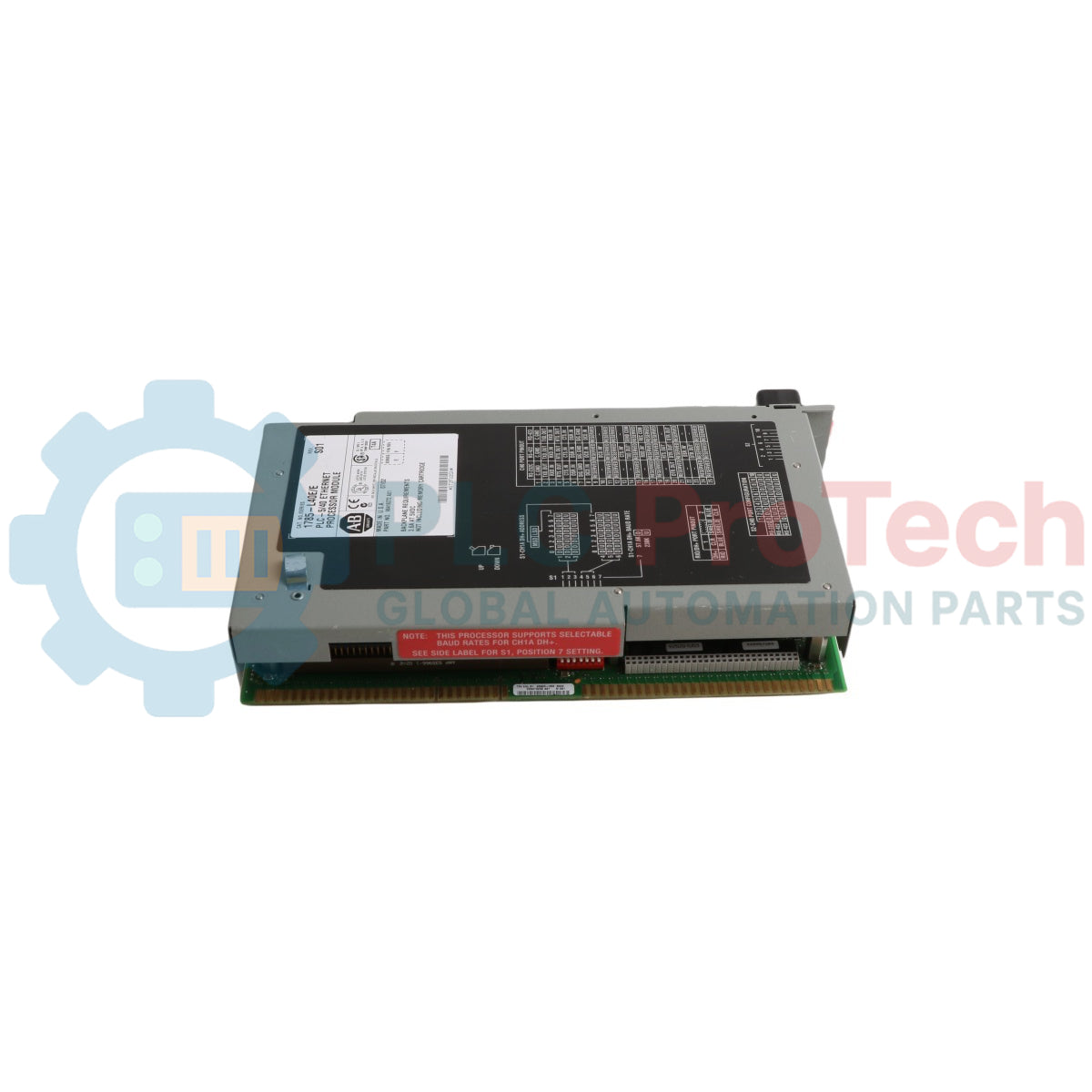
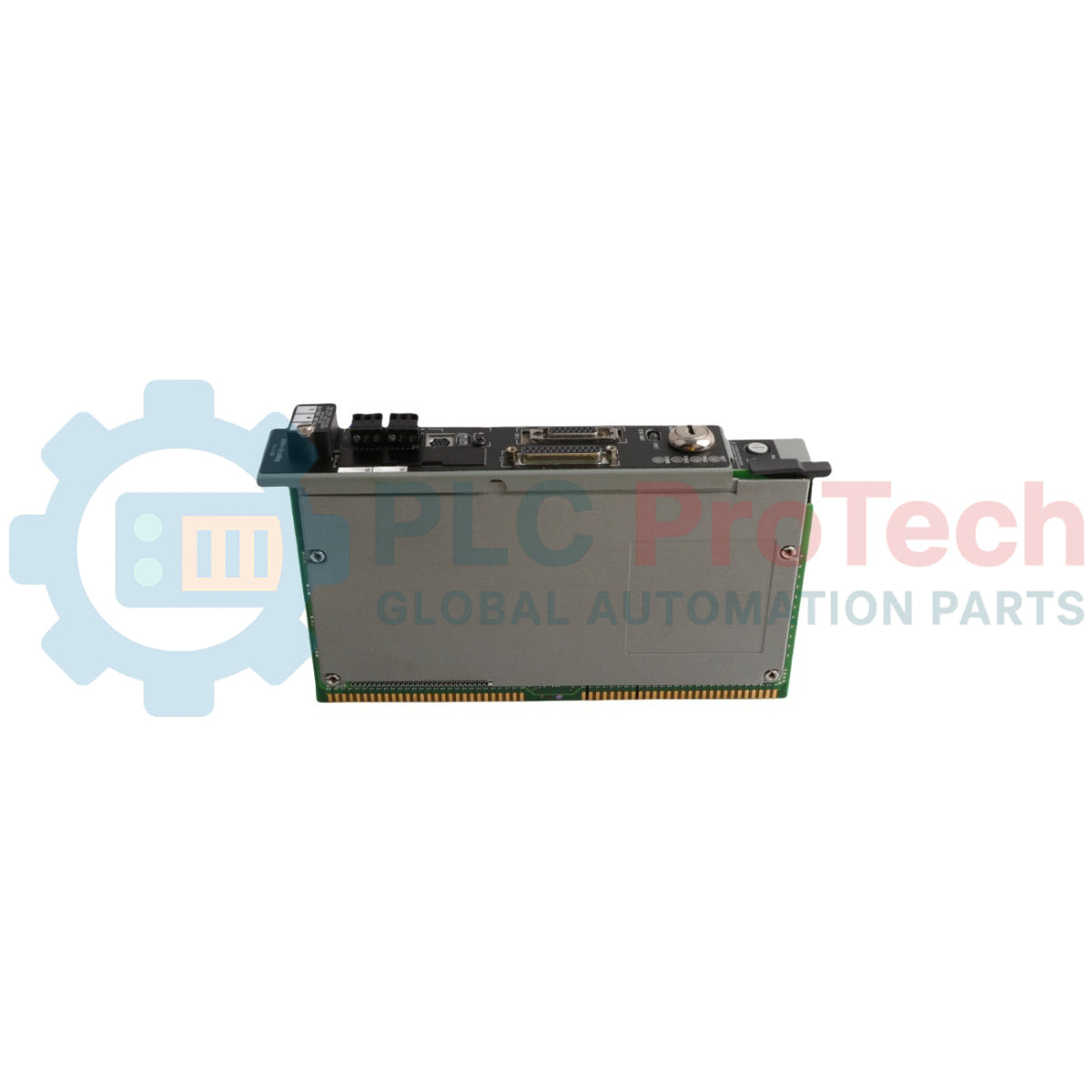
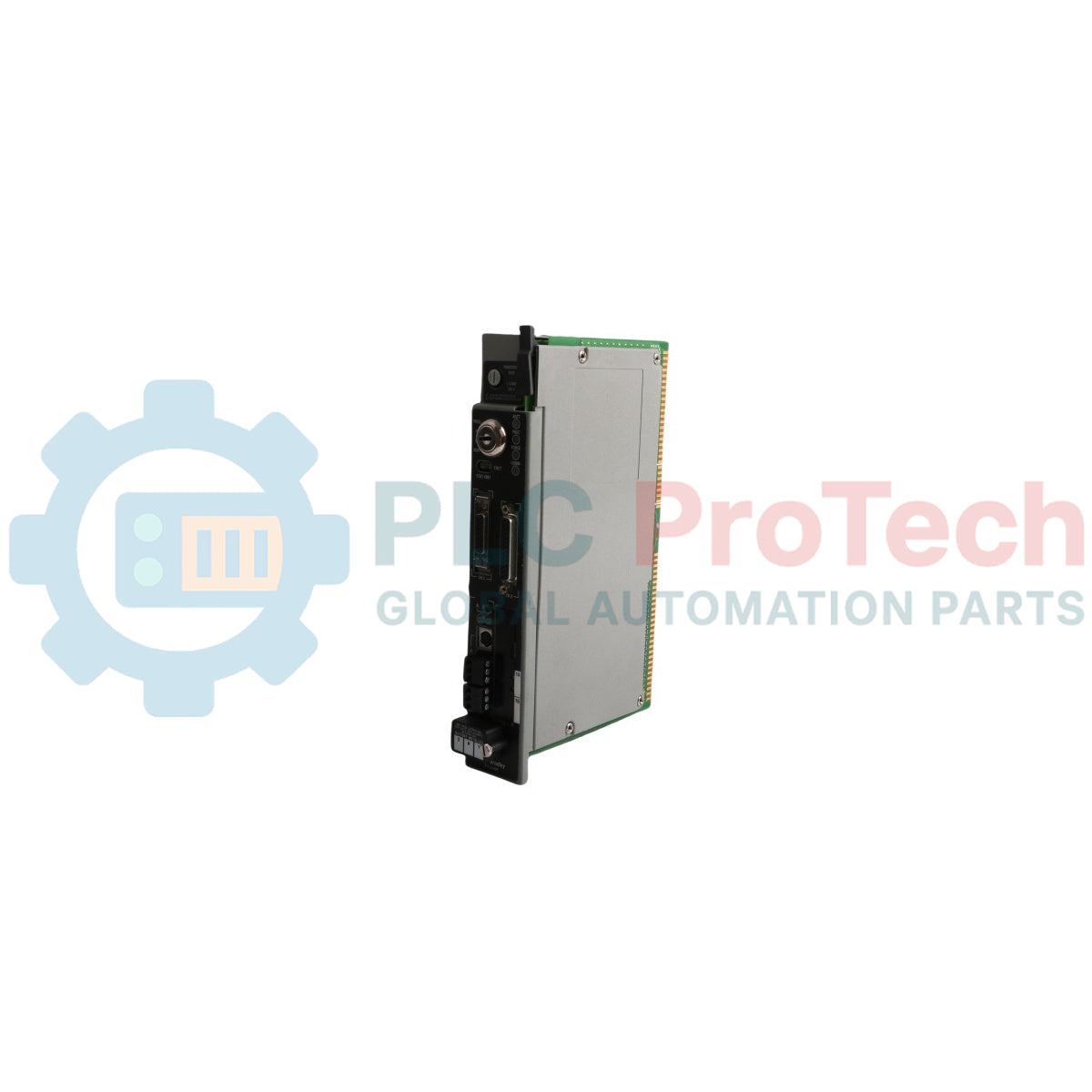
The 1785-L40E is a high-performance, single-slot Ethernet PLC-5 Programmable Controller designed for the Allen-Bradley 1771 Universal I/O platform. It features an integrated Ethernet port (10 Mbps), enabling high-speed peer-to-peer communication, program uploads/downloads, and data acquisition over standard office or industrial networks. With 48k words of user memory and the capacity to manage up to 2048 I/O points, the 1785-L40E serves as a robust control solution for medium-to-large scale industrial applications that require seamless integration between the factory floor and enterprise-level Ethernet systems.
Functional Communication & Logic
The 1785-L40E simplifies network architecture by eliminating the need for external bridge modules. It features three high-speed communication channels: one dedicated Ethernet port and two configurable DH+/Remote I/O ports. This allows the controller to simultaneously manage a local 1771 chassis, coordinate with remote I/O racks, and communicate with HMIs or SCADA systems via EtherNet/IP. Its powerful instruction set supports advanced floating-point math, PID control, and complex data handling, making it a "workhorse" for the automotive, food and beverage, and material handling industries.
Technical Specifications
| Attribute |
Specification Details |
| Model |
1785-L40E |
| User Memory |
48k Words |
| Total I/O (Max) |
2048 (Any mix) or 4096 (Complementary) |
| Communication Ports |
1 Ethernet, 2 DH+ or Remote I/O |
| Max Remote Chassis |
60 |
| Backplane Current Load |
3.6 A @ 5V DC |
| Power Dissipation |
18.9 W (Max) |
| Operating Temp |
0 °C to +60 °C (32 °F to +140 °F) |
| Weight |
1.39 kg (3 lb, 1 oz) |
| Replacement Battery |
1770-XYC |
导出到 Google 表格
Technical FAQs
How does the Ethernet port improve system integration?The built-in Ethernet port supports the EtherNet/IP protocol, allowing the 1785-L40E to connect directly to standard network infrastructure. This facilitates faster data rates compared to traditional DH+ and allows for remote troubleshooting and programming across the plant's LAN without specialized interface cards in the PC.
What are the addressing limitations for I/O modules?The controller supports 2-slot, 1-slot, and 1/2-slot addressing. When using 2-slot addressing, 16-point modules must be used in I/O pairs, and 32-point modules are not supported. For higher density requirements, 1/2-slot addressing should be used, which allows any mix of 8, 16, or 32-point modules.
How critical is the 1770-XYC battery?The 1770-XYC lithium battery is essential for backing up the 48k words of user memory and the real-time clock when the system is powered down. Without a functional battery, the program and configuration data will be lost during a power cycle.
Field Engineering & Installation Guide
-
Chassis Selection: The 1785-L40E must be installed in the leftmost slot of a 1771-A1B, -A2B, -A3B, or -A4B Universal I/O chassis. Ensure the backplane power supply is rated for at least 3.6 A to accommodate the controller's current draw.
-
Environmental Shielding: While the controller is rated for 0 to 60 °C, it is an open-style module. It must be installed in a NEMA-rated industrial enclosure to meet CISPR 11 Class A emissions standards and to protect against conductive dust and moisture.
-
Cable Selection: For Ethernet connectivity, use 802.3 compliant shielded or unshielded twisted pair cabling. For Remote I/O or DH+ networks, use 1770-CD (Blue Hose) cable to ensure signal integrity and impedance matching across long distances.
Engineering Advantages
The 1785-L40E represents a bridge between legacy reliability and modern connectivity. By integrating Ethernet directly into the proven PLC-5 architecture, Allen-Bradley provides an upgrade path that does not require replacing the entire 1771 I/O infrastructure. For B2B procurement, sourcing an original 1785-L40E ensures compliance with UL, CSA, and CE industrial standards, providing the high vibration (2 g) and shock (30 g) resistance required for the most demanding manufacturing environments.