1 of 3

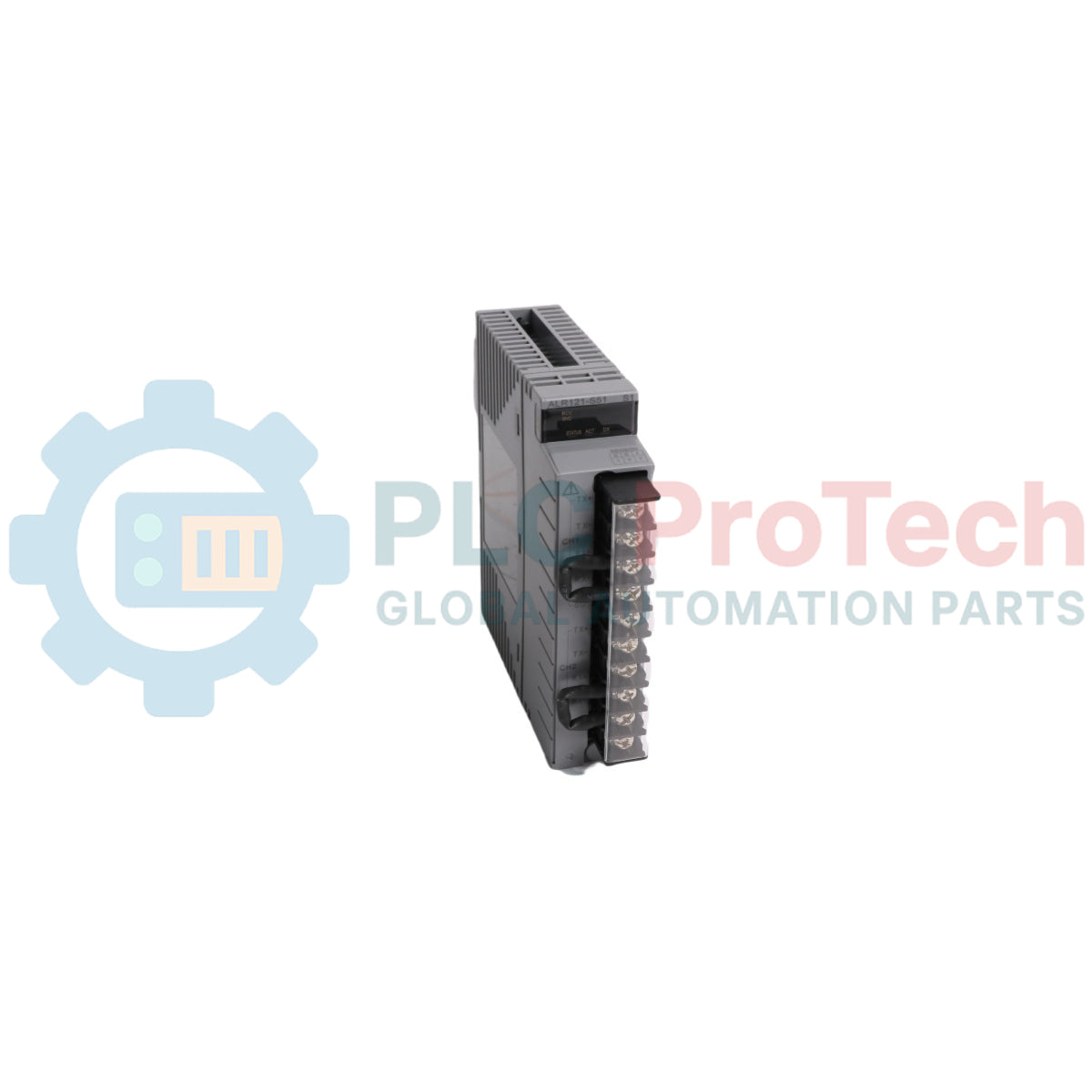
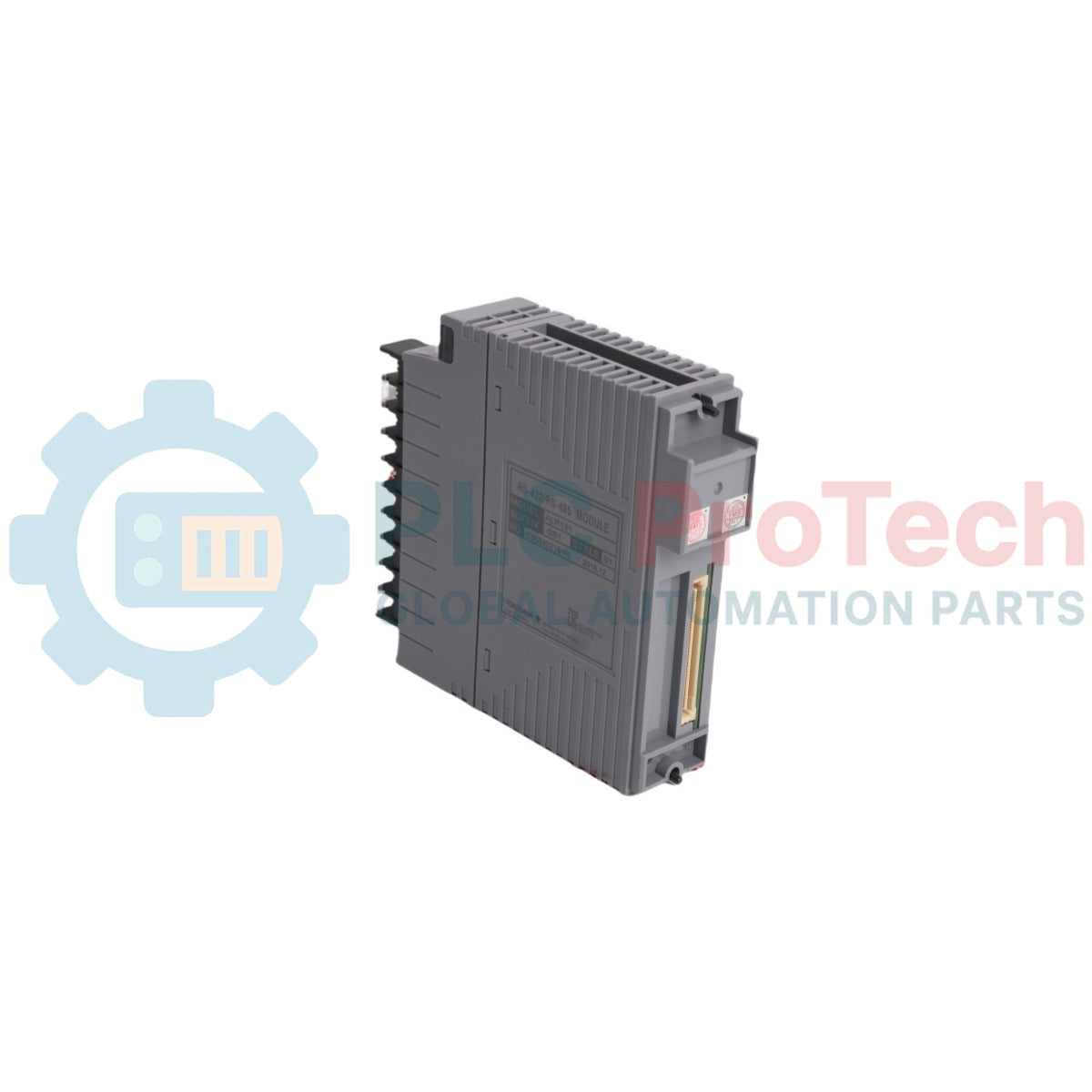
ALR121-S51 S1 Yokogawa CENTUM VP Serial Communication Module

ALR121-S51 S1 Yokogawa CENTUM VP Serial Communication Module

Only 10 item(s) left in stock
  • Manufacturer: Yokogawa

  • Product No.: ALR121-S51 S1

  • Country of origin:Japan

  • Product Type: Communication Module

  • Barcode: 8537101190

  • Payment: T/T, Western Union

  • Weight: 300g

  • Dimensions: 14cm x 13cm x 3.2cm

  • Shipping port: Xiamen

  • Warranty: 12 months

Quantity
View full details

Product Overview

The Yokogawa ALR121-S51 S1 is a high-reliability, 2-port serial communication module designed for the CENTUM VP Distributed Control System (DCS). Operating as a key data exchange bridge, this module is widely used in refineries, power stations, and chemical processing facilities to integrate subsystems—such as PLCs, safety systems, and analytical instruments—directly into the Field Control Station (FCS). By supporting both point-to-point RS-422 (4-wire) and multipoint RS-485 serial communication protocols, the module allows seamless connection to Modbus, MELSEC, or Allen-Bradley SLC500 subsystems. Featuring an ISA Standard G3 corrosion protection coating, this Style 1 module ensures continuous, uninterrupted process monitoring. This high-availability data link actively prevents signal blackouts and eliminates communication bottlenecks, directly protecting critical operational runtimes and reducing unplanned plant downtime.

Suffix Breakdown

The system ordering code for the ALR121-S51 S1 module defines its hardware durability, environmental protections, and production style revision:

  • ALR121: Base model designator for the 2-Port Serial Communication Module (RS-422/RS-485).

  • -S: Standard type module designed for standard industrial networks.

  • 5: Configured with no specialized explosion protection (suitable for standard control room or purged rack installations).

  • 1: Equipped with ISA Standard G3 conformal coating for superior protection against corrosive gases.

  • S1: Style 1 design revision, indicating the physical hardware build standard for FIO slot compatibility.

Technical Specifications

Parameter Certified Specification Value
Model ALR121-S51 S1
Brand Yokogawa Electric Corporation
Origin Japan
Ports 2 ports (RS-422 or RS-485 4-wire system)
Interface Speed 1200 / 2400 / 4800 / 9600 / 19200 / 38400 bps
Connection Topologies Point-to-point (RS-422); Multipoint (RS-485)
Communication Mode Half-duplex
Synchronizing Method Start-stop synchronization
Data Word Capacity 1000 words per module
Communication Definitions Up to 128 definitions per module
Maximum Transmission Distance 1200 m (total extended cable length)
System Current Consumption 0.5 A at 5 V DC
I/O Wiring Interfaces Cable with 3-pair shield, AKB161, or AKB162 cables
Physical Weight 0.30 kg

Technical FAQs

  • Q: Can the two ports on the ALR121-S51 S1 run different communication protocols simultaneously?

    A: No. A single communication module selects only one communication function at a time. Both port 1 and port 2 must be configured with identical communication functions (for example, both ports running Modbus RTU). You cannot configure port 1 for Modbus and port 2 for MELSEC-A on the same module.

  • Q: Is the ALR121-S51 S1 compatible with dual-redundant communication?

    A: Yes. Dual-redundant communication is fully supported when utilizing FA-M3, Modbus, or MELSEC-A communication functions. This requires installing a matched pair of ALR121 modules in adjacent slots of a compatible FCS node unit.

  • Q: What is the significance of the "Lag time after data transmission" parameter?

    A: The 1 ms lag time is the mandatory hardware delay the module enforces to transition from transmitter mode to receiver mode. This precise delay prevents transceiver signal collision, ensuring that the module only begins scanning for incoming subsystem data after its own transmission is completely clear.


Engineering & Installation Guide

  • Shield Grounding and Cable Routing: Always use a high-quality 3-pair shielded cable (such as Yokogawa AKB161 or AKB162) for serial links. Connect the overall cable shield to the cabinet frame ground at the FCS end only. Keep the shield isolated at the field device end to prevent hazardous ground loops from introducing noise onto the RS-422/RS-485 communication line.

  • Terminal Block Connection Protocol: Secure the field wires directly to the module's 5-poles-by-2 terminal block using M4 ring terminal lugs. Tighten the terminal screws to the recommended standard torque to prevent loose connections in high-vibration control environments, which can cause intermittent CRC errors.

  • Line Termination Requirements: For long-distance RS-485 multipoint networks (approaching the 1200 m maximum), always install a 120 Ohm terminating resistor across the RX+ and RX- terminal lines at the physically last device on the bus. This prevents signal reflections from distorting the start-stop data bits.

Global Express Shipping

  • Standard Delivery: 4-6 Business Days via DHL, FedEx, and UPS.
  • Express Dispatch: Same-day dispatch for in-stock orders placed before 2:00 PM (GMT+8).
  • Worldwide Coverage: Serving over 150 countries, including rapid delivery to Saudi Arabia and UAE.

Returns & Warranty

  • 30-Day Guarantee: Returns accepted for in-stock products in original, factory-sealed packaging.
  • 12-Month Warranty: Every industrial component is backed by our professional technical warranty.

Orders are processed and delivered Monday-Friday (excluding public holidays).


For full eligibility, restocking fees, and international return details, please view our official Refund & Return Policy .

TECHNICAL SPECIFICATIONS

Color pattern
Greyish White
Country of origin
Japan
Power source
DC Power

Recently Viewed Products

Technical knowledge

Guide to Robotic Grippers: From Delicate Handling to Heavy-Duty Automation

Modern robotic grippers are evolving beyond traditional mechanical jaws. From gecko-inspired adhesive systems and soft food-grade grippers to AI-powered warehouse tools, advanced gripping...

Throwback: How Early Electric Motors Changed Underground Mining

From rope-driven DC compressors to battery-powered mine carts, early mining operations marked a turning point in industrial electrification. This article explores how electric motors transformed...

Factory I/O: A Modern PLC Simulation Tool for Industrial Automation Training

Factory I/O is transforming PLC education by delivering immersive 3D industrial simulations for students, engineers, and maintenance teams. The platform bridges the gap between theory and real-world...

Programming Single-Axis Motion Cycles on a CMZ Servo Drive

This tutorial examines how onboard PLC functionality inside a CMZ SBD servo drive can execute standalone motion programs, including homing logic, position control, and cyclic axis movement without an...

Single-Axis Motion Control Setup with CMZ Servo Drives

This tutorial explores the commissioning of a single-axis servo motion system using a CMZ SBD drive, covering hardware setup, axis scaling, homing configuration, and safe motion verification for...

Mitsubishi FX PLC Integration With FR-D700 VFD and HMI Control

This tutorial explains how Mitsubishi FX PLCs integrate with FR-D700 VFDs and HMI panels for forward/reverse motor control. It covers wiring logic, parameter configuration, ladder programming, and...