Product Overview
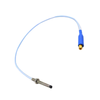
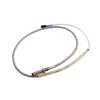
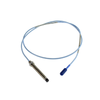
330101-00-25-05-02-CN is a Bently Nevada 3300 XL 8 mm proximity probe designed for precise shaft vibration and displacement measurement in critical rotating machinery systems. This 330101-00-25-05-02-CN (330101-00-25-05-02-CN) is widely used in turbines, compressors, pumps, and generators across oil refineries, power plants, and heavy industrial facilities. It delivers stable eddy current signals for continuous condition monitoring and early fault detection. The probe supports maintenance teams in identifying imbalance, misalignment, and bearing wear before failure occurs. Its compact design and stainless steel construction ensure reliable performance under high vibration and temperature stress, helping reduce unplanned downtime and improve asset availability.
Suffix Breakdown
The model structure defines mechanical and electrical configuration:
-
00 = Unthreaded length 0.0 in
-
25 = Overall case length 2.5 in
-
05 = Total probe length 0.5 metre (1.6 feet)
-
02 = Miniature coaxial ClickLoc connector with standard cable
-
CN = China-specific hazardous area approvals including NEPSI, CCC, and ATEX IECEx compliance
This configuration ensures correct mounting geometry, electrical connectivity, and regulatory compliance for industrial environments.
Technical Specifications
| Parameter |
Value |
| Model |
330101-00-25-05-02-CN |
| Brand |
Bently Nevada |
| Origin |
USA |
| Weight |
2.5 kg |
| Dimensions |
3/8-24 UNF threaded probe body |
| Operating Temp |
-51 to 177 deg C |
| Power Consumption |
Passive sensor, requires proximitor system |
| Probe Type |
3300 XL 8 mm eddy current proximity probe |
| Connector Type |
Miniature coaxial ClickLoc connector |
| Case Length |
2.5 in |
Technical FAQs
Is this probe compatible with 3300 XL monitoring systems?
Yes. It is fully compatible with Bently Nevada 3300 XL proximitor and monitoring modules.
What does the CN suffix indicate?
It indicates China-specific hazardous area certification including NEPSI, CCC, and ATEX IECEx compliance.
What happens if the probe gap is incorrect?
Incorrect gap setting leads to signal distortion and inaccurate vibration readings.
Can this probe operate in high temperature environments?
Yes. It supports operation up to 177 deg C when installed within system limits.
Engineering & Installation Guide
Maintain correct probe gap calibration during installation to ensure linear output response.
Route probe cables away from high voltage conductors to reduce electromagnetic interference.
Use proper torque on 3/8-24 UNF threads to prevent mechanical stress and ensure long term stability.