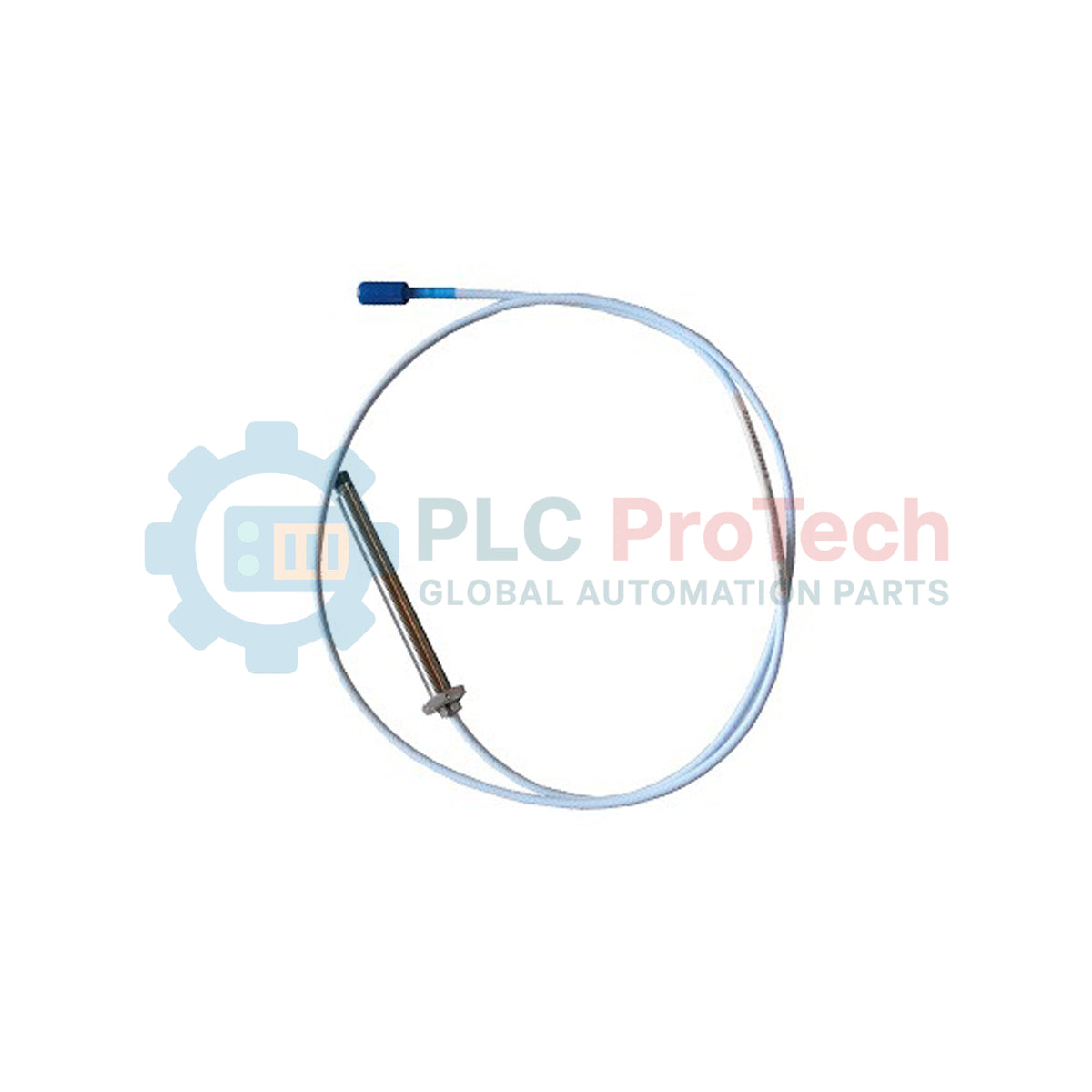
The 330102-11-45-50-11-CN is a precision-engineered 3300 XL series eddy current proximity transducer system designed for continuous vibration and position monitoring of industrial machinery. This system provides an accurate, non-contacting measurement of the displacement between a probe tip and a rotating shaft, converting mechanical motion into a high-fidelity electrical signal. Built with a robust polyphenylene sulfide (PPS) probe tip and a stainless steel case, the 330102 is optimized for reliability in extreme conditions, including exposure to high-pressure lubricants and corrosive atmospheres. By delivering critical data to 3500 series monitoring racks, this system facilitates proactive maintenance strategies, significantly reducing unexpected downtime and enhancing the operational safety of high-speed turbomachinery, compressors, and pumps.
Suffix Breakdown
The 330102 configuration utilizes a multi-segment suffix logic to define physical dimensions, mounting requirements, and regional certifications:
-
11 (Unthreaded Length): Defines the unthreaded portion of the probe barrel, typically in 10 mm increments.
-
45 (Overall Case Length): Specifies the total length of the probe housing. In this instance, 45 represents a 45 mm case.
-
50 (Total Length): Indicates the total length of the probe and integral cable. The 50 code corresponds to a 5.0 meter system length.
-
11 (Connector and Cable-Type Option): Specifies the 3300 XL standard connector with cable protection/armor options.
-
CN (Agency Approval): Designates specific regional compliance and safety certifications for the Chinese market (NEPSI/CCC).
Technical Specifications
| Feature |
Specification |
| Model |
330102-11-45-50-11-CN |
| Brand |
Bently Nevada |
| Origin |
USA |
| Weight |
2 kg (Shipping) |
| Probe Tip Material |
Polyphenylene sulfide (PPS) |
| Case Material |
AISI 303 or 304 Stainless Steel |
| Operating Temp |
-51 to +177 deg C |
| Power Consumption |
Passive Probe / Powered by Proximitor |
Technical FAQs
How do I ensure the probe is gapped correctly during installation?
The probe should be gapped using the DC voltage output from the Proximitor sensor. For a standard 3300 XL 8mm system, the linear range typically centers at -10 VDC, corresponding to a physical gap of approximately 1.27 mm (50 mils) between the tip and the target.
Is this probe compatible with non-3300 XL Proximitor sensors?
No, the 3300 XL 8mm probe is specifically designed to work within the 3300 XL ecosystem. Mixing 3300 XL probes with non-XL Proximitors or extension cables will result in scale factor errors and non-linearities in the vibration data.
What is the significance of the PPS tip material?
Polyphenylene sulfide is a high-performance thermoplastic that offers superior chemical resistance and dimensional stability at high temperatures, preventing tip deformation that could cause physical contact with the rotating shaft.
Engineering & Installation Guide
Proper deployment of the 330102 series proximity system is essential for signal accuracy and longevity:
-
Target Material Calibration: The system is factory-calibrated for AISI 4140 steel. If the shaft material differs (e.g., stainless steel or chrome-plated), the scale factor will change, necessitating a custom calibration curve within the monitor.
-
Side Clearance: Ensure a minimum side clearance of 1.5 times the probe tip diameter (approx. 12 mm) from any surrounding metal. Insufficient clearance causes "side-viewing," where the probe detects the housing instead of the shaft, leading to false readings.
-
Connector Integrity: The gold-plated brass connectors must be hand-tightened. Use silicone tape or heat-shrink tubing to seal the connection between the probe and the extension cable to prevent oil ingress, which can cause signal drift.
-
Grounding and Shielding: The Proximitor sensor should be mounted in a DIN-rail or bulkhead housing that is isolated from the machine ground. Ensure the cable shield is only grounded at the monitor rack to eliminate potential ground loops.
-
Cable Routing: Avoid routing probe cables parallel to high-current power lines. Use grounded metal conduit or tray systems to protect the coaxial cable from mechanical damage and electromagnetic interference.