


Implementing 3-Switch XOR Ladder Logic with Internal Bit
Implement a 3-SPST switch XOR light circuit in LogixPro or RSLogix 500 using an internal relay bit. Includes truth tables, boolean equations, and verified.

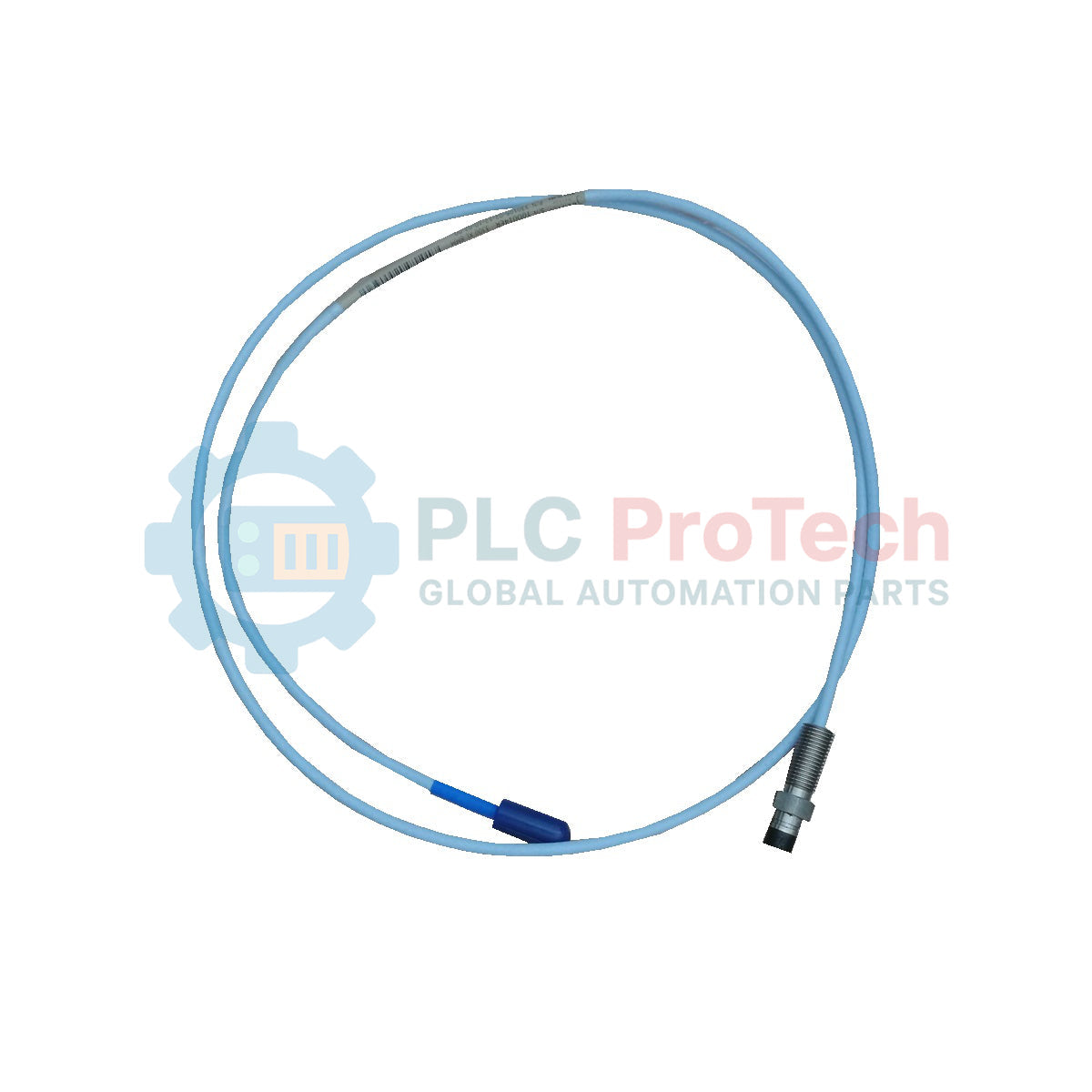
Optimized for demanding rotating machinery monitoring, the Bently Nevada 330105-02-12-10-12-CN eddy current proximity probe delivers highly reliable, non-contact measurements of shaft vibration, axial position, and oil-film dynamic behavior. As an integral component of the 3300 XL 8 mm Transducer System, this reverse-mount probe features a 3/8-24 UNF threaded case, physical fluid sealing, and robust physical construction to withstand continuous exposure to extreme industrial environments. It translates physical gap changes into proportional voltage signals when coupled with a calibrated 3300 XL Proximitor Sensor, allowing plant operators to identify machinery instability before failure occurs.
| Parameter | Specification Value |
|---|---|
| Manufacturer | Bently Nevada |
| Model Number | 330105-02-12-10-12-CN |
| Transducer Series | 3300 XL 8 mm |
| Mounting Configuration | Reverse Mount |
| Unthreaded Case Length (02) | 0.2 inches (5.1 mm) |
| Overall Case Length (12) | 1.2 inches (30.5 mm) |
| Total Length Option (10) | 1.0 meter (3.3 feet) |
| Thread Size | 3/8-24 UNF |
| Connector Option (12) | Miniature ClickLoc coaxial connector, FluidLoc cable |
| Agency Approval (CN) | Country-specific approvals (China/Ex) |
| Probe Tip Material | Polyphenylene sulfide (PPS) |
| Probe Case Material | AISI 303 or 304 stainless steel (SST) |
| Operating Temperature Range | -51 degC to +177 degC (-60 degF to +350 degF) |
| Country of Origin | United States (U.S.A.) |
| Shipping Weight (Calculated) | 2.0 kg (4.4 lbs) |
| Connection Interface | Function / Assignment |
|---|---|
| Coaxial Center Conductor | Carries high-frequency radio frequency (RF) signal to drive eddy current field. |
| Coaxial Outer Shield | Common system return line and electrical noise barrier. |
| Miniature ClickLoc Plug | Direct quick-connect coupling to the 3300 XL extension cable socket interface. |
This 1.0-meter probe requires matching extension cables and Proximitor electronics calibrated specifically for an overall 5.0-meter or 9.0-meter physical system length. Standardizing on the 3300 XL 8 mm system provides backwards compatibility with older 3300 series 5 mm and 8 mm components; however, using mixed legacy configurations will alter the output scale factor from the typical 7.87 V/mm (200 mV/mil). Ensure the model thread type (3/8-24 UNF) matches the machine casing tap geometry before attempting installation.
Reverse-mount configurations are physically installed from the outside of the machine casing or inside a dedicated sleeve. A common point of commissioning failure is over-tightening of the probe thread, which can deform the internal sensor housing or damage the PPS tip. In high-temperature casing environments, differential thermal expansion between the stainless steel probe case and the carbon steel machine housing must be calculated to prevent the physical gap from dropping to zero during thermal transients.
Always maintain minimum clearance around the probe tip to prevent side-viewing effects, which distort the output voltage calibration. The coaxial cable routing must avoid sharp bends; the minimum bend radius of 25.4 mm (1.0 inch) must be strictly maintained. When joining the ClickLoc connectors, ensure no solvent, oil, or physical debris enters the connection face. Apply silicone tape or a dedicated connector protector kit to shield the coaxial junction from local environmental humidity.
Carefully thread the reverse mount probe body into the installation sleeve or casing tap by hand to ensure no cross-threading occurs.
Using a calibrated digital voltmeter connected to the associated Proximitor output, adjust the mechanical position of the probe until the target DC gap voltage registers within the specified linear operating range (typically -9.0 VDC to -10.0 VDC for mid-scale calibration).
Tighten the thread locknut to the recommended torque specifications (do not exceed 13.5 Nm or 120 in-lb) to secure the mechanical position.
Connect the coaxial ClickLoc plug to the corresponding extension cable and apply protective heat-shrink tubing or connector sleeves to lock out moisture.
Global Express Shipping
Returns & Warranty


Manufacturer: Bently Nevada
Product No.: 330105-02-12-10-12-CN
Country of origin:United States
Product Type: Proximity Probes
Payment: T/T, Western Union
Weight: 320g
Shipping port: Xiamen
Warranty: 12 months
Optimized for demanding rotating machinery monitoring, the Bently Nevada 330105-02-12-10-12-CN eddy current proximity probe delivers highly reliable, non-contact measurements of shaft vibration, axial position, and oil-film dynamic behavior. As an integral component of the 3300 XL 8 mm Transducer System, this reverse-mount probe features a 3/8-24 UNF threaded case, physical fluid sealing, and robust physical construction to withstand continuous exposure to extreme industrial environments. It translates physical gap changes into proportional voltage signals when coupled with a calibrated 3300 XL Proximitor Sensor, allowing plant operators to identify machinery instability before failure occurs.
| Parameter | Specification Value |
|---|---|
| Manufacturer | Bently Nevada |
| Model Number | 330105-02-12-10-12-CN |
| Transducer Series | 3300 XL 8 mm |
| Mounting Configuration | Reverse Mount |
| Unthreaded Case Length (02) | 0.2 inches (5.1 mm) |
| Overall Case Length (12) | 1.2 inches (30.5 mm) |
| Total Length Option (10) | 1.0 meter (3.3 feet) |
| Thread Size | 3/8-24 UNF |
| Connector Option (12) | Miniature ClickLoc coaxial connector, FluidLoc cable |
| Agency Approval (CN) | Country-specific approvals (China/Ex) |
| Probe Tip Material | Polyphenylene sulfide (PPS) |
| Probe Case Material | AISI 303 or 304 stainless steel (SST) |
| Operating Temperature Range | -51 degC to +177 degC (-60 degF to +350 degF) |
| Country of Origin | United States (U.S.A.) |
| Shipping Weight (Calculated) | 2.0 kg (4.4 lbs) |
| Connection Interface | Function / Assignment |
|---|---|
| Coaxial Center Conductor | Carries high-frequency radio frequency (RF) signal to drive eddy current field. |
| Coaxial Outer Shield | Common system return line and electrical noise barrier. |
| Miniature ClickLoc Plug | Direct quick-connect coupling to the 3300 XL extension cable socket interface. |
This 1.0-meter probe requires matching extension cables and Proximitor electronics calibrated specifically for an overall 5.0-meter or 9.0-meter physical system length. Standardizing on the 3300 XL 8 mm system provides backwards compatibility with older 3300 series 5 mm and 8 mm components; however, using mixed legacy configurations will alter the output scale factor from the typical 7.87 V/mm (200 mV/mil). Ensure the model thread type (3/8-24 UNF) matches the machine casing tap geometry before attempting installation.
Reverse-mount configurations are physically installed from the outside of the machine casing or inside a dedicated sleeve. A common point of commissioning failure is over-tightening of the probe thread, which can deform the internal sensor housing or damage the PPS tip. In high-temperature casing environments, differential thermal expansion between the stainless steel probe case and the carbon steel machine housing must be calculated to prevent the physical gap from dropping to zero during thermal transients.
Always maintain minimum clearance around the probe tip to prevent side-viewing effects, which distort the output voltage calibration. The coaxial cable routing must avoid sharp bends; the minimum bend radius of 25.4 mm (1.0 inch) must be strictly maintained. When joining the ClickLoc connectors, ensure no solvent, oil, or physical debris enters the connection face. Apply silicone tape or a dedicated connector protector kit to shield the coaxial junction from local environmental humidity.
Carefully thread the reverse mount probe body into the installation sleeve or casing tap by hand to ensure no cross-threading occurs.
Using a calibrated digital voltmeter connected to the associated Proximitor output, adjust the mechanical position of the probe until the target DC gap voltage registers within the specified linear operating range (typically -9.0 VDC to -10.0 VDC for mid-scale calibration).
Tighten the thread locknut to the recommended torque specifications (do not exceed 13.5 Nm or 120 in-lb) to secure the mechanical position.
Connect the coaxial ClickLoc plug to the corresponding extension cable and apply protective heat-shrink tubing or connector sleeves to lock out moisture.
Global Express Shipping
Returns & Warranty
Orders are processed and delivered Monday-Friday (excluding public holidays).
For full eligibility, restocking fees, and international return details, please view our official Refund & Return Policy .
| Country of origin |
United States
|

Implement a 3-SPST switch XOR light circuit in LogixPro or RSLogix 500 using an internal relay bit. Includes truth tables, boolean equations, and verified.

Integrate Allen-Bradley CompactLogix, Caterpillar ATS, and generators into DeltaV DCS over Modbus RTU. Covers ProSoft MVI69-MCM, Miille DIN266 gateways.

ONS instruction fires but the OTE coil never latches in Studio 5000 because the one-shot is only true for one scan. Use OTL/OTU or seal-in logic instead.

Configure Allen-Bradley Kinetix 5500 servo drives on EtherNet/IP. Covers CIP Sync, IEEE 1588 V2 timing, Stratix selection, DLR topology, and HMI.

A moving-average filter is the sliding-window smoother most instrument engineers drop into DCS and PLC analog paths. Here is how the window works, how N and sample time set lag, and when a...

On Frame 5–9 gas turbines, GE Mark VI and Mark VIe run control as function-block application software. This article maps process, protection, and sequencing functions—and what Toolbox ST access...