Product Overview
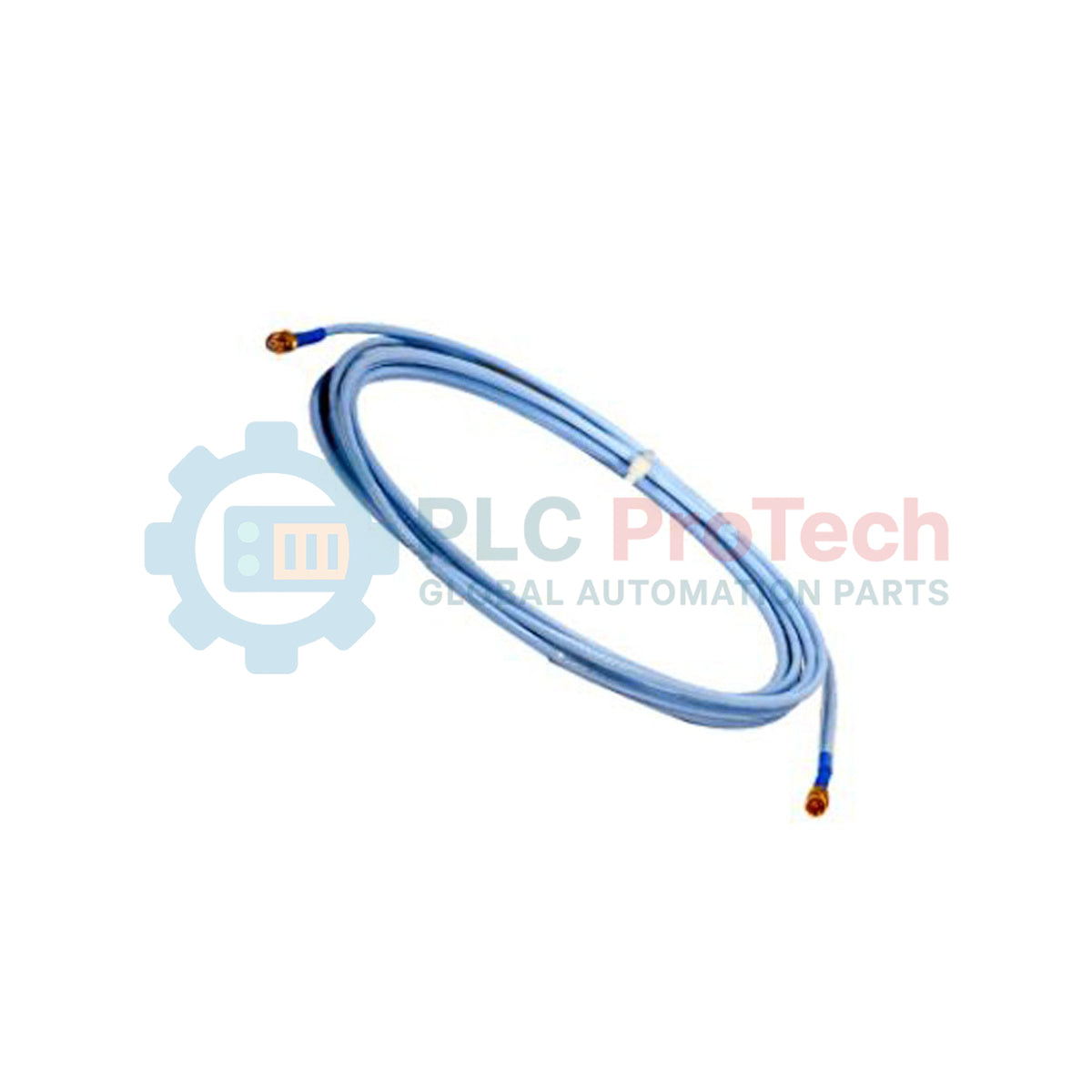
The 330130-045-13-CN is a premium 3300 XL series extension cable engineered by Bently Nevada to maintain signal integrity in the most demanding industrial environments. This cable serves as the critical link between a 3300 XL proximity probe and a Proximitor sensor, ensuring the transmission of high-frequency eddy-current data without interference. Utilizing FluidLoc technology and integrated armor, the 330130-045-13-CN is purpose-built for applications in steam turbines, cooling towers, and centrifugal pumps where exposure to moisture, oil, or physical abrasion is a constant risk. By providing a stable electrical path, it ensures the accuracy of vibration and position monitoring, allowing for precise predictive maintenance and the prevention of unplanned machinery outages.
Suffix Breakdown
The model number 330130-045-13-CN signifies a high-durability configuration designed for hazardous and wet locations:
-
330130: 3300 XL Extension Cable series (Standard 8 mm and 5 mm compatibility).
-
045: Cable Length Option - 4.5 meters (14.8 feet).
-
13: Connector Protector and Cable Option - Features FluidLoc cable construction to prevent moisture wicking and stainless steel armor for mechanical protection, including pre-installed connector protectors.
-
CN: Agency Approval Option - Country-specific approvals for the China market, certifying the cable for use in regulated hazardous industrial zones.
Technical Specifications
| Feature |
Details |
| Model |
330130-045-13-CN |
| Brand |
Bently Nevada |
| Origin |
Made in U.S.A |
| Cable Type |
75 Ohm coaxial with FluidLoc technology |
| Mechanical Protection |
Stainless steel armor |
| Connector Type |
Gold-plated miniature coaxial with ClickLoc |
| Total Length |
4.5 meters |
| Operating Temp |
-51 to +177 Celsius |
| Weight |
0.9 kg (approx. cable only) |
| Shipping Weight |
1.5 kg |
Technical FAQs
What makes the FluidLoc cable (Option 13) different from standard armored cables?
FluidLoc technology is specifically designed to prevent "wicking." In standard cables, if the jacket is cut, fluids like oil or water can travel through the interior of the cable and reach the Proximitor sensor or probe. FluidLoc prevents this internal migration, protecting the sensitive electronic junctions.
Is this extension cable compatible with 5 mm 3300 XL probes?
Yes, the 330130 series extension cables are the standard connection for both 3300 XL 8 mm and 5 mm proximity transducer systems. Ensure your total system length (probe + extension cable) matches the Proximitor sensor's calibration (typically 5.0 or 9.0 meters).
Does the armor provide electrical shielding?
The primary purpose of the stainless steel armor is mechanical protection against crushing or cutting. While it provides some additional electromagnetic shielding, the internal coaxial cable is already highly shielded. The armor should be grounded only at the Proximitor end to avoid ground loops.
Engineering & Installation Guide
-
Connector Protector Usage: The 13 option includes connector protectors. These are essential for preventing the coaxial connectors from loosening due to machine vibration and for keeping the connection free of environmental contaminants. Ensure they are threaded tightly over the connection point between the probe lead and the extension cable.
-
Total System Length Matching: This 4.5-meter cable is typically paired with a 0.5-meter probe lead to create a 5.0-meter system. If your Proximitor sensor is calibrated for a 9.0-meter system, using this cable without additional length will result in significant measurement errors.
-
Bend Radius Constraints: Even with stainless steel armor, the cable must not be bent tighter than a 25.4 mm (1.0 inch) radius. Over-bending can alter the cable's capacitance and impedance, leading to signal distortion and incorrect vibration readings.
-
Armor Integrity: Inspect the armor for any fraying or sharp breaks during installation. If the armor is compromised, it can cut into the FEP jacket of the internal cable, potentially grounding the signal and triggering a "Not OK" status on the monitoring system.