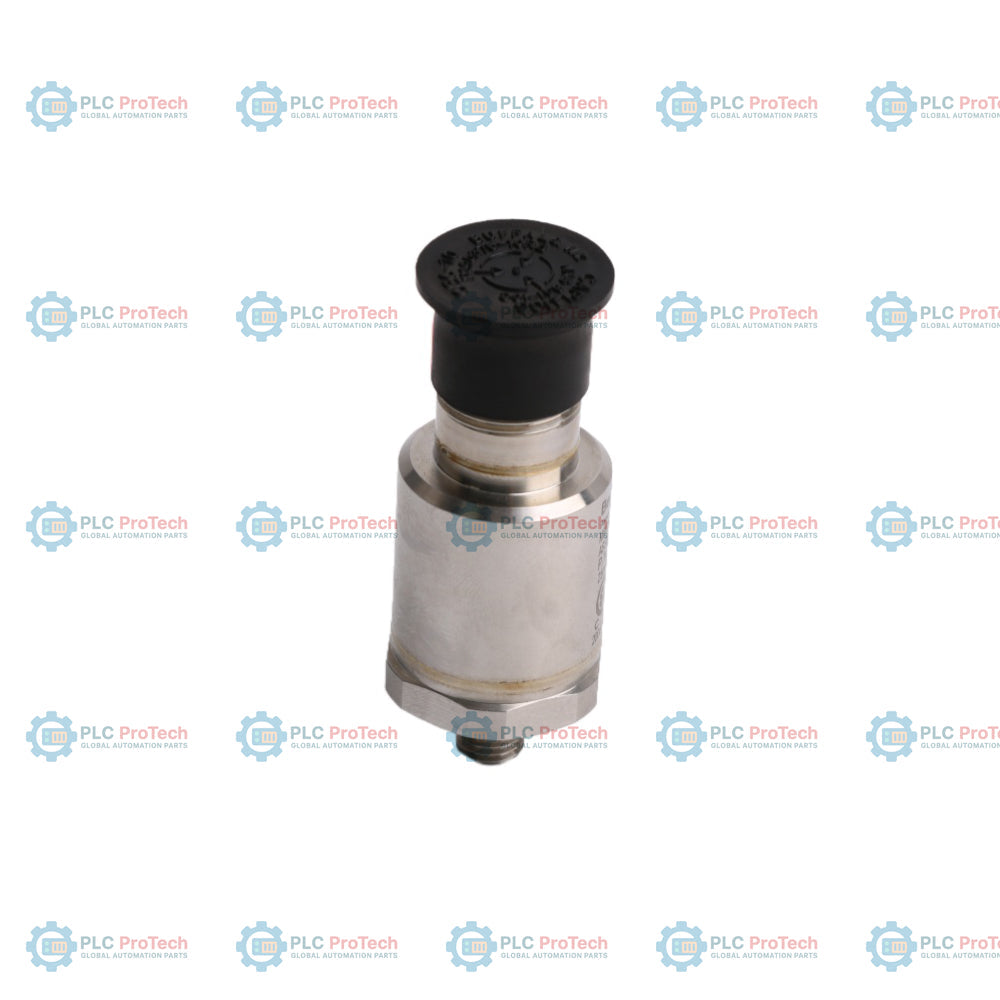
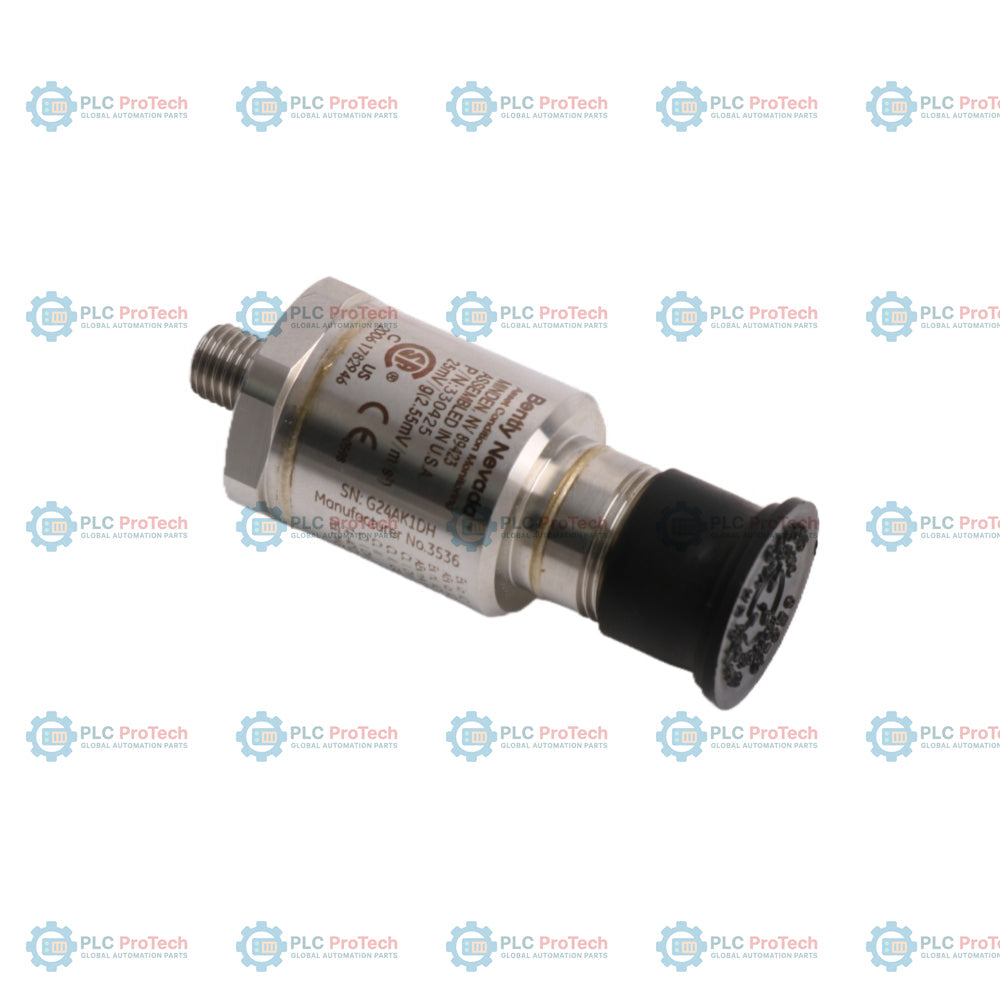
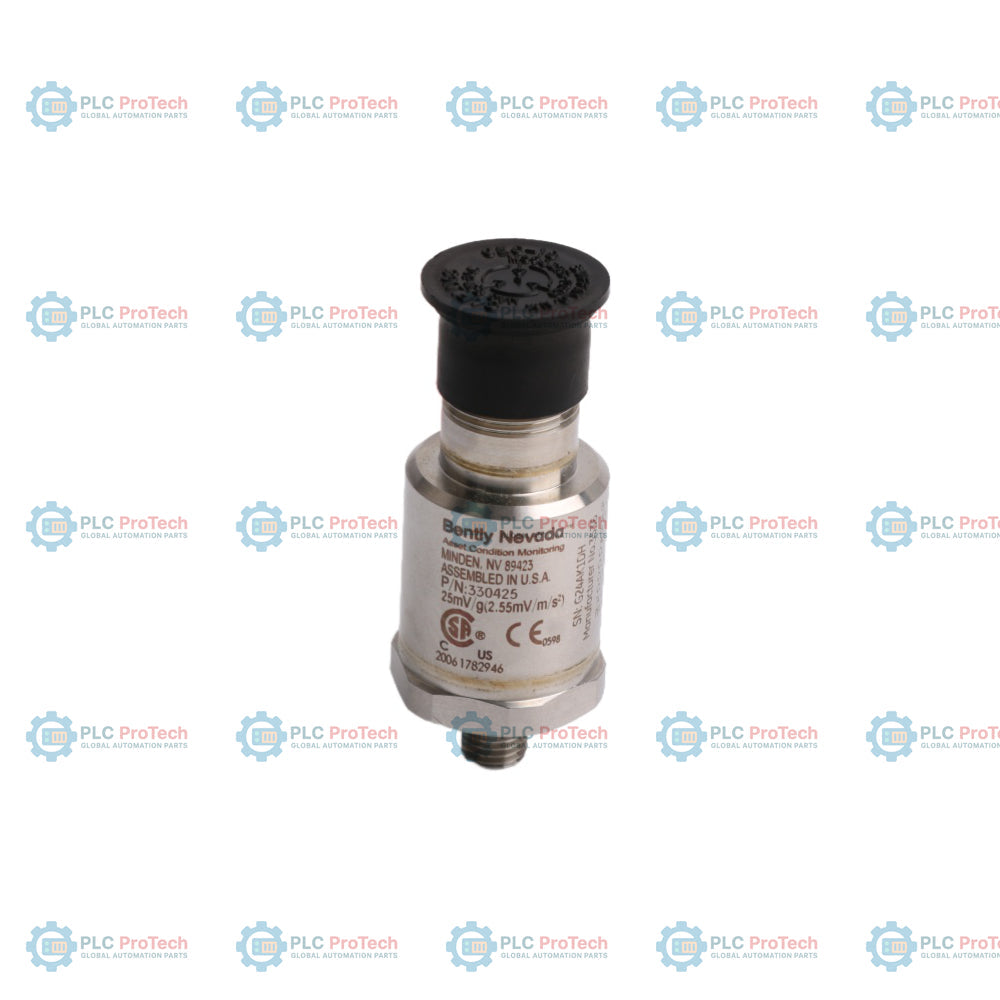
Product Overview
The 330425-02-CN is a high-performance piezoelectric accelerometer from the Bently Nevada 330400 series. Unlike proximity probes that measure displacement, this transducer measures acceleration, making it ideal for monitoring high-frequency vibration associated with gear teeth mesh, rolling element bearing defects, and aerodynamic/hydrodynamic phenomena.
Designed for critical machinery protection, the 330425 provides a wide frequency response and a rugged construction capable of withstanding harsh industrial environments. The "CN" version is specifically certified to meet regional hazardous area standards for the Chinese market.
Technical Configuration
The part number breakdown identifies the mounting and certification specifics for this transducer:
-
Model 330425: A standard industrial accelerometer providing a voltage output proportional to acceleration.
-
Mounting Thread (02): Features an M8 x 1 integral stud. This metric mounting interface ensures a rigid, high-stiffness connection to the machine casing, which is essential for accurate high-frequency data acquisition.
-
Agency Approval (CN): Complies with country-specific regulations for China (such as NEPSI), allowing for installation in potentially explosive atmospheres.
-
Piezoelectric Design: Utilizes internal ceramic crystals that generate an electrical charge when subjected to vibration, which is then converted to a low-impedance voltage signal.
Technical Specifications
| Feature |
Details |
| Model |
330425-02-CN |
| Manufacturer |
Bently Nevada (Baker Hughes) |
| Sensitivity |
2.5 mV/m/s² (25 mV/g) ±5% |
| Frequency Response |
10 Hz to 15 kHz (±3 dB) |
| Amplitude Linearity |
±1% up to 735 m/s² (75 g) peak |
| Resonant Frequency |
>30 kHz (mounted) |
| Weight |
0.1 kg (Transducer only) |
| Mounting Torque |
4.5 N·m (40 in·lb) maximum |
| Shipping Weight |
1.0 kg |
Technical FAQs
When should I use an accelerometer instead of a proximity probe?
Proximity probes are best for "soft-bearing" machines where the shaft moves significantly within the bearing (measuring relative displacement). Accelerometers are preferred for "hard-bearing" machines or high-frequency applications (above 1 kHz) where the vibration energy is transmitted through the bearing housing to the machine casing.
Why is mounting torque so important for this M8 stud?
High-frequency vibration monitoring relies on a perfect mechanical bond. If the M8 stud is under-torqued, the sensor may "bounce" or resonate at lower frequencies, creating false data. Over-torquing can damage the internal piezoelectric crystals or strip the metric threads.
Is this sensor compatible with 3500/42M monitors?
Yes. The 330425 is standardly used with the Bently Nevada 3500/42M Proximitor/Seismic Monitor or the 1900/65A standalone monitor. Ensure the monitor configuration is set to "Accelerometer" with the correct 25 mV/g sensitivity.
Engineering & Installation Guide
-
Surface Preparation: The mounting surface must be flat, smooth, and clean. Even minor imperfections or paint layers between the M8 stud and the machine casing can act as a dampener, filtering out the high-frequency signals you are trying to measure.
-
Cabling and Connectors: Accelerometers are sensitive to cable noise. Always use the recommended Bently Nevada shielded cables (like the 330400 series cables) and ensure the top-exit connector is tight and moisture-sealed using a silicone boot or heat-shrink if exposed to fluids.
-
Orientation: Accelerometers are directional. Ensure the axis of the sensor is aligned with the direction of the vibration you wish to measure (typically radial or axial relative to the shaft).
-
Signal Integration: If your monitoring system requires "Velocity" data but you are using this 330425 "Acceleration" sensor, the monitor must perform a mathematical integration (V=fadt). Ensure this is correctly configured in the rack software to avoid incorrect unit displays.