Product Overview
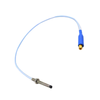
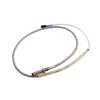
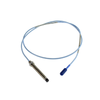
The 330710-00-05-50-02-CN is a high-performance displacement sensor engineered for critical machinery protection in heavy industrial applications. As a key component of the 3300 XL 11 mm series, this probe is specifically designed for long-range non-contacting vibration and position monitoring where a standard 8 mm probe lacks the necessary linear range. It is widely deployed in large steam turbines, high-capacity compressors, and hydroelectric generators within the power generation and petrochemical industries. By providing high-fidelity shaft data, the 330710-00-05-50-02-CN allows for early detection of mechanical instability, significantly reducing the risk of catastrophic asset failure and minimizing unplanned downtime in mission-critical operations.
Suffix Breakdown
The model number 330710-00-05-50-02-CN follows a standardized coding system to define its mechanical and regulatory profile:
-
330710: 3300 XL 11 mm Probe with M16 x 1.5 metric thread and integrated stainless steel armor.
-
-00 (Unthreaded Length): Indicates a fully threaded probe body with 0 mm of unthreaded length.
-
-05 (Overall Case Length): Specifies a short-profile case length of 50 mm, ideal for compact mounting brackets.
-
-50 (Total Length): 5.0 meters (16.4 feet) total electrical length, matched for standard system calibrations.
-
-02 (Connector/Cable): Features a miniature coaxial ClickLoc connector and standard cable protected by ruggedized armor.
-
-CN (China Certification): Mandatory China-specific approvals. The product is fully certified by NEPSI and carries the CCC (China Compulsory Certificate) for explosion-proof safety, adhering to GB 3836 standards for hazardous area use.
Technical Specifications
| Attribute |
Specification Details |
| Model |
330710-00-05-50-02-CN |
| Brand |
Bently Nevada (Baker Hughes) |
| Origin |
U.S.A. |
| Probe Tip Diameter |
11 mm |
| Thread Type |
M16 x 1.5 Metric |
| Case Length |
50 mm |
| Total System Length |
5.0 meters |
| Linear Range |
4.0 mm (160 mils) |
| Operating Temp |
-35 to +177 deg C |
| Safety Certification |
CCC / NEPSI (GB 3836 compliant) |
| Shipping Weight |
2.0 kg |
Technical FAQs
Why use an 11 mm probe instead of a standard 8 mm probe?
The 11 mm probe offers a linear range of 4.0 mm (160 mils), which is double that of the 8 mm version. This makes the 330710-00-05-50-02-CN essential for large machines with significant axial float or thermal expansion where a broader measuring range is required to maintain signal integrity.
What is the importance of the -CN suffix for my facility?
The -CN suffix is mandatory for installations within the People's Republic of China. It ensures the probe is legally compliant with NEPSI and CCC regulations, certifying that the device meets GB 3836 standards for safe operation in explosive or hazardous atmospheres.
Does the ClickLoc connector require special maintenance?
The ClickLoc connector is designed to be vibration-resistant. However, in oily or humid environments, we recommend using a connector protector or heat-shrink tubing to prevent signal contamination. Always ensure the gold-plated contacts are clean and dry before mating.
Engineering & Installation Guide
Gap Voltage Calibration for 11 mm Systems
For the 3300 XL 11 mm system, the standard scale factor is 3.94 V/mm (100 mV/mil). To achieve the best linearity, the probe should be gapped to the midpoint of its range. Connect a digital multimeter to the Proximitor Sensor and adjust the probe position until the output reads -10.0 VDC. This ensures the sensor can track both positive and negative movement without clipping the signal.
Mounting and Thread Integrity
When installing the M16 x 1.5 threaded body, ensure the mounting bracket is rigid to avoid resonance. Given the 11 mm tip diameter, the target area on the shaft must be at least 30.5 mm (1.2 inches) in diameter to ensure a proper magnetic field and avoid side-wall interference. Use a torque wrench to secure the locknut, being careful not to exceed the mechanical limits of the metric threads.
Shielding and Grounding
To prevent electromagnetic interference (EMI) from affecting vibration readings, the armored cable should be properly routed through dedicated conduit. The system should only be grounded at the Proximitor end. The armor provides physical protection but should not be used as a grounding path to avoid ground loops that could introduce noise into the TSI system.