


Commissioning Quantum Inputs with the 140XSM00200 Simulator
A controlled commissioning method for using the 140XSM00200 simulator to verify Modicon Quantum input mapping and interlocks before reconnecting field wiring.
Manufacturer: Delta Electronics
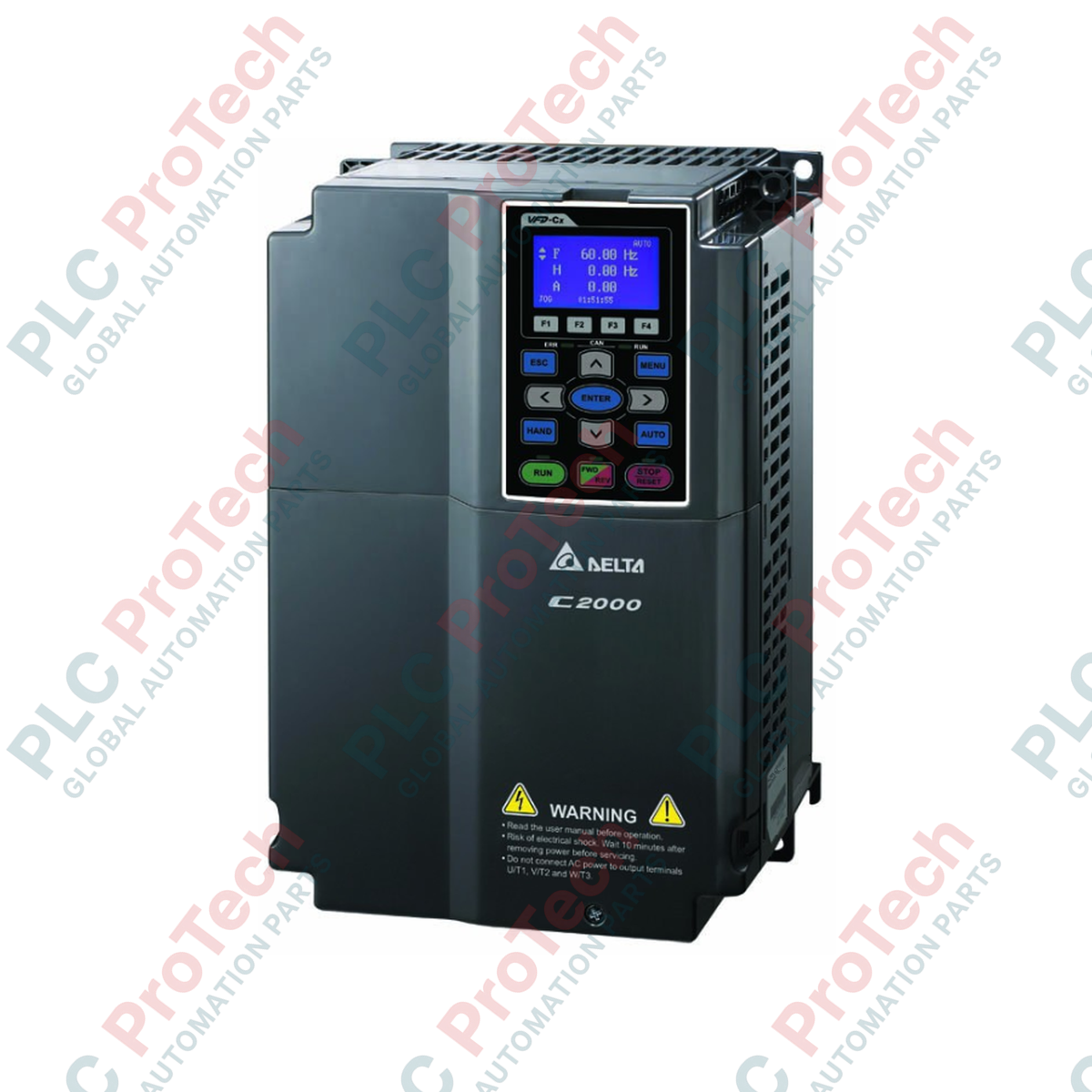
Product No.: VFD370C43S
Country of origin:United States
Product Type: Delta Products AC Drives, C2000 Series
Payment: T/T, Western Union
Weight: 500g
Dimensions: 26.5cm x 29cm x 51cm
Shipping port: Xiamen
Warranty: 12 months
The VFD370C43S (VFD370C43S) is a heavy-duty AC motor drive from the Delta C2000 series, specifically engineered to provide 37 kW (50 HP) of power in normal duty applications. This high-capacity drive is a primary solution for large-scale industrial infrastructure, including heavy-duty blowers, extruders, high-load conveyor systems, and industrial processing pumps. By leveraging Delta's high-performance field-oriented control (FOC) architecture, the VFD370C43S ensures precise speed regulation and high starting torque, critical for minimizing mechanical stress and maximizing operational uptime in continuous-duty manufacturing environments.
The VFD370C43S is built to handle rigorous industrial demands with dual-rating flexibility. In Normal Duty, it supports up to 37 kW (50 HP) with a 73 A output, while its Heavy Duty mode allows for 30 kW (40 HP) with a 69 A output, ideal for constant-torque applications. The drive offers a frequency range of up to 599.00 Hz, with adjustable carrier frequencies (2–10 kHz) to optimize the balance between motor acoustic noise and thermal efficiency. Its sophisticated design includes integrated thermal management, allowing for stable operation under high-load conditions.
| Feature | Specification |
|---|---|
| Model | VFD370C43S |
| Brand | Delta |
| Origin | Taiwan |
| Weight | 27.0 kg |
| Normal Duty Power | 37 kW (50 HP) |
| Heavy Duty Power | 30 kW (40 HP) |
| Output Current (Normal/Heavy) | 73 A / 69 A |
| Max Output Frequency | 599.00 Hz |
| Series | C2000 Series |
| Dimensions | 265 mm x 290 mm x 510 mm |
What defines the difference between Normal Duty and Heavy Duty for this 37 kW drive?
Normal Duty is optimized for variable torque loads like fans and centrifugal pumps, where the motor rarely operates at peak torque. Heavy Duty is for constant torque applications, such as extruders or crushers, where high starting torque and sustained current capacity are required throughout the entire speed range.
How does the adjustable carrier frequency (2–10 kHz) influence my application?
Increasing the carrier frequency results in quieter motor operation and smoother current, which is beneficial for reducing noise in sensitive environments. However, it increases heat dissipation inside the drive; therefore, in high-ambient-temperature environments, using the lower 2 kHz setting is recommended to prevent thermal throttling.
Can this drive be used in high-altitude environments without modification?
Standard ratings are generally applicable up to 1000 meters. For installations above 1000 meters, current derating is typically required due to reduced air density and lower cooling efficiency. Please consult the hardware manual for specific derating factors if your facility is at a higher elevation.

Global Express Shipping
Returns & Warranty


Global Express Shipping
Returns & Warranty
Orders are processed and delivered Monday-Friday (excluding public holidays).
For full eligibility, restocking fees, and international return details, please view our official Refund & Return Policy .
| Color pattern |
Greyish White
|
| Country of origin |
United States
|

A controlled commissioning method for using the 140XSM00200 simulator to verify Modicon Quantum input mapping and interlocks before reconnecting field wiring.

A commissioning checklist for the ProSoft PLX32-EIP-MBTCP covering subnet separation, register contracts, EtherNet/IP timing, failure tests and replacement records.

A field checklist for IC693MDL916 relay commands, terminal blocks, load current, switching rate and contact-side measurements.

A field checklist for KL1512 signal thresholds, counter direction, process data and the KL1512-to-KS1512 wiring difference.

A field checklist for EPP2008-0001 current limits, supply voltage, channel LEDs, connector coding and load-related output faults.

Before moving a TwinCAT 3 license with a Beckhoff C9900-L100, verify the TwinCAT build, XML device description, exact order code and cabinet limits.