


Engineering Logix Produced and Consumed Tags
A field-ready guide to Logix produced and consumed tags, covering data contracts, RPI selection, connection status, stale-data handling, commissioning and controller-to-controller troubleshooting.
Manufacturer: Honeywell
Product No.: MC-TAMT04 51305890-175
Country of origin:United States
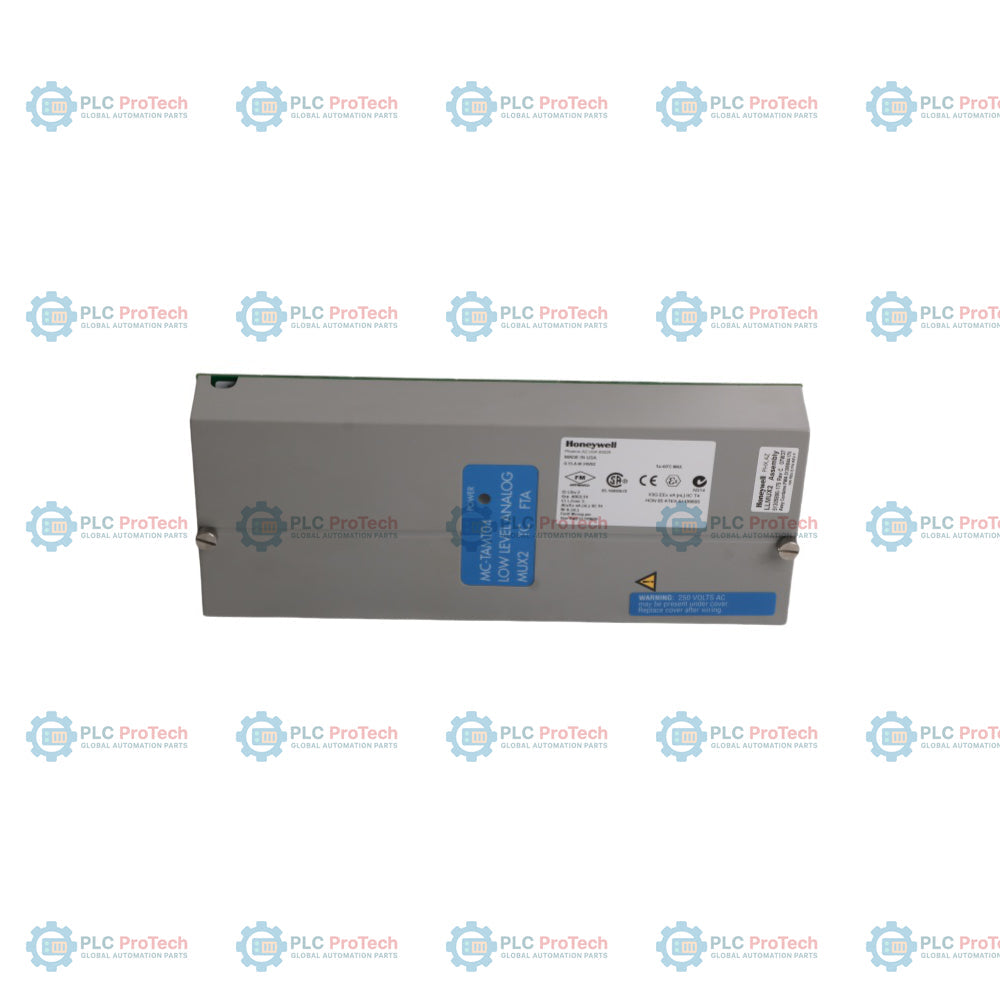
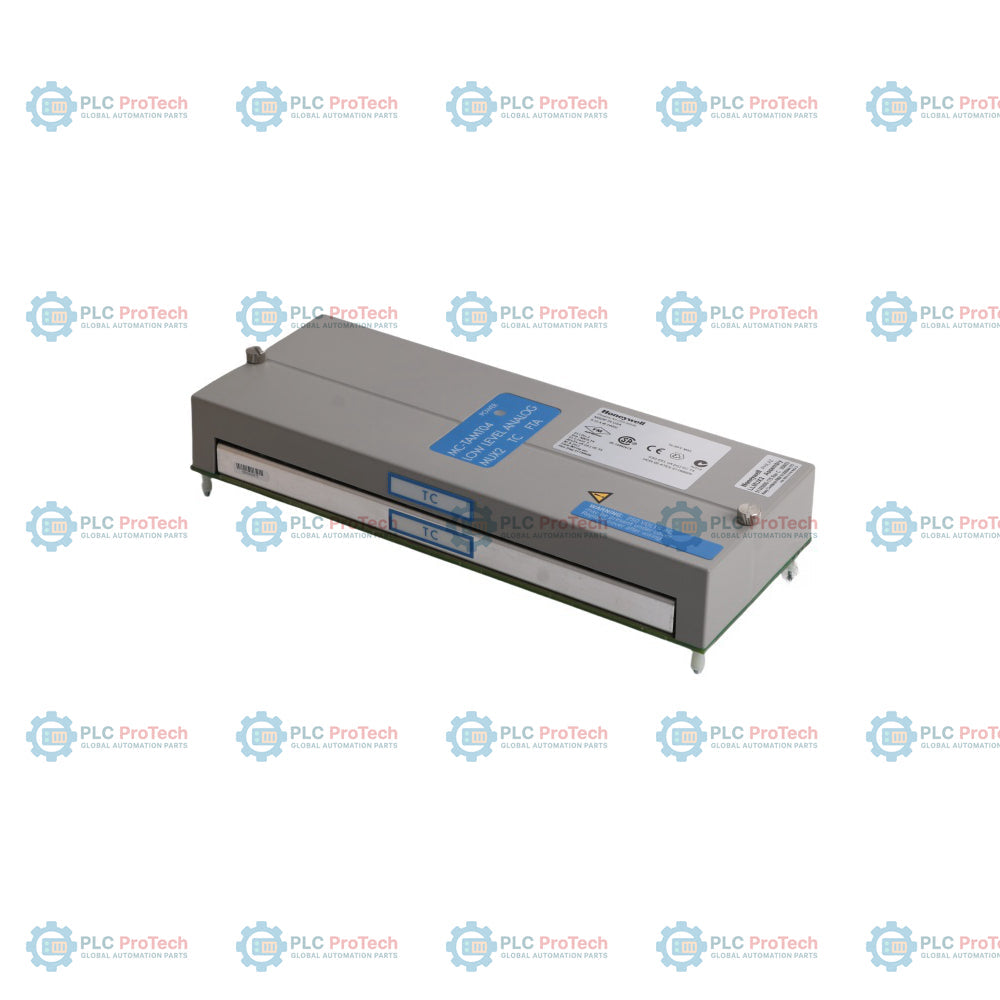
Product Type: Thermocouple Field Termination Assembly
Barcode: 8537101190
Payment: T/T, Western Union
Weight: 850g
Dimensions: 360 mm x 180 mm x 100 mm
Shipping port: Xiamen
Warranty: 12 months
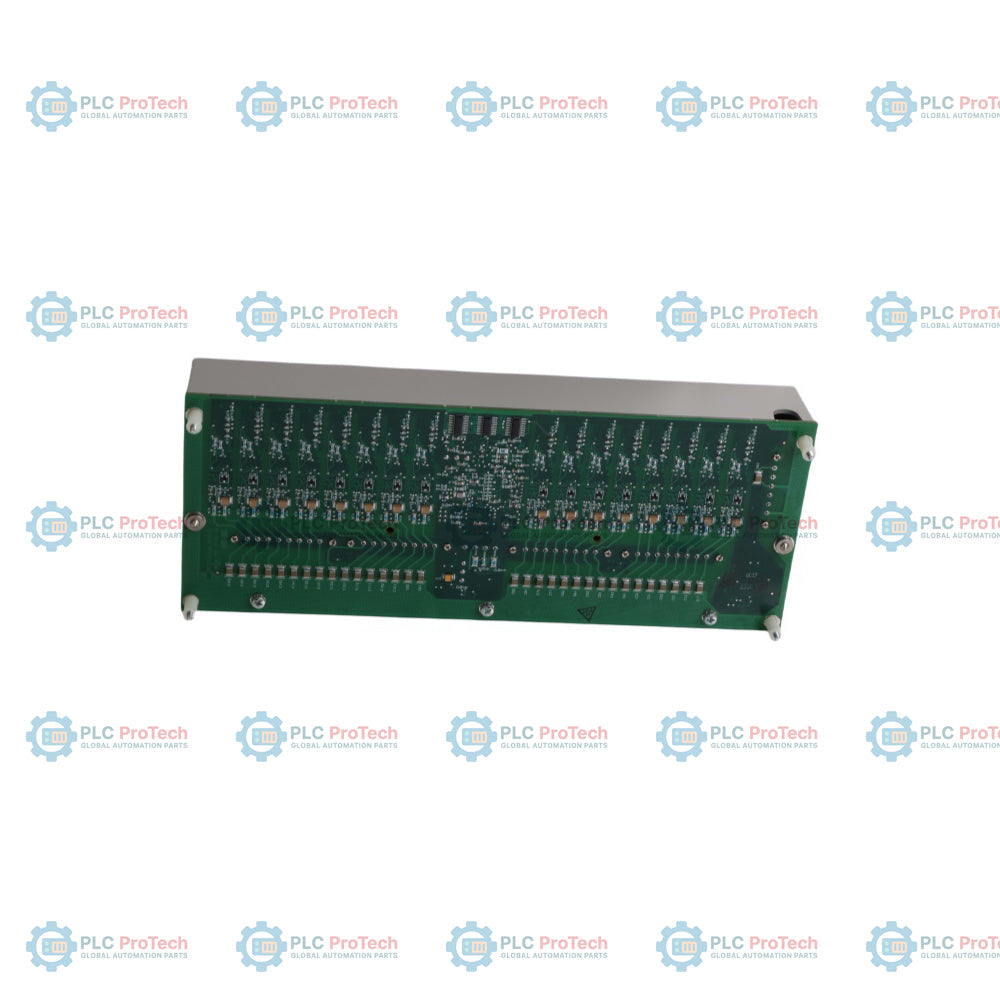
The Honeywell MC-TAMT04 (Part Number 51305890-175) is a high-reliability, 16-channel LLMUX2 Thermocouple Field Termination Assembly (FTA) engineered for integration with Honeywell Experion PKS, xPM, and Experion PMIO architectures. Utilizing advanced solid-state technology, this module replaces legacy mercury-wetted relays, eliminating environmental hazards while drastically improving loop resistance tolerances to allow longer field thermocouple wiring runs. The assembly is equipped with an integrated local Cold Junction Reference (CJR), high-performance compression terminals, a single Input/Output Processor (IOP) interface, and a robust conformal coating for continuous duty in harsh, corrosive industrial environments.
| Parameter | Specification |
|---|---|
| Manufacturer | Honeywell |
| Model Number | MC-TAMT04 |
| Base FTA Part Number | 51305890-175 |
| Input Channels | 16 channels (fully-isolated) |
| Input Scan Rate | 1 Second fixed by IOLP |
| Channel Bandwidth | 0 to 4.7 Hz (-3 dB) |
| Nominal Input Range | -20 to +100 millivolts |
| Maximum Input (Non-Damaging) | -10 to +10 volts continuous |
| Gain Error | 0.050% full scale maximum (-20 to +100 millivolt range) |
| Resolution of Reading | 2 microvolt per bit |
| Temperature Stability | +/-20 ppm per degC maximum |
| Long Term Drift | 500 ppm |
| Input Impedance | 1 megohm at dc |
| Common Mode Voltage (CMV) | +/-250 Vdc or Vac rms (channel-to-channel and channel-to-PM common) |
| CMRR (50 or 60 Hz) | 120 dB minimum (with 1000 ohms source impedance maximum) |
| NMRR (50 or 60 Hz) | 60 dB minimum |
| Supported Thermocouple Types | Type J (-200 to +1200 Celsius), Type K (-100 to +1370 Celsius), Type E (-200 to +1000 Celsius), Type T (-230 to +400 Celsius), Type B (+100 to +1820 Celsius), Type S (0 to +1700 Celsius), Type R (0 to +1700 Celsius), Japan Type R' (0 to +1770 Celsius) |
| Cold Junction Compensation Range | -20 to +60 degC |
| CJR Compensation Accuracy | +/-0.5 degC typical |
| Surge Protection | IEEE SWC 472-1974 certified at sensor terminals |
| Power Dissipation | 2.25 watts maximum |
| Thermal Dissipation | 7.68 Btu per hour maximum |
| Supply Voltage Range | 15 to 30 Vdc (24 Vdc nominal) |
| Supply Current | 160 milliamps at 15 Vdc |
| Operating Environmental Limits | 0 to 50 degC; 10 to 90% non-condensing relative humidity (derated to max 40 degC) |
| Storage Environmental Limits | -40 to 80 degC |
| Agency Certifications | CSA Certified Class 1, Division 2, Groups A, B, C, D; UL listed; CE Compliant |
| Dimensions (H x W x D) | 307.34 mm L x 124.46 mm W x 63.5 mm D (12.1 x 4.9 x 2.5 inches) |
| Country of Origin | United States |
| Shipping Weight (Calculated) | 1.25 kg (2.75 lbs) |
| Package Dimensions (Calculated) | 360 mm x 180 mm x 100 mm |
The MC-TAMT04 serves as a direct form, fit, and functional replacement for legacy, obsolete LLMUX TC FTA variants. It seamlessly replaces non-CE compliant boards MU-TAMT02 (51401491-100) and MC-TAMT02 (51401491-150), alongside older CE-compliant models MU-TAMT03 (51309223-125) and MC-TAMT03 (51309223-175). Notably, the base board assembly (51305890-175) is identical to the one used in the remote cold junction reference model, MC-TAMT14.
When evaluating field thermocouple loop resistances, the solid-state architecture of the LLMUX2 provides an expanded loop driving capability compared to old mercury systems, enabling longer field cable boundaries without signaling loss. However, engineers must carefully manage enclosure thermal metrics. The assembly dissipates up to 2.25 watts continuously, yielding a heat load of 7.68 Btu per hour. Ensure proper panel venting if multiple assemblies are grouped in dense Marshalling racks to avoid crossing the maximum 40 degC operational limit under high-humidity environments.
The unit utilizes a 6-pin compression plug for connection at the J6 port located at the top of the board assembly. If upgrading an older non-CE legacy cabinet setup that features a 4-pin plug, the internal wires must be extracted and reworked into the 6-pin connector provided in the MC-TAMT04 shipping container. Additionally, ensure the address jumper designated as "UNIT" is set correctly to '0' or '1' to mirror the address scheme of the existing system before connecting the 50-pin J1 cable interface to the Power Adapter.
Record the PV measurements of all active process loops from the central operations console to ensure validation benchmarks are available post-installation.
Unplug the primary 50-pin ribbon connector (J1) at the Power Adapter to fully decouple the LLMUX IOP from the local link system.
Loosen the retention screws on 8-pin terminal plug headers J1, J2, J3, and J4 to slide them away from the assembly without disconnecting field wiring leads.
Verify that the JMP2 jumper is set to the 'LOC' position on the replacement card to correctly engage the on-board Local Cold Junction Reference sensor circuit.
Mount the board into the standard enclosure tracking channel, secure the 4 corner retention standoffs, re-engage terminal headers, and reinstall the plastic safety cover.


Global Express Shipping
Returns & Warranty


| Product Image | Model Number / Title | Condition | Availability | Action |
|---|---|---|---|---|

|
Allen-Bradley 1769-IF8 Compact I/O Analog Input Module | Original New | In Stock | View Details |
Global Express Shipping
Returns & Warranty
Orders are processed and delivered Monday-Friday (excluding public holidays).
For full eligibility, restocking fees, and international return details, please view our official Refund & Return Policy .
| Color pattern |
Greyish White
Green
|
| Country of origin |
United States
|
| Power source |
DC Power
|

A field-ready guide to Logix produced and consumed tags, covering data contracts, RPI selection, connection status, stale-data handling, commissioning and controller-to-controller troubleshooting.

A practical AS-Interface commissioning method covering topology, power and voltage-drop checks, addressing, PLC mapping, fault tests and maintenance records for reliable actuator-sensor networks.

Learn how line reactors, harmonic filters, output reactors, dV/dt filters, and sine filters address different VFD power-quality and motor-cable problems—and how to select them safely.

Learn how light-on and dark-on photoelectric sensor modes interact with through-beam, retroreflective, and diffuse sensing, PNP/NPN wiring, PLC logic, commissioning, and fault detection.

A practical guide to H-bridge motor drives covering switching states, dead time, inductive current paths, PWM choices, protection, PCB layout, PLC interfacing, and staged commissioning tests.

Learn how Mitsubishi FX PLC STL and RET instructions structure conveyor and pneumatic sequences, with practical state design, transition logic, timeouts, diagnostics, and safe restart boundaries.