Description
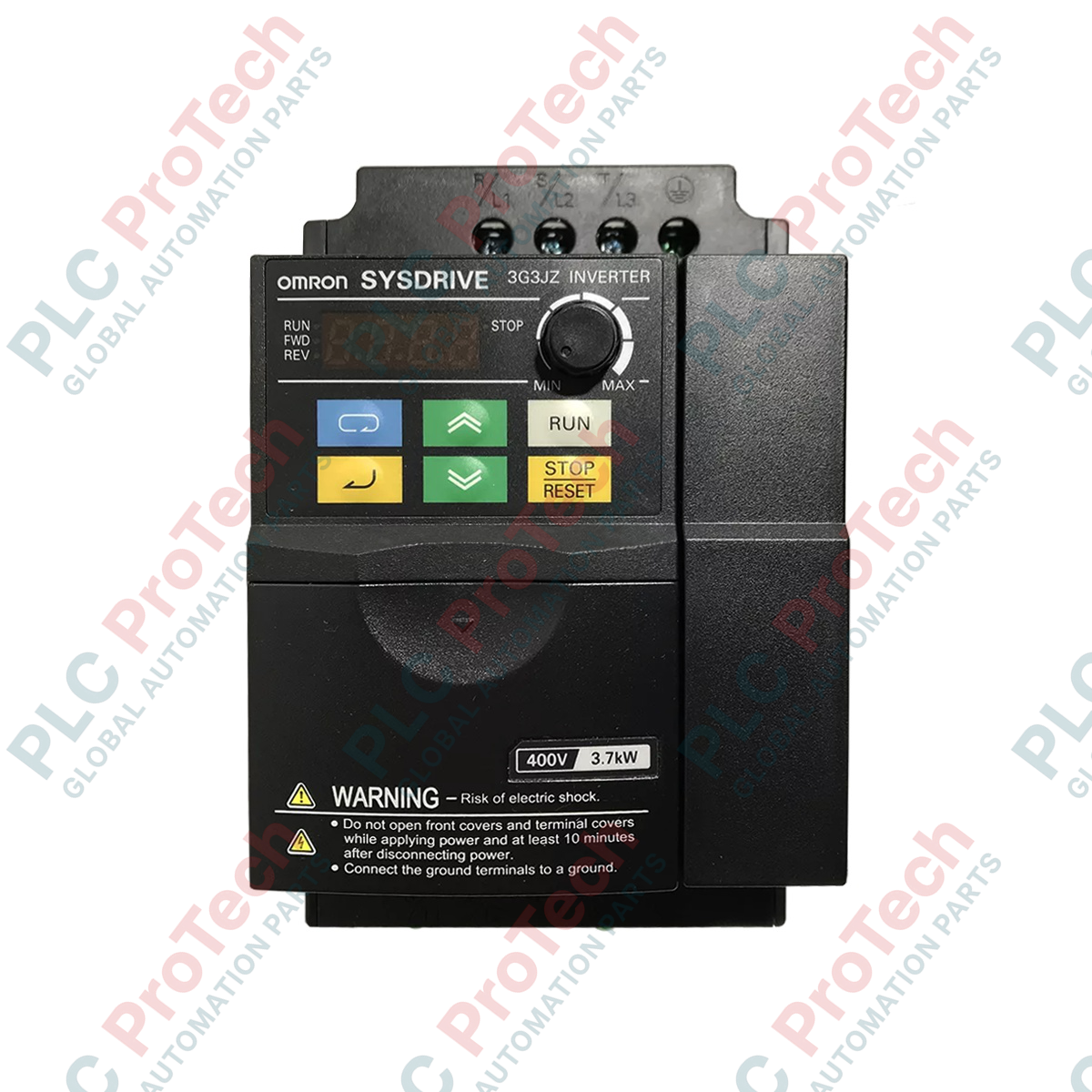
Designed to provide compact and efficient speed control for industrial machinery, the 3G3JZ-A4022 variable frequency drive is a core component of the Omron SYSDRIVE 3G3JZ series. This 3-phase AC400V inverter delivers a 2.2 kW output capacity, making it highly suitable for applications requiring precise motor speed adjustment, energy savings, and reliable torque control in industrial environments.
The unit features a panel-mounting IP20-rated enclosure (closed wall mounting) designated by the "A" classification. Designed for straightforward integration and commissioning, it simplifies installation in control cabinets while offering essential protection and standard control features for automation systems.
Features
- 3-phase AC400V input power class configuration.
- Supports three-phase induction motors up to 2.2 kW capacity.
- IP20 minimum protective enclosure designed for panel-mounting or closed wall mounting.
- User-friendly parameter setup and monitoring interfaces.
- Compact, space-saving design to optimize control cabinet layouts.
Applications
- Conveyor systems and material handling machinery.
- Pumping and fan speed control in industrial HVAC systems.
- Packaging machines and basic processing equipment.
- Small machine tool applications requiring precise speed regulation.
Technical Specifications
| Manufacturer |
Omron |
| Part Number / Model |
3G3JZ-A4022 |
| Series |
SYSDRIVE 3G3JZ Series |
| Input Voltage Class |
3-phase AC 400V class |
| Maximum Applicable Motor Capacity |
2.2 kW |
| Enclosure Type |
Panel-mounting (IP20 minimum) / Closed wall mounting |
| Estimated Shipping Weight |
3.0 kg |
Installation Guidelines
- Maintain a minimum of 100 mm of clearance above and below the inverter to ensure adequate airflow and cooling.
- Mount the unit vertically on a flat, non-flammable surface inside a secure control panel.
- Ensure the inverter is grounded correctly according to local industrial electrical standards to prevent electrical noise and hazardous voltage build-up.
- Route power cabling and low-voltage control lines through separate conduits to minimize electromagnetic interference (EMI).