


First TwinCAT PLC Project on a Beckhoff IPC
Build and verify a first TwinCAT PLC project on a Beckhoff IPC. This checklist covers target selection, EtherCAT discovery, I/O mapping, safe activation, restart tests, and commissioning records.
Manufacturer: Omron
Product No.: DRT2-OD16
Country of origin:Japan
Product Type: Output Modules
Payment: T/T, Western Union
Weight: 140g
Shipping port: Xiamen
Warranty: 12 months
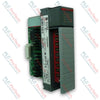
Facilitating high-performance distributed control in industrial networks, the Omron DRT2-OD16 serves as a highly reliable remote transistor output terminal for DeviceNet systems. This output block is engineered with an NPN internal common configuration, permitting seamless interfacing between modern PLC networks and low-voltage field actuators. Supporting 16 solid-state transistor output channels, the unit provides fast response times and integrated diagnostic capabilities, such as communication error logging and power supply voltage monitoring, ensuring minimum downtime in automated environments.
| Manufacturer | Omron |
| Model / Part Number | DRT2-OD16 |
| Output Type | Transistor Output (NPN) |
| Number of Outputs | 16 points |
| Rated Output Current | 0.5 A per point, 4.0 A per common |
| Residual Voltage | 1.2 V max. (0.5 A DC between each output terminal and G) |
| Ambient Operating Temperature | -10 degC to 55 degC |
| Ambient Storage Temperature | -25 degC to 65 degC |
| Ambient Operating Humidity | 25% to 85% RH (non-condensing) |
| Weight | 0.14 kg |
For reliable communication and optimal electrical isolation, mount the module securely inside an IP54-rated (or higher) protective enclosure onto standard 35mm DIN rail. Maintain adequate spacing from high-voltage cables and variable frequency drives (VFDs) to prevent electromagnetic interference. Utilize standard DeviceNet-compliant shielded cabling for network communication, ensuring the network drain wire is grounded at a single point in the system layout.

Global Express Shipping
Returns & Warranty

| Product Image | Model Number / Title | Condition | Availability | Action |
|---|---|---|---|---|

|
Allen-Bradley 1769-OW8 CompactLogix Relay Output Module | Original New | In Stock | View Details |

|
Allen-Bradley 1746-OVP16 SLC 500 Digital DC Output Module | Original New | In Stock | View Details |
|
Allen-Bradley 1746-OA16 SLC 500 Discrete AC Output Module | Original New | In Stock | View Details |
Global Express Shipping
Returns & Warranty
Orders are processed and delivered Monday-Friday (excluding public holidays).
For full eligibility, restocking fees, and international return details, please view our official Refund & Return Policy .
| Country of origin |
Japan
|

Build and verify a first TwinCAT PLC project on a Beckhoff IPC. This checklist covers target selection, EtherCAT discovery, I/O mapping, safe activation, restart tests, and commissioning records.

A practical commissioning sequence for KEPServerEX OPC UA connections: define data ownership, test tags locally, configure endpoint and certificate trust, limit access, then verify failure recovery...

Commissioning an Ethernet-connected PLC often starts with the laptop, not the controller. Learn how to record existing settings, choose a temporary address, test connectivity, and restore the plant...

Combustible dust controls require more than alarms. Learn how to map dust generation, select instrumentation, design interlocks, handle failed feedback, test safe states, and maintain the full...

Hairpin windings raise slot fill and support compact traction motors, but conductor geometry, AC losses, insulation damage, weld quality, and cooling determine whether the design meets its targets.

Use Ansible to standardize SCADA server changes without expanding OT risk. This guide covers inventories, idempotent playbooks, staged testing, credentials, logging, and practical rollback controls.