Product Overview
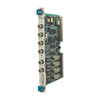
The VM600 MPC4 (200-510-071-113) serves as the central processing powerhouse for the Vibro-Meter VM600 machinery protection system. This high-performance card is engineered to monitor critical rotating assets—such as industrial turbines, centrifugal compressors, and generators—providing four intensive vibration channels and two dedicated speed channels. By performing real-time signal processing and logic evaluation, the MPC4 200-510-071-113 ensures millisecond-level response times for emergency shutdowns, effectively preventing catastrophic mechanical failure and protecting high-value capital equipment in power plants and oil refineries worldwide.
Technical Configuration (Deep Dive)
The 200-510-071-113 configuration is a versatile version of the MPC4, specifically designed for integration with the IOC4T input/output card within a VM600 rack.
-
Input Capability: It processes signals from various sensor types, including proximity probes (TSI), accelerometers, and velocity sensors.
-
On-board Logic: The card features a dedicated processor for performing FFT analysis and tracking integrated vibration levels. It includes programmable alarm limits (Alert and Danger) for every channel.
-
VME Bus Integration: It utilizes the VME bus for communication with the CPUM rack controller while maintaining autonomous protection capabilities; even if the rack controller fails, the MPC4 continues to execute its safety functions.
-
Redundancy: Supports redundant power supply inputs and can be configured in "Voting Logic" (e.g., 2-out-of-3) to eliminate false trips.
Technical Specifications
| Parameter |
Specification Details |
| Model |
MPC4 200-510-071-113 |
| Brand |
Vibro-Meter (Meggitt) |
| Origin |
Switzerland |
| Vibration Channels |
4 Channels (Dynamic) |
| Speed Channels |
2 Channels (Tachometer) |
| Power Consumption |
11 W (Typical) |
| Operating Temp |
-25 to 65 deg C |
| Weight |
0.65 kg |
| Dimensions |
6U Height (Standard VME) |
Technical FAQs
How do I handle a "Hardware Failure" LED on the MPC4 front panel?
A red LED usually indicates a self-test failure or a configuration mismatch. First, verify the firmware compatibility with the MPS (Machinery Protection System) software. If the error persists after a rack power cycle, check the backplane pins for any physical deformation.
Can the MPC4 200-510-071-113 be hot-swapped while the rack is live?
While the VM600 rack supports the insertion of cards, it is highly recommended to bypass the associated trip relays before removing or inserting the MPC4 to prevent accidental machinery shutdown caused by transient signals.
Does this card support SIL (Safety Integrity Level) applications?
Yes, the MPC4 series is designed for use in safety-related systems and is often certified for SIL 2 requirements when configured according to the official safety manual.
Engineering & Installation Guide
-
IOC4T Pairing: Ensure that the MPC4 200-510-071-113 is correctly aligned with its corresponding IOC4T (Input/Output) card in the rear of the rack. The communication between these two cards is established through the specialized P2 connector on the backplane.
-
Shielding & Grounding: For high-vibration environments, the sensor cable shields must be grounded at the IOC4T terminal block only. Avoid multiple ground points to prevent ground loops, which can introduce "ghost" vibrations into the MPC4 processing logic.
-
Configuration Security: Always engage the hardware "Security Switch" on the card after uploading the final configuration. This prevents unauthorized remote modifications to the alarm setpoints via the network.
Engineering Advantages
The MPC4 platform is distinguished by its Dual-Path Architecture, which separates the protection functions from the condition monitoring data. This ensures that the primary safety mission—tripping the machine during a surge—is never compromised by heavy data processing loads. Furthermore, the 200-510-071-113 model features high-resolution A/D converters that provide superior signal-to-noise ratios, allowing for the detection of subtle bearing wear long before traditional sensors would trigger an alert.