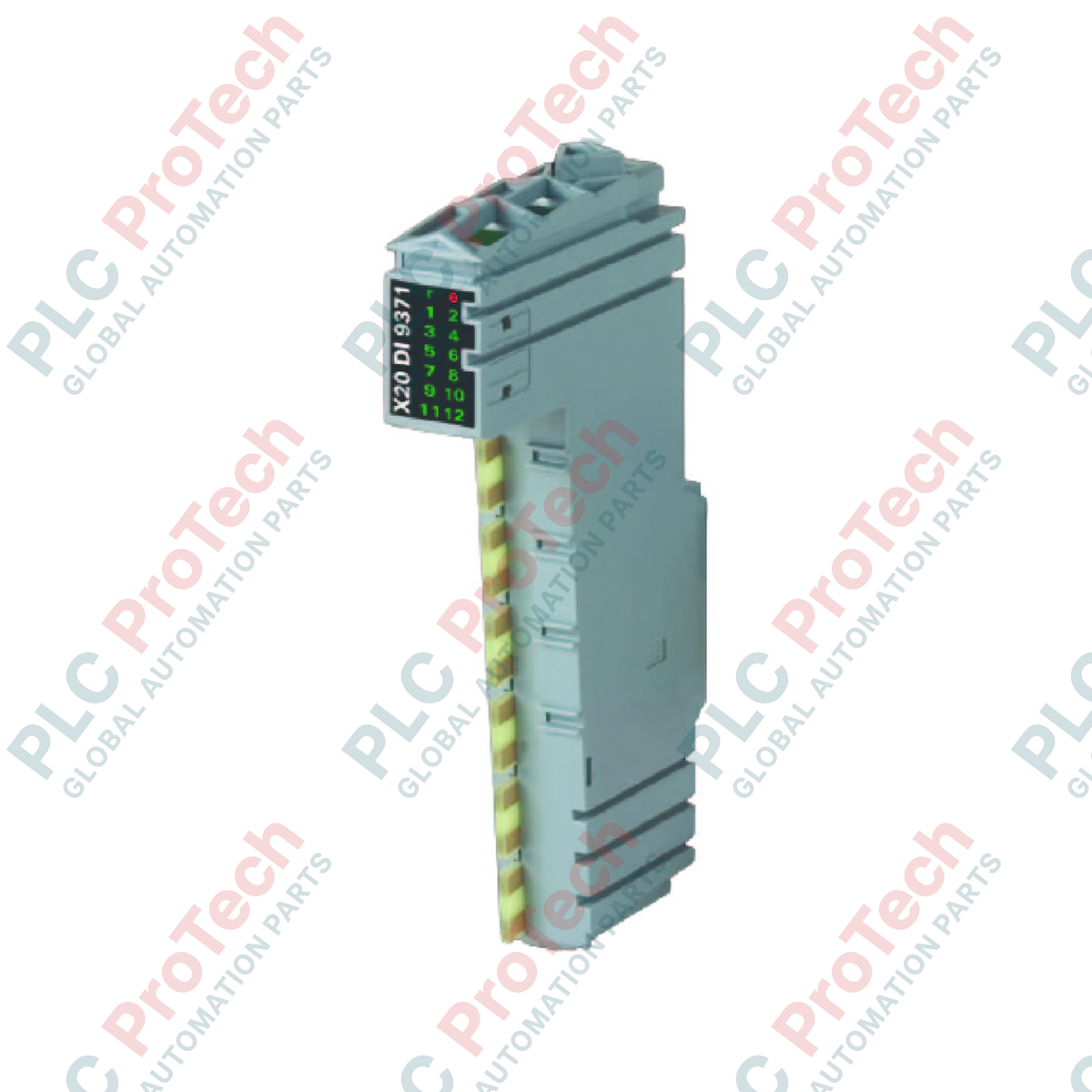
Product Overview
The X20DO9322 (X20DO9322) is a high-density digital output module designed for the B&R X20 System, featuring 12 channels of current-sourcing FET outputs. Operating at a nominal 24 VDC, each channel provides a nominal output current of 0.5 A, with a robust total module capacity of 6 A. This module is engineered for precision control in automated assembly lines, high-speed sorting systems, and CNC machining centers where reliable switching of solenoids, valves, and actuators is critical. By utilizing advanced integrated output protection and current-sourcing technology, the X20DO9322 ensures superior thermal management and electrical stability, effectively reducing system downtime caused by short circuits or overcurrent conditions in high-duty cycle applications.
Technical Configuration
The X20DO9322 utilizes a 1-wire connection architecture, maximizing cabinet space efficiency while maintaining high output density. The internal hardware is built around current-sourcing FET (Field-Effect Transistor) variants, which offer high switching speeds and low power dissipation. The module draws a minimal 0.26 W from the X20 bus and 1.15 W for internal I/O operations. Its wide switching voltage range of 24 VDC -15% / +20% allows for reliable performance even during fluctuations in the primary power supply. Designed with a total nominal current limit of 6 A, the module can drive multiple high-power actuators simultaneously. The IP20-rated housing is compliant with EN 60529 standards, ensuring protection against solid objects and facilitating easy integration into standard industrial control cabinets.
Technical Specifications
| Feature |
Specification |
| Model |
X20DO9322 |
| Brand |
B&R (Bernecker + Rainer) |
| Module Type |
Digital Output Module |
| Output Type |
Current-sourcing FET |
| Number of Outputs |
12 |
| Nominal Voltage |
24 VDC |
| Switching Voltage |
20.4 to 28.8 VDC |
| Nominal Output Current |
0.5 A per channel |
| Total Nominal Current |
6 A |
| Connection Type |
1-wire connections |
| Bus Power Consumption |
0.26 W |
| Internal I/O Power |
1.15 W |
| Protection Rating |
IP20 |
| Shipping Weight |
2.0 kg |
Technical FAQs
Does the X20DO9322 support short-circuit protection for individual channels?
Yes, the integrated output protection monitors each FET output. In the event of an overcurrent or short circuit on a specific channel, the module limits the current or shuts down the affected channel to protect the internal circuitry while allowing other channels to continue operating.
What is the benefit of the current-sourcing FET variant compared to relay outputs?
FET outputs provide significantly faster switching frequencies and an almost infinite mechanical lifespan compared to relays. This makes the X20DO9322 ideal for pulse-width modulation (PWM) tasks or applications requiring rapid, repetitive cycling of actuators.
How should the 6 A total nominal current be distributed across the 12 channels?
While each channel can handle up to 0.5 A, the sum of all simultaneous active outputs must not exceed 6 A. If your application requires all 12 channels to be active at 0.5 A, ensure the power supply and thermal conditions are optimized to handle the maximum load continuously.
Engineering & Installation Guide
-
Actuator Power Dissipation: When calculating the thermal load of the control cabinet, account for the additional 0.63 W of power dissipation caused by resistive actuators. In high-density racks, this heat accumulation can affect the lifespan of adjacent modules if adequate ventilation is not provided.
-
1-Wire Connection Grounding: Since this module uses a 1-wire connection system, all actuators must share a common ground (0 V) reference with the X20 I/O supply. Ensure that the 0 V potential is properly bridged across the terminal blocks to prevent erratic switching or ground offset errors.
-
Inductive Load Protection: Although the FET outputs are robust, switching highly inductive loads (large solenoids or magnetic clutches) can cause voltage spikes. It is a best practice to install flyback diodes directly at the actuator to suppress transient voltages and protect the module’s output stage from long-term degradation.