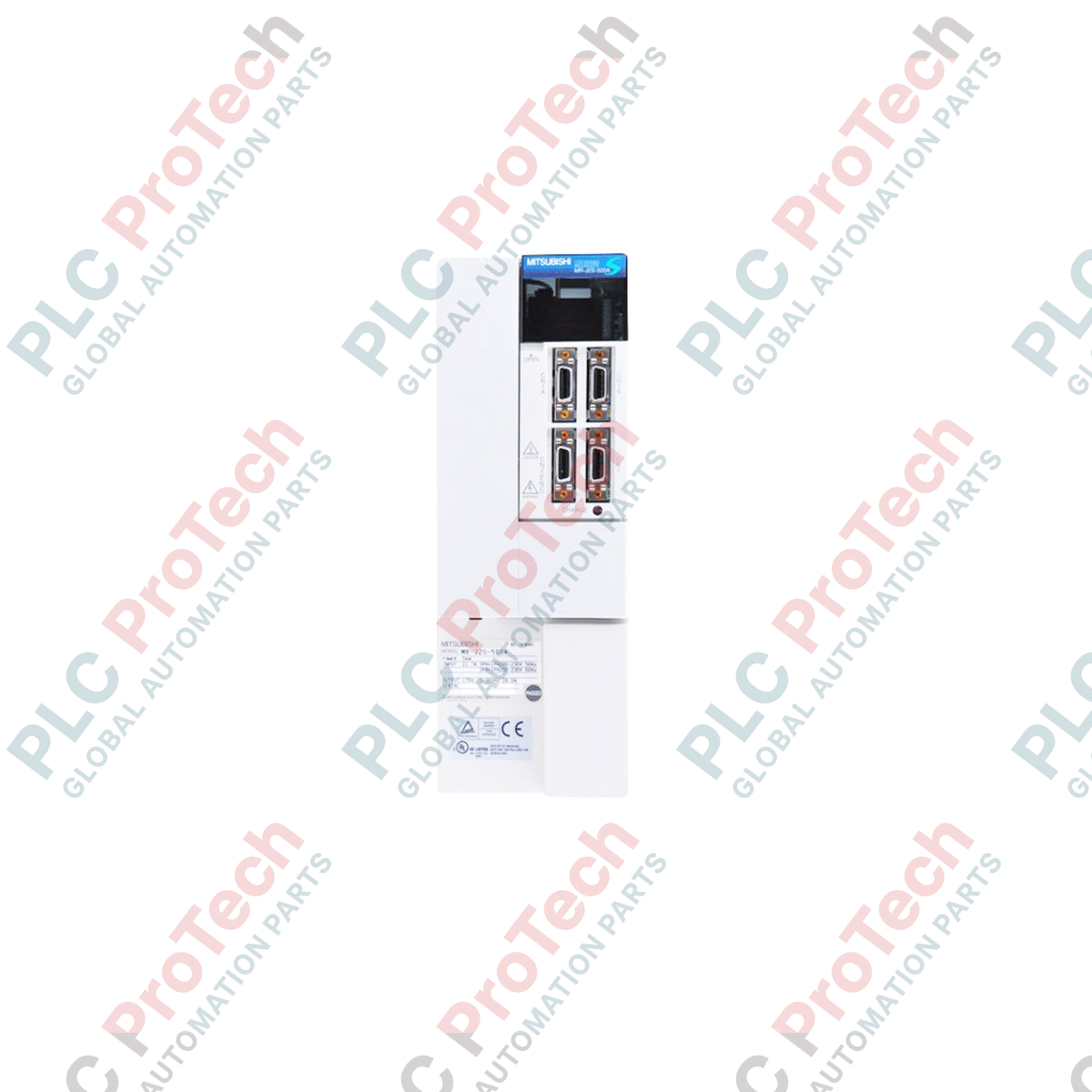
Beschreibung
Zur Optimierung der Bewegungspräzision in industriellen Hochdrehmomentanwendungen dient der Mitsubishi Electric MR-J2S-500A als leistungsstarker digitaler 3-Phasen-Servoantrieb innerhalb der älteren MELSERVO J2-Super-Serie. Dieser für hochdynamische Anwendungen entwickelte Verstärker mit einer Nennausgangsleistung von 5,0 kW verwendet eine sinusförmige PWM-Steuerung mit einem Echtzeit-Stromregelsystem zur Regelung von Position, Drehzahl und Drehmoment. Durch die automatische Motorerkennung und eine Schnittstelle zur Absolutpositionserfassung reduziert der MR-J2S-500A den Inbetriebnahmeaufwand und gewährleistet zugleich eine außergewöhnliche Synchronisationsgenauigkeit in mehrachsigen Maschinenkonfigurationen.
Merkmale
-
Adaptives automatisches Tuning: Die Echtzeitschätzung des Lastträgheitsverhältnisses ermöglicht eine automatische Anpassung der Regelkreisverstärkungen und kompensiert mechanische Resonanzen dynamisch.
-
Schnittstelle für Absolutpositionsgeber: Unterstützt serielle Rückmeldungen mit hoher Auflösung und macht nach dem Ausschalten eine Rückkehr zu Nullpunkten überflüssig.
-
Integrierte dynamische Bremse: Bietet eine integrierte Notbremsfunktion, indem bei Systemfehlern oder Ausfall der Hauptstromversorgung die Motorwicklungen kurzgeschlossen werden.
-
Flexible Steuermodi: Nahtloser Wechsel zwischen Positionssteuerung (Impulsfolge), Drehzahlsteuerung (+/-10 V analog) und Drehmomentsteuerung (+/-8 V analog).
-
Zwangsluftkühlung: Interne Kühllüfter halten das thermische Gleichgewicht während anspruchsvoller Betriebszyklen in geschlossenen Schaltschränken aufrecht.
Anwendungen
- Mehrkoordinaten-CNC-Fräs-, Dreh- und Schleifarbeitsplätze.
- Robuste Rundtakttische und rotierende Verpackungsanlagen.
- Portalpositioniersysteme, Pick-and-Place-Roboter und automatisierte Materialtransportlifte.
- Hochgeschwindigkeits-Industriesysteme für Bahnführung, Wicklung und Längsschneiden.
Tabelle der technischen Daten
| Spezifikationsparameter |
Wert / Nennwert |
| Hersteller |
Mitsubishi Electric |
| Modellbezeichnung |
MR-J2S-500A |
| Produktserie |
MELSERVO J2-Super-Serie |
| Nennausgangsleistung |
5,0 kW |
| Eingangsspannung / Phasen |
3-phasig, 200 bis 230 V AC, 50/60 Hz |
| Zulässige Spannungsschwankung |
3-phasig, 170 bis 253 V AC |
| Zulässige Frequenzschwankung |
Innerhalb von +/- 5 % |
| Steuersystem |
Sinusförmige PWM-Steuerung, Stromregelsystem |
| Option für dynamische Bremse |
Integriert |
| Kühlmethode |
Zwangsluftkühlung (interner Lüfter) |
| Betriebstemperaturbereich |
0 bis 55 °C (frostfrei) |
| Lagertemperaturbereich |
-20 bis 65 °C (frostfrei) |
| Zulässige Luftfeuchtigkeit |
maximal 90 % relative Luftfeuchtigkeit (nicht kondensierend) |
| Ursprungsland |
Japan |
| Versandgewicht (berechnet) |
6,0 kg |
| Paketabmessungen (berechnet) |
380 mm x 280 mm x 150 mm |
Anschlüsse und Schnittstellen
| Klemme / Anschluss |
Zuordnung der Funktionskreise |
| L1, L2, L3 |
Eingang der Hauptstromversorgung (3-phasig, 200–230 V AC) |
| L11, L21 |
Eingang der Stromversorgung des Steuerkreises (einphasig, 200–230 V AC) |
| U, V, W |
Ausgangsleistung für 3-Phasen-Servomotor (keinen Wechselstromanschluss anschließen) |
| P, C, D |
Anschlüsse für die interne oder externe Regenerativbremsoption |
| CN1A / CN1B |
Steuersignalanschlüsse (digitale Ein-/Ausgänge, Impulsfolge, analoge Referenz) |
| CN2 |
Feedbackanschluss für hochauflösende serielle Encoder-Schnittstelle |
| PE (Erdungssymbol) |
Schutzleiterklemmen (Ausführung mit zwei Schrauben) |
Alternative Modelle und Kompatibilität
Der MR-J2S-500A dient als standardmäßiger direkter Ersatz für ältere MR-J2-500A-Verstärker. Prüfen Sie beim Aufrüsten eines Systems von MR-J2 auf MR-J2S, ob das Encoder-Feedbackauflösungsprofil des zugehörigen Servomotors übereinstimmt. Motoren der J2-Super-Serie verwenden einen Absolutencoder mit 131.072 Impulsen pro Umdrehung, was bei älteren CNC-Steuerungen oder Positionierlogikmodulen Anpassungen der Firmware und Skalierung erforderlich machen kann.
Anwendungsprobleme und technische Hinweise
Ein häufiges Problem beim MR-J2S-500A an Lasten mit hoher Trägheit ist der Fehlercode AL.30 (Regenerative Überspannung) bei starken Verzögerungsrampen. Der eingebaute Regenerativbremswiderstand ist für kurzzeitige Betriebszyklen ausgelegt. Wenn AL.30 ausgelöst wird, berechnen Sie die rückgespeiste regenerative Energie. Verdrahten Sie bei kontinuierlichen zyklischen Verzögerungen einen externen Hochleistungs-Regenerativwiderstand zwischen den Klemmen P und C und stellen Sie sicher, dass der entsprechende Parameter so konfiguriert ist, dass die Kapazität des internen Widerstands umgangen wird.
Tipps zur Inbetriebnahme und Verdrahtung
Verwenden Sie zur Vermeidung elektrischer Störungen für die Steuersignaleingänge CN1A und CN1B verdrillte, geschirmte Kabel und erden Sie den Schirm am Verstärkerende. Verlegen Sie die 3-phasigen Hauptstromversorgungsleitungen (L1/L2/L3) nicht im selben Kabelkanal wie die Niederspannungs-Feedbackleitungen (CN2). Wenn die Encoder-Feedbackleitungen ohne geeignete Abschirmung neben den Ausgangsleitungen (U/V/W) verlegt werden, wird die Integrität der seriellen Kommunikation beeinträchtigt und AL.20 (Encoder-Kommunikationsfehler) ausgelöst.
Installationsrichtlinien
WICHTIGER WARNHINWEIS: HOCHSPANNUNGSGEFAHR
Stellen Sie sicher, dass alle Quellen der AC-Hauptstromversorgung und der Steuerstromversorgung vollständig getrennt sind, bevor Sie mit der Installation beginnen. Warten Sie nach dem Ausschalten mindestens 15 Minuten, damit sich die internen Zwischenkreiskondensatoren entladen können. Vergewissern Sie sich vor Arbeiten an der Klemmenverdrahtung oder der Prüfung der Klemmenspannungen, dass die Lade-LED an der Front vollständig erloschen ist.
1
Montieren Sie den Servoverstärker senkrecht in einem Schaltschrank. Lassen Sie zur Wärmeableitung oben und unten mindestens 40 mm sowie an beiden Seiten 10 mm Abstand.
2
Schließen Sie die Hauptstromversorgung (3-phasig, 200–230 V AC) direkt an die Klemmen L1, L2 und L3 an. Schließen Sie die Stromversorgung des Steuerkreises an L11 und L21 an.
3
Schließen Sie das Motorausgangskabel an U, V und W an. Installieren Sie auf der Ausgangsseite keine Phasenvorlaufkondensatoren oder Überspannungsableiter, da diese durch das Hochfrequenzschalten beschädigt werden.
4
Schließen Sie das Encoderkabel vom Motor an CN2 und die Steuereingänge an CN1A/CN1B an. Überprüfen Sie nochmals, dass alle Masseanschlüsse sicher mit der Hauptrückwand verbunden sind.