Beschreibung
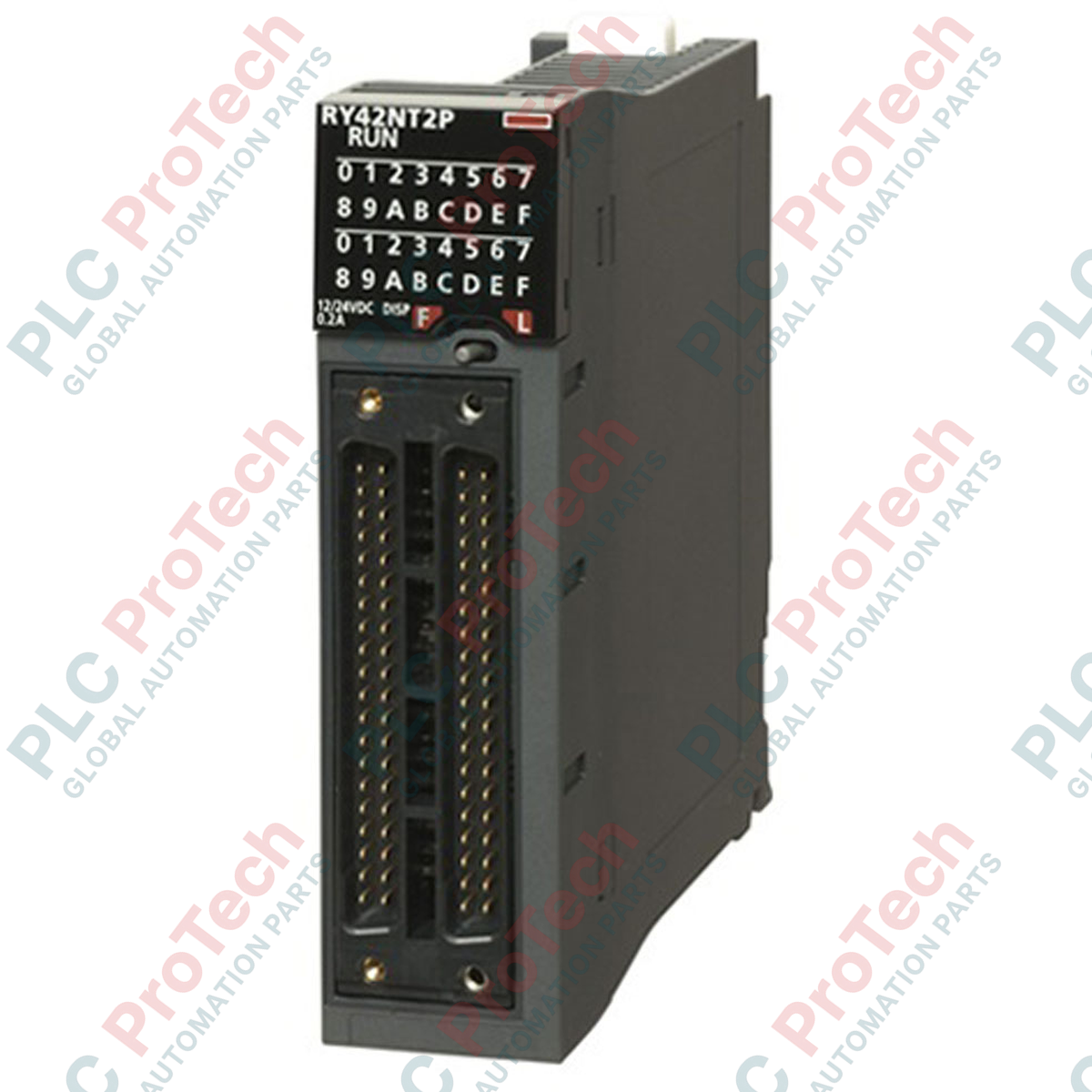
Dieses digitale 64-Punkt-Ausgangsmodul wurde für industrielle Steuerungsarchitekturen mit hoher Packungsdichte entwickelt und bietet eine schnelle, zuverlässige Transistorschaltung innerhalb der SPS-Plattform der MELSEC iQ-R-Serie. Das Mitsubishi Electric RY42NT2P fungiert als robuste NPN-Sink-Transistorschnittstelle und verfügt über einen integrierten Überstrom- und thermischen Überlastschutz, der wichtige Feldschaltkreise und die interne Hardware vor elektrischen Fehlern schützt. Die äußerst kompakte Anordnung mit zwei 40-poligen Steckverbindern maximiert die E/A-Dichte in robusten Automatisierungsschränken und gewährleistet zugleich präzise Ansprechzeiten.
Wichtige Merkmale
-
Hohe Anzahl an Ausgangskanälen: 64 digitale Ausgänge sind in einem einzigen Steckplatz zusammengefasst.
-
Transistorlogik als Sink-Typ (NPN): Für standardmäßiges industrielles Schalten auf der Low-Side ausgelegt.
-
Integrierter Schutz („P“-Suffix): Schützt aktive Schaltkreise vor Kurzschlüssen auf der Feldseite und thermischer Überlastung.
-
Schnelle Ansprechzeiten: Schaltverzögerungen im Mikrosekundenbereich gewährleisten eine präzise Ausführung zeitkritischer Regelkreise.
-
Schnittstelle mit zwei 40-poligen Steckverbindern: Zuverlässiger Anschlusspunkt für dichte Kabelbäume und vormontierte Kabelmodule.
Anwendungen
- Steuerung von pneumatischen und hydraulischen Magnetventilblöcken.
- Anbindung externer Halbleiterrelais (SSRs) und zusätzlicher Schütze.
- Mehrachsige Roboterzellen und automatisierte CNC-Werkzeugwechsler.
- Hochdichte-Übertragung von Logiksignalen an verteilte Sensor-Aktor-Hubs.
Technische Spezifikationen
| Parameter |
Spezifikation |
| Hersteller |
Mitsubishi Electric |
| Modellnummer |
RY42NT2P |
| SPS-Serie |
MELSEC iQ-R |
| Modultyp |
Transistor-Ausgangsmodul |
| Anzahl der Ausgänge |
64 Punkte |
| Ausgangstyp |
Transistor (Sink / NPN) |
| Nennlastspannung |
12 bis 24 VDC (+10 % / -15 %) |
| Max. Laststrom |
0.2 A pro Punkt, 1.6 A pro Anschluss |
| Ansprechzeit (Aus zu Ein) |
<= 1.0 ms |
| Ansprechzeit (Ein zu Aus) |
<= 1.5 ms |
| Interne Stromaufnahme |
110 mA (5 VDC) |
| Physischer Anschluss |
Zwei 40-polige Steckverbinder |
| Schutzfunktionen |
Überstromschutz, Schutz durch thermische Abschaltung |
| Gewicht |
0.13 kg |
| Versandgewicht (berechnet) |
1.50 kg |
| Ursprungsland |
Japan |
Empirische Erkenntnisse aus der Technik
Alternative Modelle & Kompatibilität
Bei der Modernisierung älterer Systeme oder bei System-Upgrades ist zu beachten, dass RY42NT2P ältere, ungeschützte 64-Punkt-Ausgangsmodule ersetzt. Die Version „P“ verfügt über Schutzschaltungen mit automatischer Rücksetzung auf Hardwareebene, wodurch sich die Wärmeabgabe in extrem beengten, unbelüfteten Gehäusen geringfügig verändern kann. Vergewissern Sie sich, dass Ihre Firmware-Konfiguration in GX Works3 mit der exakten Bezeichnung „P“ übereinstimmt, damit die Diagnose kanalspezifischer Überstromflags aktiviert wird.
Anwendungsprobleme und technische Hinweise
Obwohl das Modul für 0,2 A pro Punkt ausgelegt ist, darf der Gesamtstromgrenzwert von 1,6 A pro gemeinsamer Gruppe nicht überschritten werden. Bei Installationen mit gleichzeitig betriebenen induktiven Lasten hoher Leistung, etwa großen Magnetspulen oder direkt angesteuerten Miniaturrelais, müssen externe Freilaufdioden parallel zu den Lasten geschaltet werden. Wird der induktive Rückschlag nicht unterdrückt, führt dies zu vorzeitigem Verschleiß der internen Ausgangstransistoren und zur Einspeisung transienter Störungen in die SPS-Rückwandplatine.
Tipps zur Inbetriebnahme und Verdrahtung
Verwenden Sie stets standardisierte, vormontierte 40-polige Flachkabelsysteme oder spezielle Umsetzer für Klemmenblöcke (z. B. Klemmen-Breakout-Platinen), um Fehler durch manuelles Löten von Steckverbindern zu vermeiden. Um elektromagnetische Störungen (EMI) zu minimieren, verlegen Sie die Leitungen der 24-V-Gleichstromversorgung für die Feldgeräte getrennt von Hochleistungs-Wechselstrommotorantrieben und Motorkabeln.
Installationsrichtlinien
WICHTIGER WARNHINWEIS: Trennen Sie vor der Installation, dem Ausbau oder der Verdrahtung eines Moduls alle externen Stromquellen, die das SPS-Chassis und die Feldstromkreise versorgen. Wird das System nicht vollständig spannungsfrei geschaltet, kann dies zu dauerhaften Hardwareschäden, unerwarteten Maschinenbewegungen oder Verletzungen führen.
1
Richten Sie den unteren Haken des Moduls an der Aussparung der Basiseinheit aus und stellen Sie sicher, dass die Anschlussstifte nicht blockiert werden.
2
Drücken Sie das Modul fest in Richtung Basiseinheit, bis es sicher einrastet, und stellen Sie sicher, dass der Montagehebel des Moduls ordnungsgemäß einrastet.
3
Ziehen Sie die Befestigungsschraube des Moduls mit dem vom OEM angegebenen Drehmoment fest (falls das Modul in Umgebungen mit starken Vibrationen eingesetzt wird).
4
Schließen Sie die 40-poligen Anschlusskabel sicher an und stellen Sie sicher, dass die Verriegelungsmechanismen hörbar einrasten, um lose elektrische Kontakte zu verhindern.