


1746-OA8 vs 1746-OA16: Ausgangsanzahl und Stromgrenzen
Ein direkter Vergleich der Ausgangsanzahl, der gemeinsamen Gruppierung, des Rückwandbusstroms und der temperaturabhängig herabgesetzten Lastgrenzen von 1746-OA8 und 1746-OA16.
Hersteller: Omron
Produkt-Nr.: E3Z-LL81
Herkunftsland:Japan
Produkttyp: Optische Sensoren
Zahlung: T/T, Western Union
Gewicht: 1000g
Abmessungen: 150 x 100 x 50 mm
Versandhafen: Xiamen
Garantie: 12 Monate
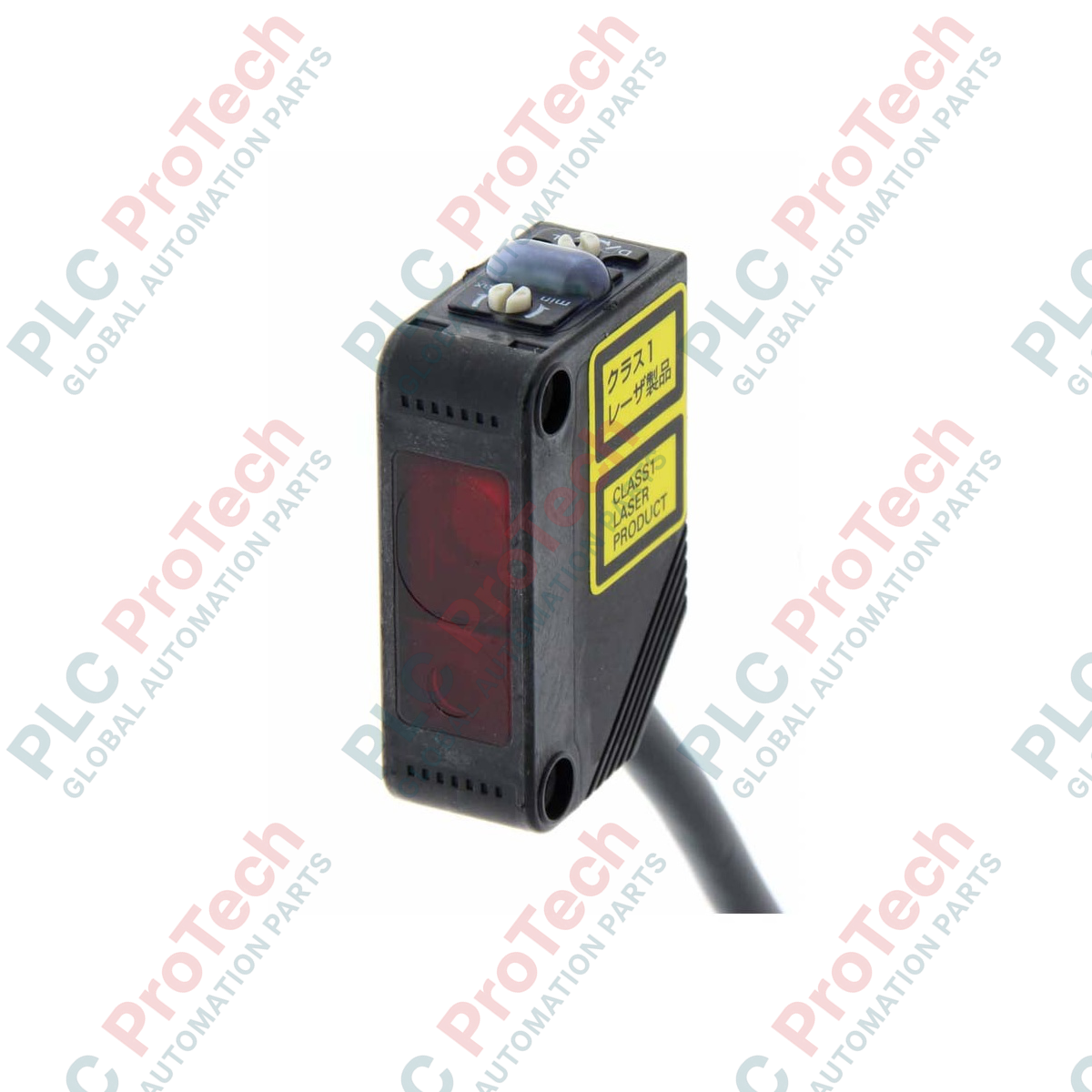
Der fotoelektrische Sensor Omron E3Z-LL81 ermöglicht eine präzise, abstandseinstellbare Hintergrundunterdrückung (BGS) in komplexen Positionierungsanwendungen und nutzt dafür eine hochpräzise rote Laserdiode der Klasse 1 zur Zielerkennung im Millimeterbereich. Der Sensor ist so ausgelegt, dass er Hintergrundobjekte jenseits der eingestellten Abschaltgrenze ignoriert und dadurch unabhängig von Zielfarbe, Glanz oder Winkel eine äußerst zuverlässige Objekterkennung ermöglicht. Mit seinem ultrakonzentrerten Punktdurchmesser von 0,5 mm bei 300 mm eignet sich das Gerät ideal für die Prüfung elektronischer Bauteile, die Erkennung von Kleinteilen und Hochgeschwindigkeits-Verpackungsmaschinen.
| Parameter | Spezifikation |
|---|---|
| Hersteller | Omron |
| Modellnummer | E3Z-LL81 |
| Erfassungsmethode | Abstandseinstellbar (BGS-Modelle) |
| Erfassungsabstand (weißes Papier) | 20 bis 300 mm (Ziel 100 x 100 mm) |
| Erfassungsabstand (schwarzes Papier) | 20 bis 160 mm (Ziel 100 x 100 mm) |
| Einstellbereich (weißes Papier) | 40 bis 300 mm |
| Einstellbereich (schwarzes Papier) | 40 bis 160 mm |
| Lichtquelle (Wellenlänge) | Rote LD (655 nm), JIS-Klasse 1, IEC-Klasse 1, FDA-Klasse 2 |
| Punktdurchmesser (Referenzwert) | 0,5 mm Durchmesser bei 300 mm |
| Versorgungsspannung | 12 bis 24 VDC +/-10 %, Restwelligkeit (Spitze-Spitze): max. 10 % |
| Stromaufnahme | max. 30 mA |
| Steuerausgang | PNP-Open-Collector, max. 26,4 VDC, max. Laststrom 100 mA |
| Versandgewicht (berechnet) | 1,00 kg (einschließlich schützender Werksverpackung) |
| Verpackungsabmessungen (berechnet) | 150 x 100 x 50 mm |
| Kabelfarbe | Funktion / Zuordnung |
|---|---|
| Braun | Stromversorgung (+V, 12 bis 24 VDC) |
| Blau | Stromversorgung (0V / GND) |
| Schwarz | Steuerausgang (PNP-Open-Collector) |
| Rosa | Steuereingang (Auswahl Light-ON / Dark-ON) |
Der E3Z-LL81 verfügt über einen PNP-Open-Collector-Ausgang. Wenn Ihr Steuerungssystem eine NPN-Konfiguration erfordert, verwenden Sie das alternative Modell E3Z-LL61. Montageabmessungen und Erfassungsbereiche sind bei beiden Modellen identisch, sodass sie bei der Systemintegration oder bei nachträglichen Logikanpassungen direkt physisch ausgetauscht werden können.
Beim Einsatz des Sensors in Umgebungen mit stark reflektierendem Metall oder spiegelnden Hintergründen in der Nähe des Erfassungsfelds kann die Reflexion vom Hintergrund die BGS-Abschaltung umgehen. Um diese optische Rückkopplung zu vermeiden, montieren Sie den Sensor in einem Winkel von 5 bis 10 Grad zur Zielfläche. Vermeiden Sie es, den Sensor direktem Sonnenlicht auszusetzen oder auf starke Hochfrequenz-Entladungslichtquellen auszurichten, da diese die Empfängerschaltung stören können.
Verwenden Sie zur Konfiguration des Ausgangsmodus des Sensors die integrierte rosafarbene Steuerleitung. Wenn Sie die rosafarbene Leitung mit der braunen Leitung (+V) verbinden, wird der Sensor für den Dark-ON-Betrieb konfiguriert. Eine Verbindung mit der blauen Leitung (0V) oder ein Offenlassen der Leitung konfiguriert ihn dagegen für den Light-ON-Betrieb. Überprüfen Sie vor dem Anschließen die Stromgrenzwerte, um Schäden durch Überstrom am internen PNP-Transistor zu vermeiden.
Trennen Sie vor dem Herstellen elektrischer Verbindungen oder dem Vornehmen mechanischer Einstellungen alle Stromquellen. Blicken Sie nicht direkt in die Linse des Lasersenders, während der Sensor mit Strom versorgt wird, da direkte Laserstrahlung Augenreizungen oder optische Schäden verursachen kann.
Befestigen Sie den Sensor sicher mit einem passenden Omron-L-Winkel oder direkt am Maschinenrahmen. Stellen Sie dabei sicher, dass der optische Pfad zum Ziel frei von physischen Hindernissen ist.
Verdrahten Sie den Sensor gemäß dem Schaltplan. Stellen Sie sicher, dass die rosafarbene Leitung mit dem entsprechenden Potenzial (+V oder 0V) verbunden ist, um den gewünschten Betriebsmodus (Light-ON oder Dark-ON) festzulegen.
Legen Sie eine Versorgungsspannung von 12 bis 24 VDC an und überprüfen Sie, dass die grüne Stabilitätsanzeige unter nicht erfassenden Bedingungen weiterhin leuchtet, was auf eine ausreichende Signalreserve hinweist.
Platzieren Sie das Zielobjekt in der maximal gewünschten Erfassungsentfernung und stellen Sie die integrierte Schraube zur mehrgängigen Entfernungsjustierung ein, bis die orangefarbene Betriebsanzeige aufleuchtet.

Globaler Expressversand
Rückgabe & Garantie
Globaler Expressversand
Rückgaben & Garantie
Bestellungen werden von Montag bis Freitag bearbeitet und geliefert (außer an Feiertagen).
Für vollständige Anspruchsvoraussetzungen, Wiedereinlagerungsgebühren und internationale Rückgabedetails sehen Sie bitte unsere offiziellen Rückerstattungs- & Rückgabebedingungen .
| Country of origin |
Japan
|

Ein direkter Vergleich der Ausgangsanzahl, der gemeinsamen Gruppierung, des Rückwandbusstroms und der temperaturabhängig herabgesetzten Lastgrenzen von 1746-OA8 und 1746-OA16.

Eine Checkliste für die Dokumentation der 1761-NET-DNI-Hardware-Serie, der Firmware, der EDS-Datei, der DF1-Einstellungen, der DeviceNet-Adresse und der Nachrichtenkonfiguration vor dem Austausch.

Das EL3062 ist ein 0–10-V-EtherCAT-Terminal. Das EL3062-0030 ist eine 0–30-V-Variante. Diese Checkliste behandelt Identifikation, Skalierung und Inbetriebnahme.

Eine Checkliste für den Austausch von Allen-Bradley-1769-OW8-Relaisausgangsmodulen, ohne Details zu Lastgruppen, Verdrahtung und Inbetriebnahme zu verlieren.

Eine Checkliste für die Zuordnung digitaler und analoger SPS-Ein- und -Ausgänge zu Sensoren, Lasten, Bezugspotenzialen, Isolationsgruppen, Filtern und Ersatzeinstellungen.

Eine praxisorientierte Checkliste zur Auswahl, Installation, Inbetriebnahme und Diagnose magnetisch-induktiver Durchflussmesser mit Schwerpunkt auf Leitfähigkeit, vollständig gefüllten Rohrleitungen,...