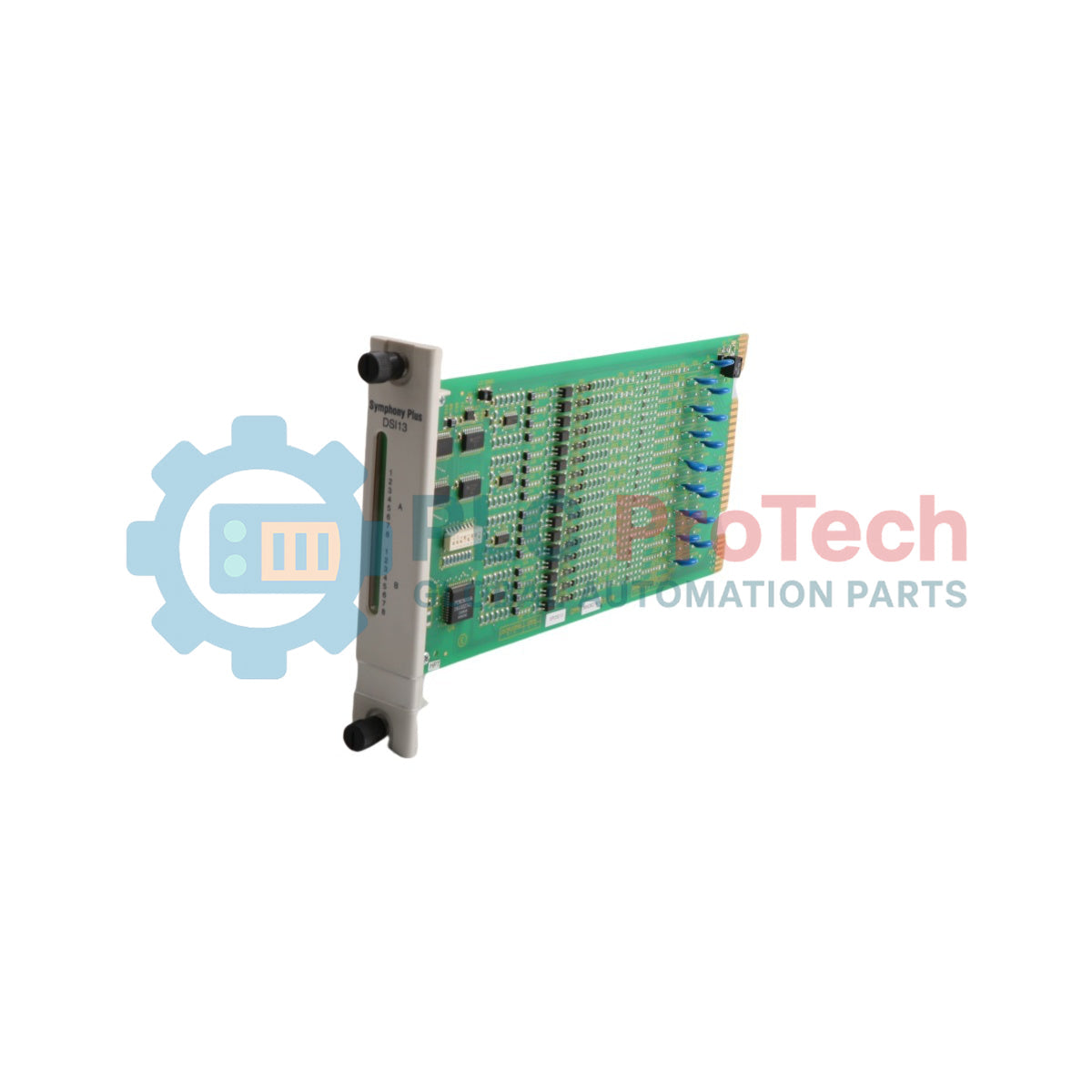
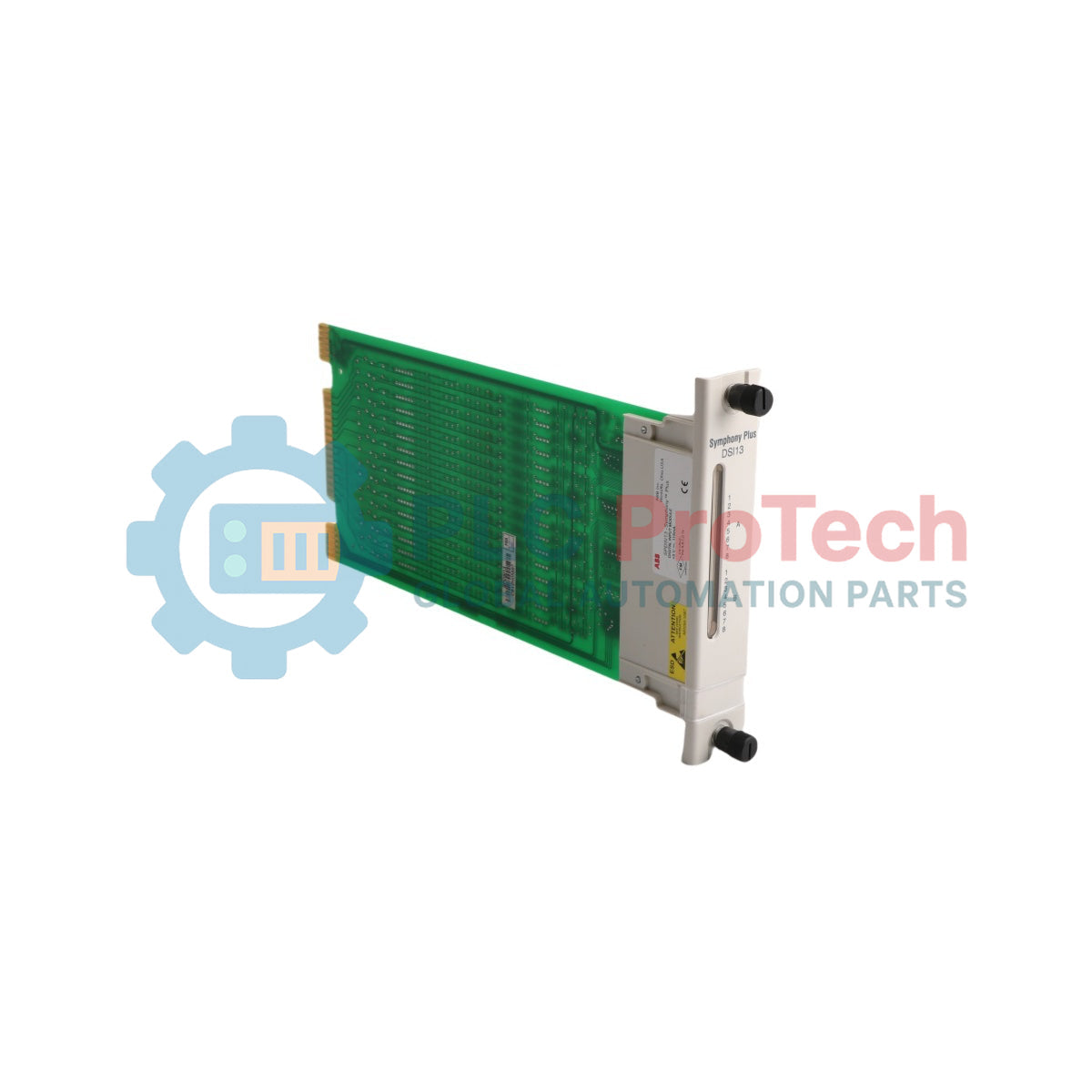
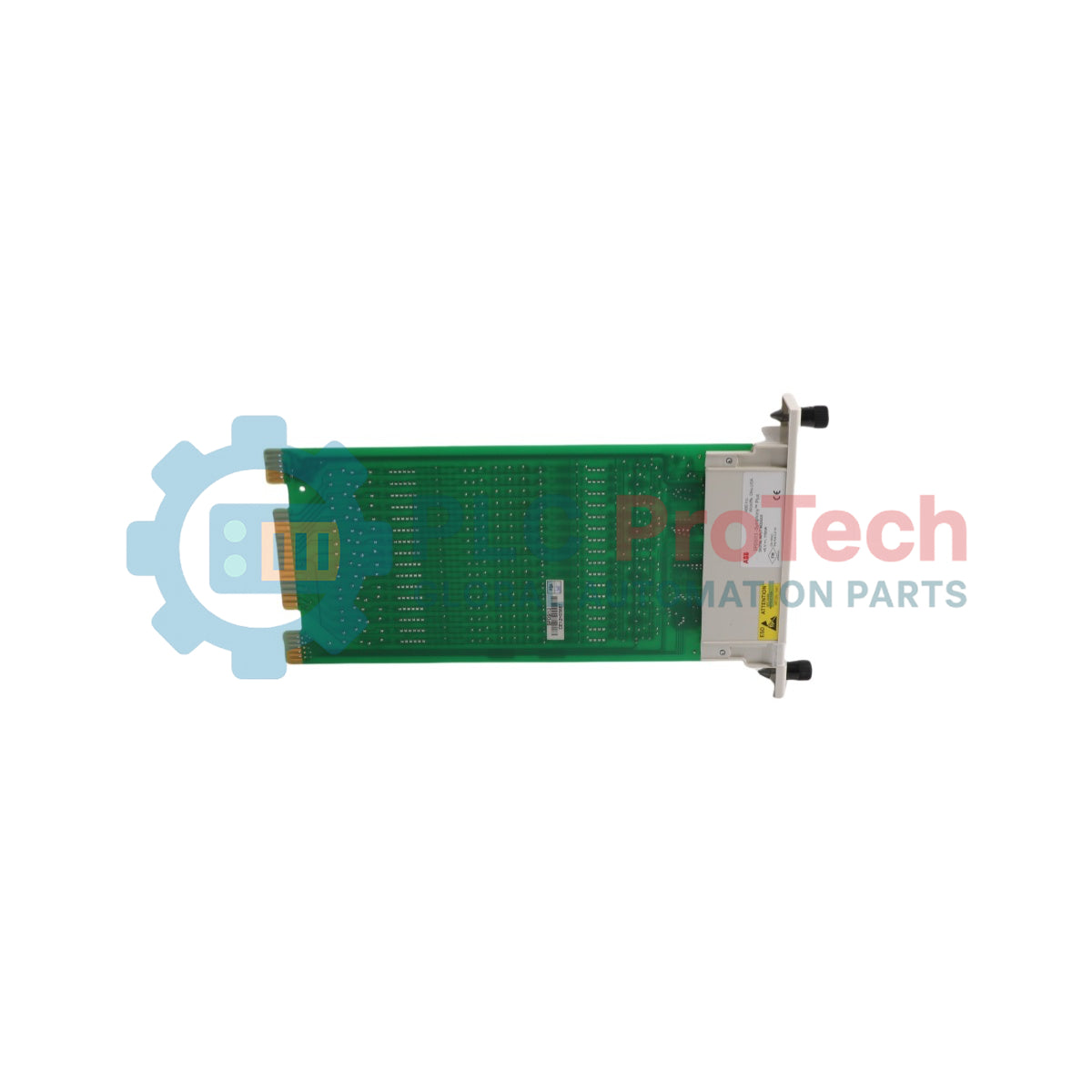
The ABB SPDSI13 is a high-density Digital Input Module engineered for the Symphony Plus distributed control system architecture. Operating as a core signal processing component within the S+ HR I/O (Harmony Rack) platform, this module provides 16 discrete input channels optimized specifically for 24 VDC field loop sensing. Featuring a fixed hardware architecture with no internal configuration jumpers, the ABB SPDSI13 eliminates manual on-site selection errors and utilizes galvanic optocoupler isolation to interface field dry contacts securely with the internal system logic bus.
Features
-
16 Isolated DI Channels: High-density discrete processing layout maps maximum monitoring points across a single chassis slot footprint.
-
24 VDC Fixed Thresholds: Precision voltage matching designed directly for standardized industrial instrumentation power loops.
-
Jumperless Design Profile: Complete absence of onboard hardware configuration jumpers prevents deployment delays and wiring setup mistakes.
-
Harmony Rack Bus Coupling: Connects natively to the system backplane to ensure low-latency status polling and continuous module level diagnostics.
Applications
- Sequence of Events (SOE) tracking for critical process interlocks and turbine trip signals.
- Auxiliary contact monitoring for low-voltage power distribution breakers and motor control center status.
- Remote marshalling panel interface for dry contact field instrument switches and valve position confirmations.
Technical Specifications
| Manufacturer |
ABB |
| Product ID |
SPDSI13 |
| ABB Type Designation |
SPDSI13 |
| Channel Type |
DI (Digital Input) |
| Number of Input Channels |
16 Channels |
| Nominal Signal Voltage |
24 VDC |
| Onboard Customization |
None (Fixed Circuit Jumperless Layout) |
| Product Net Depth / Length |
73.66 mm |
| Product Net Height |
358.14 mm |
| Product Net Width |
266.70 mm |
| Product Net Weight |
0.81 kg (Calculated) |
| Package Dimensions |
410 mm x 320 mm x 110 mm (Calculated) |
| WEEE Category |
5. Small Equipment (No External Dimension More Than 50 cm) |
| Customs Tariff Number / HS Code |
85389081 |
Connections and Interfaces
| Interface Connector |
Circuit Destination & Mapping Profile |
| Rear Card-Edge Pins |
Plugs directly into standard Harmony Rack subrack communication slots, routing logical statuses to the control node and extending isolated circuit channels 1-16 out to the termination layer. |
| Field Loop Terminals |
Governed and processed entirely by the designated Symphony Plus Termination Unit (TU) paired with the backplane slot. Refer to individual TU terminal blocks for exact screw layout. |
Empirical Engineering Insights
Alternative Models & Compatibility
The module hardware carries the designated firmware identification SPDSI13. It is designed exclusively for 24 VDC environments, differing fundamentally from the multi-voltage jumper-adaptable modules such as the SPDSI22. When hot-swapping or replacing cards within mature Harmony Rack systems, ensure your software configuration database explicitly matches the fixed 24 VDC digital input block definition to prevent hardware-logic mismatch errors.
Application Pitfalls & Engineering Notes
This module features strict operating thresholds. Introducing 48 VDC, 125 VDC, or 120 VAC potentials into these channels will result in immediate thermal overstress, blown field-side trace elements, or catastrophic damage to the onboard optocouplers. It must only be deployed inside dedicated 24 VDC process signal networks.
Commissioning & Wiring Tips
Because this module utilizes a jumperless layout, pre-commissioning deployment speed is greatly accelerated. Field loop diagnostic focus must center entirely on checking the loop common distribution and verifying wetting potential stability directly at the external Symphony Plus Termination Unit (TU) block before sliding the module into its active backplane slot.
Installation Guidelines
CRITICAL WARNING: De-energize all external 24 VDC wetting sources and ensure the target subrack slot is clear of active field loop currents before module insertion. Inserting modules into live, shorted, or high-inductance field lines without circuit isolation can produce inductive degradation across the backplane communication connectors.
1
Review the local loop drawing configurations to confirm that the assigned slot matches a 24 VDC discrete loop allocation.
2
Align the top and bottom edge guides of the printed circuit card assembly precisely within the subrack guide channels.
3
Press the front edge evenly and firmly until the card slides back completely to sit flush against the rear data bus connector socket.
4
Tighten the front plate captive fasteners securely to verify mechanical frame grounding and protect the module from structural high-frequency vibration.