


پیادهسازی منطق نردبانی XOR سهکلیده با بیت داخلی
مدار روشنایی XOR با کلید ۳-SPST را در LogixPro یا RSLogix 500 با استفاده از یک بیت رله داخلی پیادهسازی کنید. شامل جدولهای درستی، معادلات بولی و تأییدشده است.

مسیریابی غیرمتمرکز سیگنالها در محیطهای فیزیکی دشوار با ماژول خروجی دیجیتال Beckhoff EP2028-0001 از خانواده EtherCAT Box بهینه شده است؛ این ماژول با درجه حفاظت IP67 برای نصب مستقیم روی ماشین و بدون کابینت کنترلی طراحی شده است. این تجهیز میدانی مقاوم، ۸ خروجی دیجیتال با ولتاژ ۲۴ ولت DC را مدیریت میکند و هر کانال آن برای تأمین حداکثر ۲ آمپر جریان بار طراحی شده است. این ماژول با بهرهگیری از یکپارچهسازی پرسرعت سیستم EtherCAT، رابطهای اتصال صنعتی M8 و ایزولاسیون الکتریکی جامع، کنترل قابلاعتمادی برای بارهای اهمی، القایی و لامپی در شرایط فیزیکی سخت ارائه میدهد.
| پارامتر مشخصات | مقدار فنی |
|---|---|
| سازنده | Beckhoff |
| شماره مدل | EP2028-0001 |
| سری | EtherCAT Box (EP) |
| پروتکل فیلدباس | EtherCAT |
| تعداد خروجیها | ۸ خروجی دیجیتال |
| ولتاژ خروجی نامی | ۲۴ ولت DC (۱۵- درصد / ۲۰+ درصد) |
| حداکثر جریان خروجی | ۲ آمپر برای هر کانال (هر کانال بهطور مستقل در برابر اتصال کوتاه محافظت شده است)؛ حداکثر مجموع: ۴ آمپر |
| محدودکننده جریان اتصال کوتاه | معمولاً ۱۵ آمپر |
| تأخیر کلیدزنی | TON: ۲۰۰ میکروثانیه (معمول)؛ TOFF: ۲۰۰ میکروثانیه (معمول) |
| مصرف توان سیستم (US) | ۱۲۰ میلیآمپر از US |
| جریان تغذیه کمکی (UP) | معمولاً ۲۰ میلیآمپر + جریان بار |
| ایزولاسیون الکتریکی | ۵۰۰ ولت (تغذیه سیستم/کمکی تا منطق کنترلی) |
| محدوده دمای کاری | ۲۵- تا ۶۰+ درجه سانتیگراد |
| محدوده دمای نگهداری | ۴۰- تا ۸۵+ درجه سانتیگراد |
| درجه حفاظت | IP65 / IP66 / IP67 (مطابق با EN 60529) |
| نشانگذاری Ex | II 3 G Ex nA IIC T4 Gc |
| تأییدیهها | CE، UL، ATEX |
| وزن دستگاه | حدود ۱۶۵ گرم |
| نوع رابط | نوع کانکتور | تخصیص عملکرد |
|---|---|---|
| ورودی/خروجی باس EtherCAT | ۲ سوکت M8، شیلددار، پیچی | مسیریابی شبکه EtherCAT ورودی و خروجی |
| خروجیهای دیجیتال (۰ تا ۷) | ۸ سوکت M8، سهپین، کدگذاری A | پین ۱: خروجی کمکی +۲۴ ولت DC؛ پین ۳: اتصال زمین؛ پین ۴: سیگنال خروجی |
| ورودی برق | ۱ عدد سوکت نری M8، ۴ پین | برق سیستم ۲۴ ولت DC (US) و برق تجهیزات جانبی (UP) |
| برق پاییندست | ۱ عدد سوکت مادگی M8، ۴ پین | حلقه توزیع برق به واحدهای EtherCAT Box بعدی |
هنگام استانداردسازی طرحهای سیمکشی میدانی، EP2028-0001 (با استفاده از کانکتورهای جمعوجور M8) را با EP2028-0002 (طراحیشده با دو پورت اتصال M12) مقایسه کنید. تعویض مستقیم از طریق فایلهای پیکربندی EtherCAT (ESI) ساده است، اما در صورت جایگزینی کانکتورهای M8 با انواع M12، اصلاحات فیزیکی سیمکشی لازم خواهد بود. اطمینان حاصل کنید که پیکربندیهای System Manager در TwinCAT با پسوند دقیق سختافزار مطابقت داشته باشند تا زمانبندی ارتباط چرخهای حفظ شود.
یکی از محدودیتهای مهندسی اصلی این ماژول، حداکثر جریان تجمیعی ۴ آمپر برای مجموع همه کانالهاست. اگرچه هر خروجی میتواند تا ۲ آمپر را سوئیچ کند، عملکرد همزمان چند کانال با جریان بالا نباید از ۴ آمپر بیشتر شود. عبور از این حد حرارتی کلی، پرچمهای تشخیصی سیستم را فعال میکند و ممکن است سازوکارهای حفاظتی اتصال کوتاه را به کار بیندازد. مهندسان باید در مرحله طراحی، چرخههای کاری و پروفایلهای بار را محاسبه کنند تا از خاموشیهای حرارتی ناخواسته در کاربردهای عملگر با بار بالا جلوگیری شود.
برای محیطهای صنعتی با تداخل الکترومغناطیسی (EMI) شدید، اطمینان حاصل کنید که براکتهای فلزی نصب EtherCAT Box مستقیماً به فریم ماشین اتصال زمین شده باشند. از کابلهای شبکه M8 شیلددار استفاده کنید و اتصالات را طبق مشخصات سازنده اصلی (0.4 نیوتنمتر) سفت کنید تا آببندی IP67 تضمین شود. همه پورتهای خروجی یا برقِ بدون استفاده باید با درپوشهای پلاستیکی پیچی محافظ IP67 پوشانده شوند تا از ایجاد میعان رطوبت یا آلودگی ذرات و آسیب به مسیرهای سیگنال داخلی جلوگیری شود.
پیش از نصب، مسیریابی کابلها یا وصلکردن و جداکردن اتصالات روی ماژول، همه منابع برق را ایزوله کنید (هم برق US سیستم کنترل و هم برق UP تجهیزات جانبی). اتصال یا جداسازی در حالت برقدار میتواند به عناصر حساس سوئیچینگ حالتجامد آسیب برساند و عملکرد باس ارتباطی را مختل کند.
Global Express Shipping
Returns & Warranty

تولیدکننده: BECKHOFF
شماره محصول: EP2028-0001
کشور سازنده:آلمان
نوع محصول: ماژولهای I/O EtherCAT
پرداخت: حواله بانکی (T/T)، وسترن یونیون
وزن: 500g
بندر حمل و نقل: شیامن
گارانتی: ۱۲ ماه
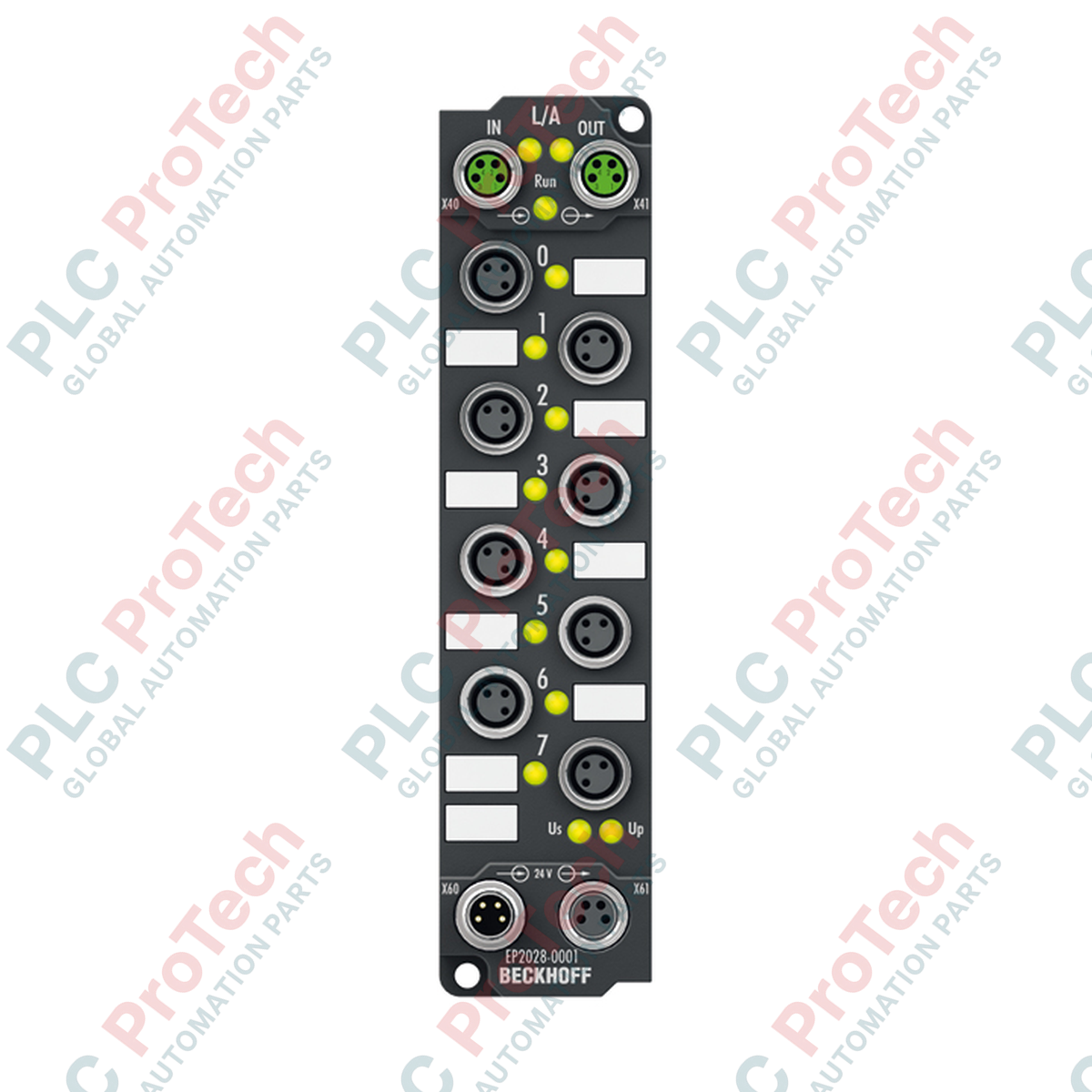
مسیریابی غیرمتمرکز سیگنالها در محیطهای فیزیکی دشوار با ماژول خروجی دیجیتال Beckhoff EP2028-0001 از خانواده EtherCAT Box بهینه شده است؛ این ماژول با درجه حفاظت IP67 برای نصب مستقیم روی ماشین و بدون کابینت کنترلی طراحی شده است. این تجهیز میدانی مقاوم، ۸ خروجی دیجیتال با ولتاژ ۲۴ ولت DC را مدیریت میکند و هر کانال آن برای تأمین حداکثر ۲ آمپر جریان بار طراحی شده است. این ماژول با بهرهگیری از یکپارچهسازی پرسرعت سیستم EtherCAT، رابطهای اتصال صنعتی M8 و ایزولاسیون الکتریکی جامع، کنترل قابلاعتمادی برای بارهای اهمی، القایی و لامپی در شرایط فیزیکی سخت ارائه میدهد.
| پارامتر مشخصات | مقدار فنی |
|---|---|
| سازنده | Beckhoff |
| شماره مدل | EP2028-0001 |
| سری | EtherCAT Box (EP) |
| پروتکل فیلدباس | EtherCAT |
| تعداد خروجیها | ۸ خروجی دیجیتال |
| ولتاژ خروجی نامی | ۲۴ ولت DC (۱۵- درصد / ۲۰+ درصد) |
| حداکثر جریان خروجی | ۲ آمپر برای هر کانال (هر کانال بهطور مستقل در برابر اتصال کوتاه محافظت شده است)؛ حداکثر مجموع: ۴ آمپر |
| محدودکننده جریان اتصال کوتاه | معمولاً ۱۵ آمپر |
| تأخیر کلیدزنی | TON: ۲۰۰ میکروثانیه (معمول)؛ TOFF: ۲۰۰ میکروثانیه (معمول) |
| مصرف توان سیستم (US) | ۱۲۰ میلیآمپر از US |
| جریان تغذیه کمکی (UP) | معمولاً ۲۰ میلیآمپر + جریان بار |
| ایزولاسیون الکتریکی | ۵۰۰ ولت (تغذیه سیستم/کمکی تا منطق کنترلی) |
| محدوده دمای کاری | ۲۵- تا ۶۰+ درجه سانتیگراد |
| محدوده دمای نگهداری | ۴۰- تا ۸۵+ درجه سانتیگراد |
| درجه حفاظت | IP65 / IP66 / IP67 (مطابق با EN 60529) |
| نشانگذاری Ex | II 3 G Ex nA IIC T4 Gc |
| تأییدیهها | CE، UL، ATEX |
| وزن دستگاه | حدود ۱۶۵ گرم |
| نوع رابط | نوع کانکتور | تخصیص عملکرد |
|---|---|---|
| ورودی/خروجی باس EtherCAT | ۲ سوکت M8، شیلددار، پیچی | مسیریابی شبکه EtherCAT ورودی و خروجی |
| خروجیهای دیجیتال (۰ تا ۷) | ۸ سوکت M8، سهپین، کدگذاری A | پین ۱: خروجی کمکی +۲۴ ولت DC؛ پین ۳: اتصال زمین؛ پین ۴: سیگنال خروجی |
| ورودی برق | ۱ عدد سوکت نری M8، ۴ پین | برق سیستم ۲۴ ولت DC (US) و برق تجهیزات جانبی (UP) |
| برق پاییندست | ۱ عدد سوکت مادگی M8، ۴ پین | حلقه توزیع برق به واحدهای EtherCAT Box بعدی |
هنگام استانداردسازی طرحهای سیمکشی میدانی، EP2028-0001 (با استفاده از کانکتورهای جمعوجور M8) را با EP2028-0002 (طراحیشده با دو پورت اتصال M12) مقایسه کنید. تعویض مستقیم از طریق فایلهای پیکربندی EtherCAT (ESI) ساده است، اما در صورت جایگزینی کانکتورهای M8 با انواع M12، اصلاحات فیزیکی سیمکشی لازم خواهد بود. اطمینان حاصل کنید که پیکربندیهای System Manager در TwinCAT با پسوند دقیق سختافزار مطابقت داشته باشند تا زمانبندی ارتباط چرخهای حفظ شود.
یکی از محدودیتهای مهندسی اصلی این ماژول، حداکثر جریان تجمیعی ۴ آمپر برای مجموع همه کانالهاست. اگرچه هر خروجی میتواند تا ۲ آمپر را سوئیچ کند، عملکرد همزمان چند کانال با جریان بالا نباید از ۴ آمپر بیشتر شود. عبور از این حد حرارتی کلی، پرچمهای تشخیصی سیستم را فعال میکند و ممکن است سازوکارهای حفاظتی اتصال کوتاه را به کار بیندازد. مهندسان باید در مرحله طراحی، چرخههای کاری و پروفایلهای بار را محاسبه کنند تا از خاموشیهای حرارتی ناخواسته در کاربردهای عملگر با بار بالا جلوگیری شود.
برای محیطهای صنعتی با تداخل الکترومغناطیسی (EMI) شدید، اطمینان حاصل کنید که براکتهای فلزی نصب EtherCAT Box مستقیماً به فریم ماشین اتصال زمین شده باشند. از کابلهای شبکه M8 شیلددار استفاده کنید و اتصالات را طبق مشخصات سازنده اصلی (0.4 نیوتنمتر) سفت کنید تا آببندی IP67 تضمین شود. همه پورتهای خروجی یا برقِ بدون استفاده باید با درپوشهای پلاستیکی پیچی محافظ IP67 پوشانده شوند تا از ایجاد میعان رطوبت یا آلودگی ذرات و آسیب به مسیرهای سیگنال داخلی جلوگیری شود.
پیش از نصب، مسیریابی کابلها یا وصلکردن و جداکردن اتصالات روی ماژول، همه منابع برق را ایزوله کنید (هم برق US سیستم کنترل و هم برق UP تجهیزات جانبی). اتصال یا جداسازی در حالت برقدار میتواند به عناصر حساس سوئیچینگ حالتجامد آسیب برساند و عملکرد باس ارتباطی را مختل کند.
ارسال سریع جهانی
بازگشت کالا و گارانتی
سفارشها از دوشنبه تا جمعه پردازش و تحویل داده میشوند (به جز تعطیلات رسمی).
برای شرایط کامل واجد شرایط بودن، هزینههای بازگردانی و جزئیات بازگشت بینالمللی، لطفاً صفحه رسمی ما را مشاهده کنید سیاست بازپرداخت و بازگشت کالا .
| Country of origin |
آلمان
|

مدار روشنایی XOR با کلید ۳-SPST را در LogixPro یا RSLogix 500 با استفاده از یک بیت رله داخلی پیادهسازی کنید. شامل جدولهای درستی، معادلات بولی و تأییدشده است.

Allen-Bradley CompactLogix، تابلوهای انتقال خودکار Caterpillar و ژنراتورها را از طریق Modbus RTU در سیستم کنترل توزیعشده DeltaV یکپارچه کنید. این محتوا ProSoft MVI69-MCM و گیتویهای Miille DIN266...

دستور ONS اجرا میشود، اما کویل OTE در Studio 5000 هرگز لچ نمیشود، زیرا وانشات فقط در یک اسکن درست است. در عوض از OTL/OTU یا منطق خودنگهدار استفاده کنید.

درایوهای سرو Kinetix 5500 از Allen-Bradley را روی EtherNet/IP پیکربندی کنید. این دوره مباحث CIP Sync، زمانبندی IEEE 1588 V2، انتخاب Stratix، توپولوژی DLR و HMI را پوشش میدهد.

فیلتر میانگین متحرک، هموارساز پنجرهای لغزان است که بیشتر مهندسان ابزار دقیق آن را در مسیرهای آنالوگ DCS و PLC به کار میبرند. در اینجا نحوه کار پنجره، تأثیر N و زمان نمونهبرداری بر تأخیر، و زمان...

در توربینهای گازی Frame 5 تا 9، سیستمهای GE Mark VI و Mark VIe کنترل را بهصورت نرمافزار کاربردی مبتنی بر بلوکهای تابع اجرا میکنند. این مقاله عملکردهای فرایندی، حفاظتی و توالیگذاری را بررسی...