Product Overview and Analog Data Acquisition
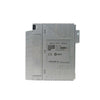
The 1771-IFE (1771IFE) is a high-density, intelligent analog input module belonging to the legendary Allen-Bradley PLC-5 series. Designed for precision data acquisition in heavy industrial environments—such as oil refineries, wastewater treatment plants, and steel mills—the module provides up to 16 single-ended or 8 differential inputs. It is engineered to convert continuous analog signals (voltage or current) into digital values that can be processed by the PLC-5 processor. The 1771-IFE is a cornerstone for monitoring critical process variables like pressure, flow, temperature, and level, offering a robust hardware solution that has maintained its reliability in the field for decades.
Hardware Architecture and Signal Interfacing
The 1771-IFE utilizes a modular chassis-based design and occupies a single slot in the 1771 I/O rack. It interfaces with the PLC backplane through block transfer programming, ensuring high-speed data updates without overloading the processor's discrete I/O scan.
-
Configurable Input Ranges: The module is highly versatile, supporting a wide array of signal types including 1 to 5 VDC, 0 to 5 VDC, 0 to 10 VDC, and -10 to +10 VDC, as well as 4 to 20 mA current loops (using external shunt resistors).
-
A/D Conversion: Features a 12-bit Analog-to-Digital converter, providing a resolution of 4096 counts, which ensures high granularity for sensitive process control.
-
Input Filtering: Includes hardware-based low-pass filtering to suppress high-frequency noise and 50/60 Hz electrical interference common in industrial motor control centers.
-
Isolation Logic: Provides optical isolation between the analog input circuitry and the backplane logic, protecting the PLC processor from external field transients and ground loops.
Technical Specifications
| Specification |
Details |
| Model |
1771-IFE |
| Manufacturer |
Allen-Bradley / Rockwell Automation |
| Input Channels |
16 Single-ended or 8 Differential |
| Resolution |
12-bit (0 to 4095) |
| Voltage Ranges |
0 to 5V, 1 to 5V, 0 to 10V, +/- 10V |
| Current Ranges |
4 to 20 mA (With 249 Ohm resistor) |
| Conversion Type |
Successive Approximation |
| Backplane Current |
750 mA @ 5 VDC |
| Operating Temp |
0 to 60 Celsius |
| Isolation |
1500 VAC (Continuous) |
| Shipping Weight |
1.5 kg |
Integrated Technical FAQ
How do I configure the module for 4 to 20 mA current inputs?
The 1771-IFE is natively a voltage-sensing module. To measure 4 to 20 mA, you must install a precision 249 Ohm shunt resistor across the input terminals and configure the software range for 1 to 5 VDC.
What is the difference between Single-Ended and Differential wiring?
Single-ended wiring (16 channels) uses a common ground for all inputs and is suitable for signals with a shared reference. Differential wiring (8 channels) uses two leads per signal to cancel out common-mode noise, making it the preferred choice for long cable runs in electrically noisy areas.
How does "Block Transfer" (BTW/BTR) affect module operation?
Unlike discrete I/O, analog data is too large for a single scan. You must use Block Transfer Write (BTW) to send configuration data (ranges, filters) to the module and Block Transfer Read (BTR) to pull the digitalized analog values into the PLC-5 data table.
Engineering & Installation Protocols
-
Wiring Arm Configuration: Use the 1771-WG wiring arm to allow for module replacement without disconnecting field wiring. Ensure that all terminal screws are tightened to 0.9 Nm to prevent signal drift caused by loose connections.
-
Shielding Strategy: Always use twisted-pair shielded cable for analog signals. Connect the shield at the PLC-5 chassis ground only; do not ground the shield at the sensor end to avoid creating ground loops that can cause significant measurement offsets.
-
Calibration Cycle: While the 1771-IFE is factory calibrated, it is recommended to perform a field calibration check every 12 months using a high-precision signal generator to account for component aging and environmental drift.
Engineering Advantages
The 1771-IFE remains a staple in legacy migration and maintenance strategies. Its high-density 16-channel capacity allows for significant I/O concentration, reducing the number of chassis slots required for large-scale monitoring. The module's diagnostic capabilities—including "Out of Range" bit detection—provide immediate feedback to the control logic, allowing for automated fail-safe routines in the event of a sensor failure or wire break, thereby enhancing overall plant safety and uptime.