Product Overview
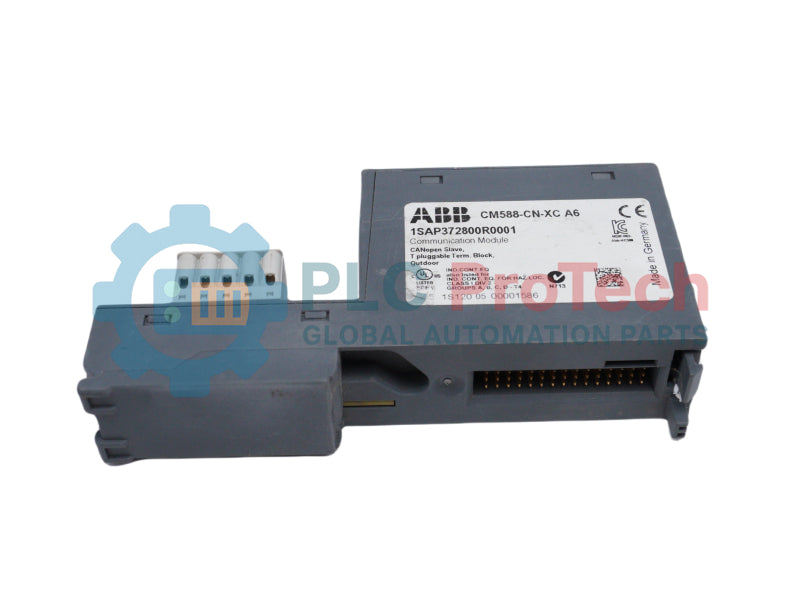
The ABB CM588-CN-XC (1SAP372800R0001) is a CANopen Slave communication module designed for the ABB AC500 PLC platform. It enables deterministic fieldbus communication between the AC500 CPU and distributed CANopen devices in industrial automation systems.
This module belongs to the AC500-XC (eXtended Conditions) series, which is engineered for harsh industrial environments. It supports reliable operation under extreme temperature variations, vibration exposure, and high humidity conditions. The XC variant is typically deployed in offshore systems, marine automation, wind power installations, and heavy industrial machinery where standard PLC modules may fail.
The CM588-CN-XC functions strictly as a CANopen slave node, responding to a master controller within a structured CANopen network. It supports real-time cyclic data exchange based on object dictionary communication, ensuring predictable and synchronized system behavior.
Key Features
-
CANopen Slave communication module for ABB AC500 PLC systems
-
Designed for AC500-XC extreme environment applications
-
Stable operation under vibration, humidity, and temperature stress
-
Supports deterministic cyclic data exchange via CANopen protocol
-
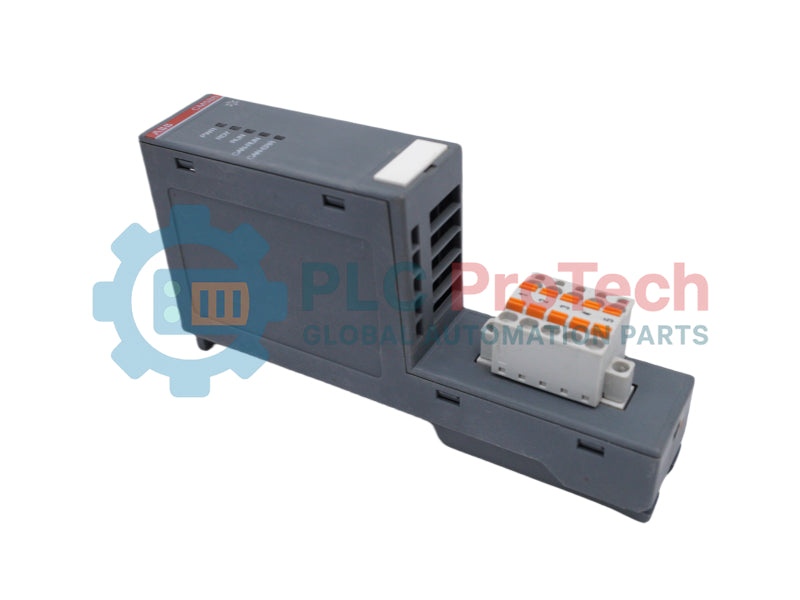
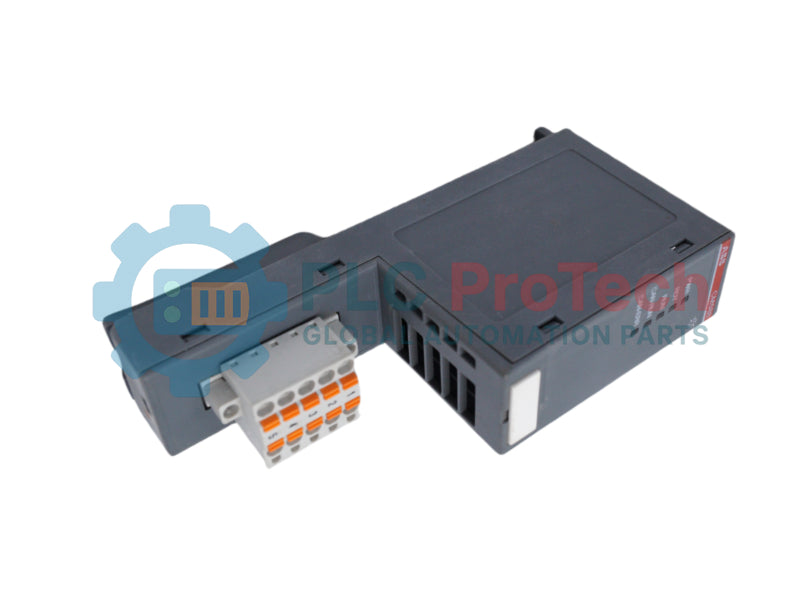
Pluggable 2x5 spring terminal block for secure field wiring
-
DIN rail mounting compatible with standard AC500 racks
-
Suitable for distributed automation and fieldbus architectures
Technical Specifications
| Parameter |
Value |
| Model |
CM588-CN-XC |
| Product ID |
1SAP372800R0001 |
| Brand |
ABB |
| Series |
AC500-XC |
| Function |
CANopen Slave Communication Module |
| Protocol |
CANopen (CiA 301 compliant) |
| Terminal Type |
2x5 pole pluggable spring terminals |
| Mounting |
DIN rail / AC500 PLC rack |
| Operating Temperature |
-30°C to +70°C |
| Storage Temperature |
-40°C to +85°C |
| Dimensions |
28 mm × 135 mm × 62 mm |
| Weight |
0.17 kg |
| EAN |
4016779864817 |
| RoHS |
Compliant with EU directive |
Communication & System Behavior
The CM588-CN-XC operates as a slave node in a CANopen network controlled by a master device. Communication is based on standardized CAN frames and object dictionary mapping.
Each node is assigned a unique node ID, and communication parameters such as baud rate and transmission cycle are configured through the AC500 engineering environment.
The module supports cyclic process data exchange (PDO) and parameter access via service data objects (SDO), ensuring both real-time control and configuration flexibility in automation systems.
Wiring & Installation Guidelines
Proper installation is essential to ensure stable CANopen communication.
-
Use shielded twisted-pair cables compliant with ISO 11898 standard
-
Install 120Ω termination resistors at both ends of the CAN bus
-
Keep CAN wiring separated from power cables (minimum 200 mm recommended)
-
Connect cable shielding to functional earth (FE) for EMC stability
-
Ensure correct node ID and baud rate configuration before system startup
Incorrect termination or poor shielding may lead to communication errors such as bus-off states or frame loss.
EMC and Environmental Considerations
The XC version is designed for harsh environments and includes enhanced protection against vibration and corrosive atmospheres through conformal coating.
To maintain EMC performance:
-
Ensure proper grounding of the module and cabinet structure
-
Avoid long parallel routing between power and signal cables
-
Maintain stable cabinet humidity conditions to prevent condensation
-
Use IP54 or higher-rated enclosure for outdoor applications
Applications
The ABB CM588-CN-XC is widely used in:
-
Marine automation systems
-
Offshore oil & gas platforms
-
Wind turbine control systems
-
Heavy industrial machinery
-
Distributed factory automation networks
-
Infrastructure control systems requiring CANopen communication
Ordering Information
-
Product ID: 1SAP372800R0001
-
Type Designation: CM588-CN-XC
-
EAN: 4016779864817
-
Minimum Order Quantity: 1 piece
FAQ
Q1: What is the main difference between CM588-CN and CM588-CN-XC?
The XC version is designed for extreme environmental conditions, including wider temperature range and enhanced vibration resistance.
Q2: Is this module a CANopen master?
No, it operates strictly as a CANopen slave node.
Q3: Can it replace the standard CM588-CN directly?
Yes, it is backward compatible, but environmental and system configuration requirements must be verified.
Q4: What happens if CAN bus termination is incorrect?
Improper termination may cause signal reflection, data corruption, or complete communication failure.