


Derivative Action in PID Control Without Noise Problems
Learn what derivative action contributes to a PID loop, why it can amplify measurement noise and setpoint changes, and how filtering, sampling, and staged tests make D tuning safer.
Manufacturer: ABB
Product No.: INIIT13
Country of origin:India
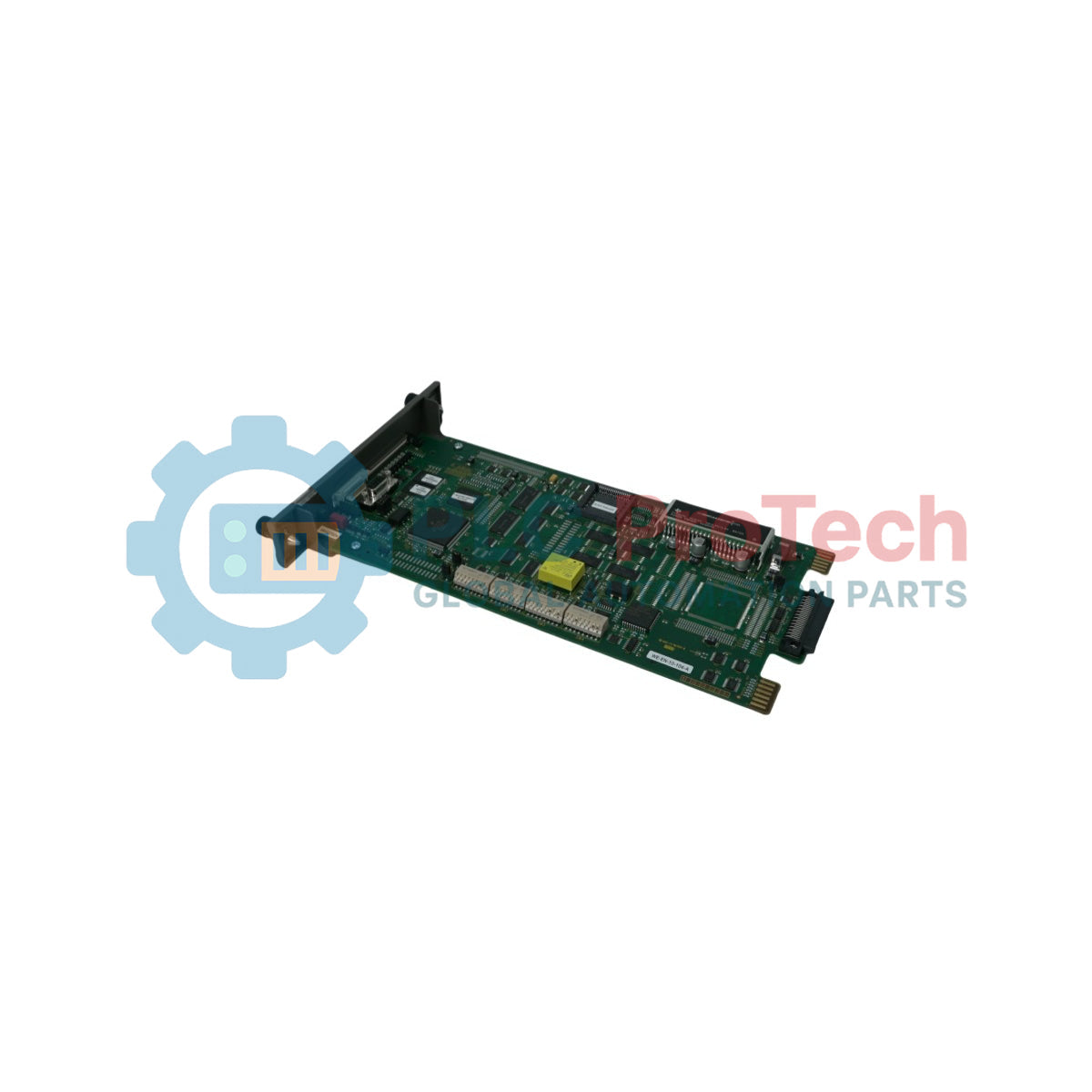
Product Type: Infi-Net to Infi-Net Transfer Module
Barcode: 8537101190
Payment: T/T, Western Union
Weight: 590g
Dimensions: 271.8 X 358.1 X 73.7 mm
Shipping port: Xiamen
Warranty: 12 months
The INIIT13 (INIIT13) functions as a high-performance Infi to Infi-Net local transfer module within the ABB Harmony Rack hardware family. Engineered for mission-critical process control environments such as petro-chemical refining, power generation facilities, and large-scale mining operations, this module establishes seamless data bridging across localized communication networks. By maintaining deterministic data rates and robust signal integrity, the INIIT13 eliminates communication bottlenecks between legacy Infi 90 subsystems and updated Infi-Net architectures. Incorporating this component into your distributed control system (DCS) topology ensures continuous real-time monitoring, drastically reducing unscheduled plant downtime and securing process loop stability.
The INIIT13 local transfer module utilizes an advanced hardware architecture designed to handle high-density data packets without inducing latency into the control loop. It operates as a transparent network interface, managing token-ring data passing and error-checking protocols natively.
Redundancy Capabilities: Supports dual-channel network topologies to provide automatic failover paths. In the event of a primary line disruption, the module shifts traffic to the secondary channel in milliseconds to prevent loss of view for control room operators.
Electrical Isolation: Features onboard optocouplers that isolate local backplane electronics from external network surges, preventing cascading hardware faults.
Diagnostic LEDs: Front-panel indicators provide real-time status updates on network transmit/receive activity, module health, and error states, allowing field technicians to perform rapid troubleshooting.
| Parameter | Specifications |
| Model | INIIT13 |
| Brand | ABB |
| Product Family | Harmony Rack HW ( |
| Module Type | Infi to Infi-Net Local Transfer |
| Country of Origin | India (IN) |
| Gross Weight | 0.59 kg |
| Product Net Width | 10.7 in (271.8 mm) |
| Product Net Height | 14.1 in (358.1 mm) |
| Product Net Length | 2.9 in (73.7 mm) |
| Operating Temperature | 0 to 60 deg C |
| Storage Temperature | -40 to 85 deg C |
| Relative Humidity | 5 to 95% non-condensing |
| Current Consumption | 1.2 A at 5 VDC |
Is the INIIT13 module hot-swappable within the Harmony Rack?
No. To prevent bus contention and potential damage to the backplane electronics, power to the specific rack slot section must be isolated before removing or inserting the transfer module.
What is the direct upgrade or replacement path if the INIIT13 is phased out?
The INIIT13 is directly backward compatible with classic Infi 90 systems. For modernizations, it interfaces with the broader Symphony Plus system via standard termination units. Consult your system topology diagram to verify if firmware upgrades are required on adjacent controller modules.
How do the front-panel LEDs assist in identifying communication failure?
The module features dedicated LEDs for network status. A solid red error LED indicates a failure in hardware self-test routines, while flashing green/yellow LEDs indicate active data transfer. If the LEDs are entirely dark despite system power, check the backplane power supply connections or the internal fuse.
Electrostatic Discharge (ESD) Protection: Always wear a grounded ESD wrist strap clamped to the bare metal of the enclosure frame before handling the module. Sensitive onboard CMOS components are vulnerable to static voltages exceeding 100 V.
Rack Insertion and Torque Limits: Align the module carefully with the plastic guides of the Harmony rack. Slide the module firmly until the backplane connectors seat completely. Tighten the top and bottom captive retaining screws to a torque spec of 0.4 Nm (3.5 in-lbs) to prevent vibration-induced loosening.
Network Cable Shielding: Ensure all Infi-Net coaxial or twinaxial cables are properly grounded at the designated termination panels. Twinaxial shield drains must be connected to the system ground bus at one end only to eliminate ground loop currents that corrupt data transmission.
Thermal Management: Maintain a minimum 1U (1.75 inch) cooling clearance above and below the rack chassis if operating near the upper ambient limit of 60 deg C. Forced-air ventilation within the cabinet is highly recommended to extend the mean time between failures (MTBF).


Global Express Shipping
Returns & Warranty


Global Express Shipping
Returns & Warranty
Orders are processed and delivered Monday-Friday (excluding public holidays).
For full eligibility, restocking fees, and international return details, please view our official Refund & Return Policy .
| Color pattern |
Green
|
| Country of origin |
India
|
| Power source |
DC Power
|

Learn what derivative action contributes to a PID loop, why it can amplify measurement noise and setpoint changes, and how filtering, sampling, and staged tests make D tuning safer.

A practical guide to segmenting, documenting, and testing industrial Ethernet networks so plant teams can isolate faults quickly, control change, and expand without creating fragile dependencies.

Commission IO-Link systematically from master addressing and port modes through IODD selection, PLC byte mapping, parameter backups, device validation, and failure-injection tests.

A practical PowerFlex braking guide covering regenerative energy, resistor resistance and duty cycle, thermal protection, model-specific parameters, and measured commissioning tests.

An industrial joystick is only the first element in a safe motion command chain. This guide covers sensing choices, wiring, signal validation, PLC logic, restart behavior, and commissioning for...

PID tuning becomes safer when engineers can see how proportional, integral, and derivative actions reshape error, output, and response over time. This guide turns live trends into a disciplined...