Functional Description
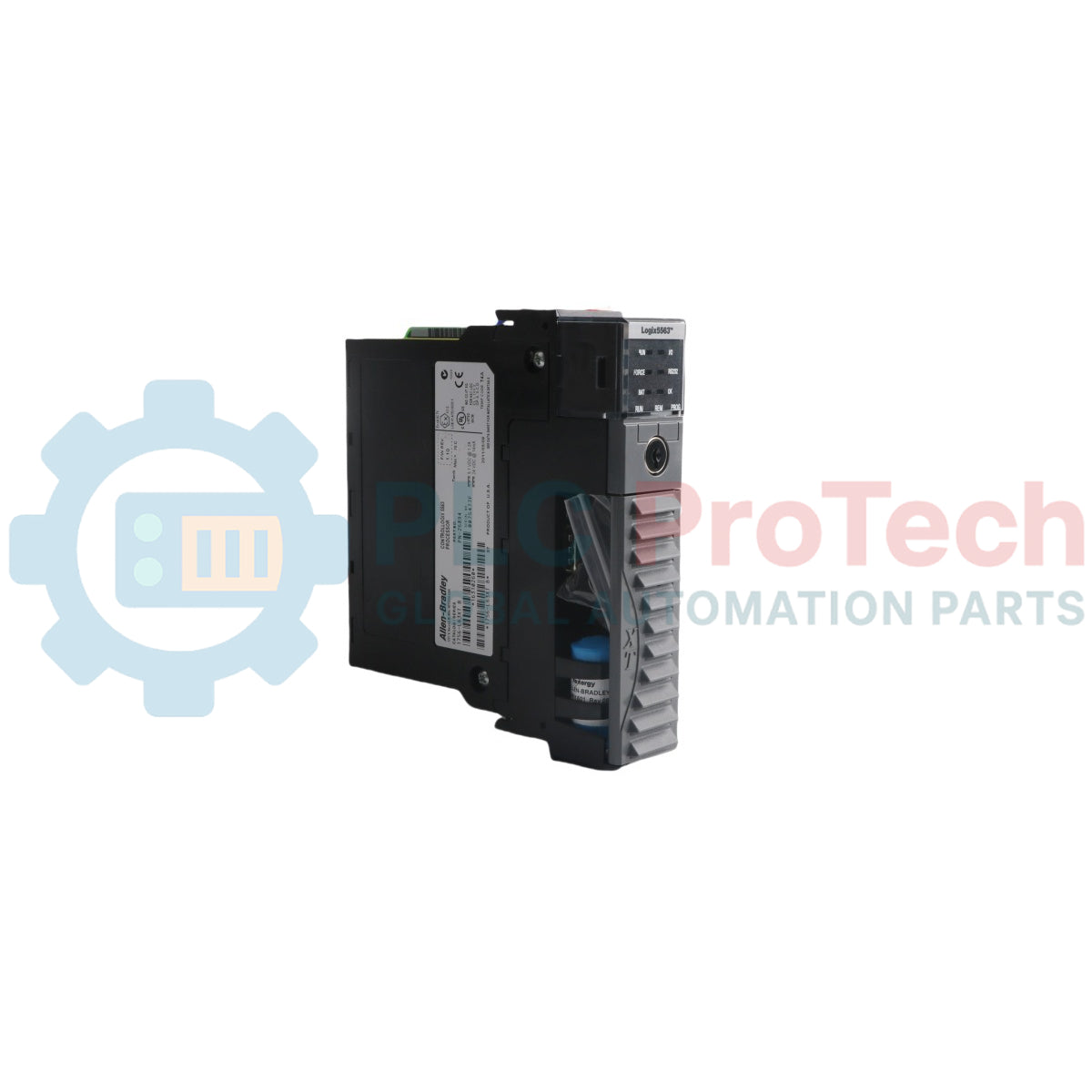
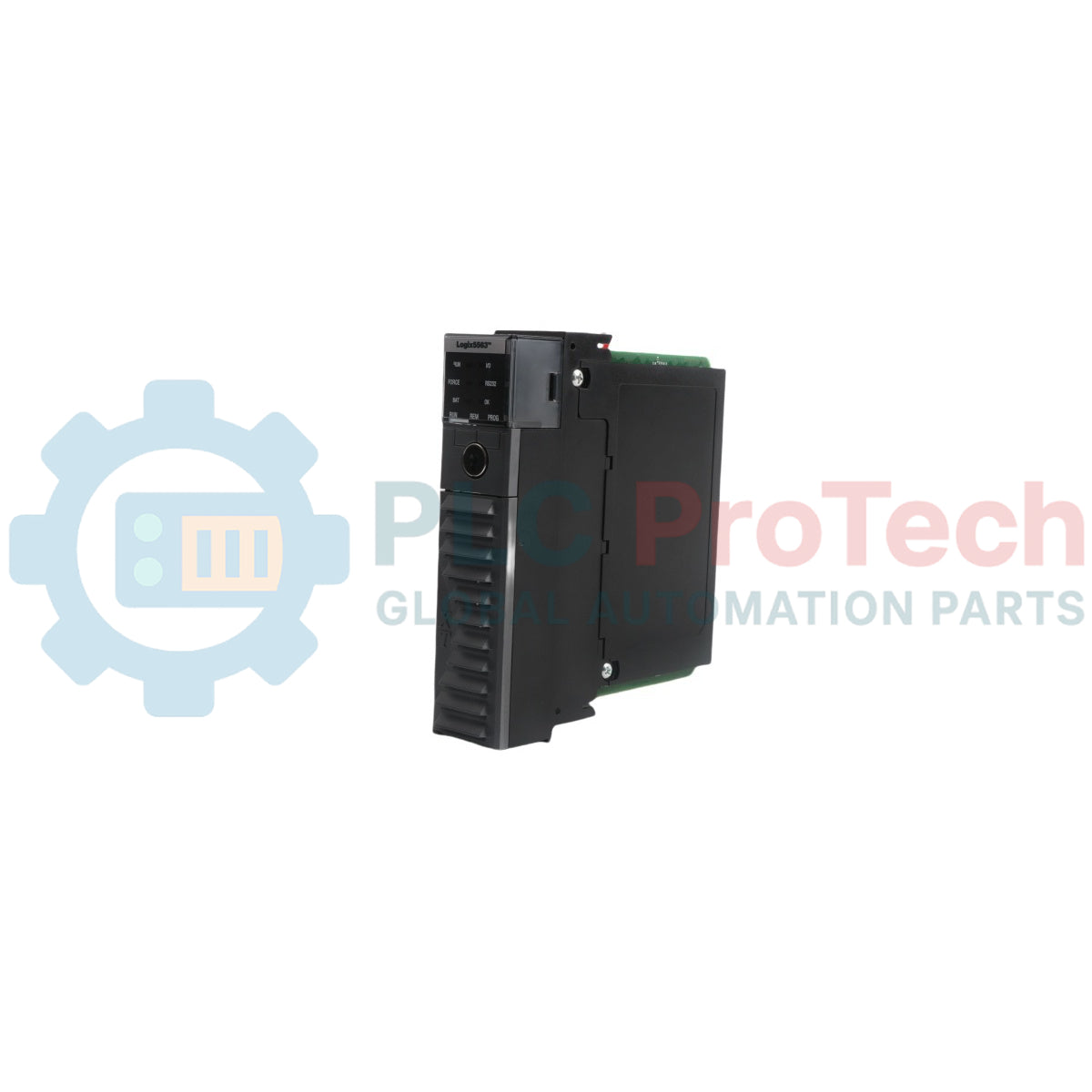
The 1756-L63XT (1756-L63XT) is a ruggedized ControlLogix controller engineered explicitly for execution in extreme temperature and high-vibration atmospheres. Functioning across harsh continuous-process field environments including oil and gas extraction fields, desert-based power substations, and heavy surface mining sites, this high-performance processing unit delivers un-compromised automation control where standard PLC hardware fails. Featuring 8 MB of user execution memory and 478 KB of dedicated I/O memory storage, the 1756-L63XT implements an optimized conformal coating to isolate internal electronics from atmospheric humidity and airborne chemical contaminants. Deploying this extreme environment controller prevents critical data corruption, withstands severe thermal cycling without clock degradation, and provides a bumpless redundancy platform on ControlNet layers to minimize catastrophic plant shutdowns and optimize remote system uptime.
Hardware Infrastructure and Network Capability
The underlying architectural framework of the 1756-L63XT processor emphasizes wide network integration, multitasking logic execution, and strict physical isolation.
-
Tasking Execution Profile: Supports up to 32 independent controller tasks, allowing a maximum of 100 industrial programs per individual task group. This configuration handles complex asynchronous event triggers alongside time-critical loop routines.
-
Broad Interface Integration: Communicates seamlessly over industrial networks via native rack-mounted adapters, including EtherNet/IP, ControlNet, DeviceNet, Remote I/O, SynchLink, and Data Highway Plus (DH+).
-
Built-In Point-to-Point Serial Interface: Incorporates a 1-port RS-232 serial communication path executing DF1 full/half-duplex channels, DF1 radio modem parameters, master ASCII text streams, and Modbus protocol translation via localized controller logic.
-
Redundant System Architecture: Integrates cross-loading redundancy engines that support synchronized partner tracking over a single ControlNet network link, ensuring seamless main-to-backup processor transfer without loss of process state variable data.
Technical Performance Matrix
| Operational Parameter |
Detailed Engineering Values |
| Model |
1756-L63XT |
| Brand |
Allen-Bradley / Rockwell Automation |
| Component Classification |
Extreme Environment (XT) Processor Module |
| Country of Origin |
United States (US) |
| Net Hardware Weight |
0.57 kg (1.25 lbs) |
| User Memory Capacity |
8 Megabytes |
| Dedicated I/O Memory |
478 Kilobytes |
| Maximum Total I/O Capacity |
128,000 Total (128,000 Digital / 4,000 Analog) |
| Continuous Circuit Isolation |
30 V Continuous (Tested at 720 V DC for 60 s) |
| Current Draw at 5.1 V DC |
1200 mA |
| Current Draw at 24 V DC |
14 mA |
| Total Power Dissipation |
3.5 W |
| Thermal Energy Dissipation |
11.9 BTU per hour |
| Atmospheric Operating Temp |
-25 to 70 deg C (-13 to 158 deg F) |
| Non-Operating Storage Temp |
-40 to 85 deg C (-40 to 185 deg F) |
| Relative Humidity Range |
5 to 95% (Non-condensing) |
| Operational Mechanical Vibration |
2 g acceleration at 10 to 500 Hz |
| Maximum Operating Shock |
30 g mechanical pulse impact |
| Maximum Non-Operating Shock |
50 g mechanical pulse impact |
Application and Field Engineering FAQs
Why does the surrounding temperature rating decrease when using specific chassis types?
The 1756-L63XT is independently rated for up to 70 deg C surrounding air. However, when mounted inside a 1756-A7LXT extreme environment chassis, the system thermal restriction limits the assembly to -25 to 60 deg C. Conversely, when integrated within a paired FLEX I/O-XT field distribution layout, the bottom thermal tolerance drops safely down to -20 to 70 deg C.
What specific nonvolatile memory cards can be utilized for non-erasable backup?
The module is strictly limited to commercial-grade industrial CompactFlash cards. It supports either the 64 megabyte card model 1784-CF64 or the high-capacity 128 megabyte card model 1784-CF128. Standard commercial off-the-shelf non-Rockwell flash cards must not be deployed.
How does the unit maintain data integrity during a complete loss of chassis backplane power?
The 1756-L63XT utilizes an integrated energy storage module or a replaceable industrial lithium battery pack. This power backup supplies continuous trickle currents to the SRAM block, preserving active variable tables, internal time clocks, and system status markers until system line voltages recover.
Field Commissioning and Rigid Safety Guidelines
-
Chassis Thermal Clearances and Airflow: When installing the 1756-L63XT in a sealed extreme-environment NEMA enclosure, ensure proper vertical spacing above and below the 1756-A4LXT, 1756-A5XT, or 1756-A7XT chassis. Maintain at least 50.8 mm (2.0 inches) of un-obstructed air clearance around the outer enclosure housing to guarantee passive natural convection cooling across the processor faceplate at high ambient operating peaks.
-
Electrostatic Discharge Protection protocols: Onboard processing chips and surface-mount electronic networks are highly susceptible to sudden ESD arcs. Maintenance engineers must engage a grounded ESD wristband bonded directly to the metal enclosure frame prior to sliding the controller out of its chassis slot or manipulating the front stop/reset pushbutton interface.
-
Serial Port Shielding and Noise Suppression: All custom RS-232 serial links utilizing the integrated channel must implement dedicated shielded cabling. Terminate the overall cable shield braid to the metal D-shell casing on the controller end. Do not route the serial lines in close proximity to high-current motor drive cables or inductive power lines to avoid signal interference on ASCII or DF1 networks.
-
Module Mechanical Seating and Torque: Align the upper and lower circuit card edges with the designated plastic chassis guide tracks. Press the module back smoothly until the rear connectors seat securely into the active backplane bus. Tighten the top and bottom latching screws to a torque spec of 0.6 Nm (5.3 in-lbs) to avoid contact loss under high floor vibrations up to 2 g.