Product Overview
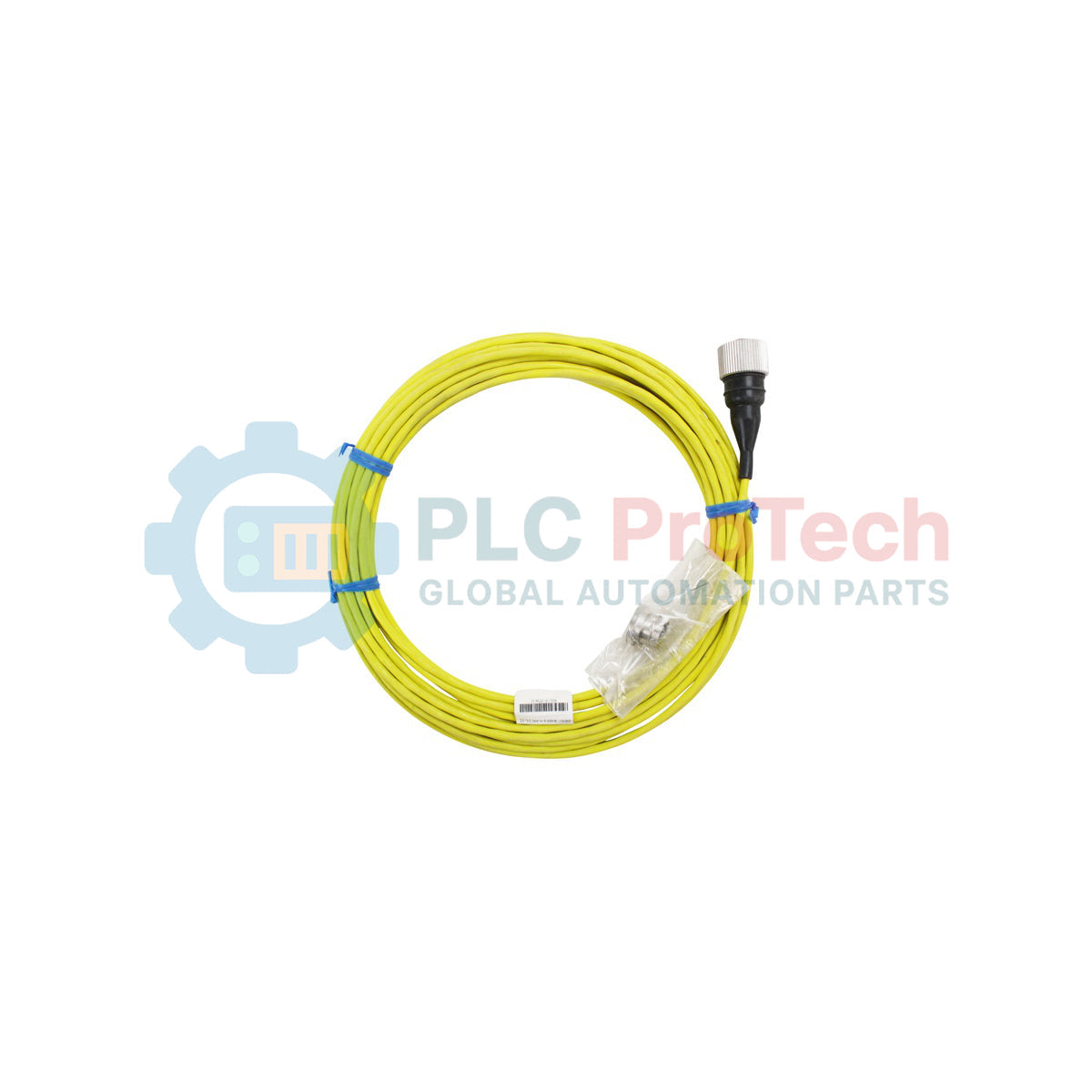
The CB2W100-112 interconnect cable from Bently Nevada is designed for long-distance signal transmission within industrial machinery protection and vibration monitoring systems. This cable is commonly installed between proximity probes, monitoring modules, junction boxes, and condition monitoring equipment used on steam turbines, centrifugal compressors, generators, pumps, and large rotating machinery operating in refinery, petrochemical, mining, and power generation facilities.
The 112 ft cable length supports extended routing requirements inside large process plants where monitoring cabinets are positioned far from rotating assets. Bently Nevada designs the CB2W100 series for stable signal integrity in electrically noisy industrial environments exposed to vibration, oil contamination, heat, and continuous mechanical operation. The cable construction supports reliable communication between field transducers and monitoring systems, helping maintenance teams maintain accurate machinery condition data and reduce unplanned shutdown events caused by signal instability or wiring failures.
Suffix Breakdown
| Code Segment |
Description |
| CB2W100 |
Interconnect cable series |
| 112 |
112 ft cable length |
| Metric Length Equivalent |
34.1 metres |
Cable Design and Application Details
The CB2W100 series is engineered for industrial machinery monitoring installations requiring stable low-noise signal transmission over extended cable distances. The cable supports integration with Bently Nevada vibration monitoring systems commonly installed on API rotating equipment.
Its industrial-grade construction helps resist environmental stress caused by continuous machine vibration, oil exposure, and elevated ambient temperatures commonly found in turbine halls and compressor stations. The long cable length allows flexible routing between field instrumentation and centralized monitoring cabinets without requiring additional intermediate connections.
The cable is widely used in condition monitoring applications where maintaining signal reliability remains critical for predictive maintenance and machinery protection performance.
Technical Specifications
| Parameter |
Specification |
| Model |
CB2W100-112 |
| Brand |
Bently Nevada |
| Product Type |
Interconnect Cable |
| Origin |
U.S.A |
| Cable Length |
112 ft |
| Cable Length Metric |
34.1 metres |
| Application |
Machinery protection and vibration monitoring |
| Installation Area |
Turbines, compressors, motors, generators |
| Weight |
1 kg |
| Shipping Weight |
2 kg |
| Operating Temp |
Suitable for industrial process environments |
| Power Consumption |
Passive cable assembly |
| Cable Routing |
Long-distance industrial signal transmission |
Frequently Asked Questions
What is the primary use of the CB2W100-112 cable?
The cable is used for signal transmission between field transducers and Bently Nevada machinery monitoring systems installed on rotating equipment.
Can this cable be installed in refinery and power plant environments?
Yes. The cable is designed for industrial environments with vibration, heat, and continuous machinery operation.
What is the total cable length of this model?
This version provides a total cable length of 112 ft, equivalent to approximately 34.1 metres.
Is the CB2W100-112 suitable for long cable routing applications?
Yes. The extended cable length supports installations where monitoring cabinets are located far from machinery assets.
Installation Guidelines and Field Recommendations
Route the cable separately from high-voltage motor conductors and VFD output wiring to minimize electromagnetic interference within machinery monitoring circuits.
Use vibration-resistant cable clamps when installing near turbines, compressors, or large motors. Unsupported cable sections may experience long-term mechanical fatigue under continuous vibration conditions.
Inspect cable routing paths for sharp metal edges and excessive heat exposure before commissioning. Continuous abrasion or thermal stress may reduce cable service life in industrial process environments.
For outdoor installations, use sealed conduit systems and industrial-grade cable protection methods to prevent moisture intrusion and environmental contamination.