


Commissioning Three-Phase Power Measurement Safely
A field-focused guide to commissioning three-phase power measurement: verify CT and voltage wiring, scaling, phase order, signal quality, PLC mapping, alarms, and safe maintenance before trusting...
Manufacturer: General Electric
Country of origin:United States
Product Type: Power Distribution Board
Payment: T/T, Western Union
Weight: 2500g
Dimensions: 17.78(W) × 7.62(D) × 51.81(H) cm
Shipping port: Xiamen
Warranty: 12 months
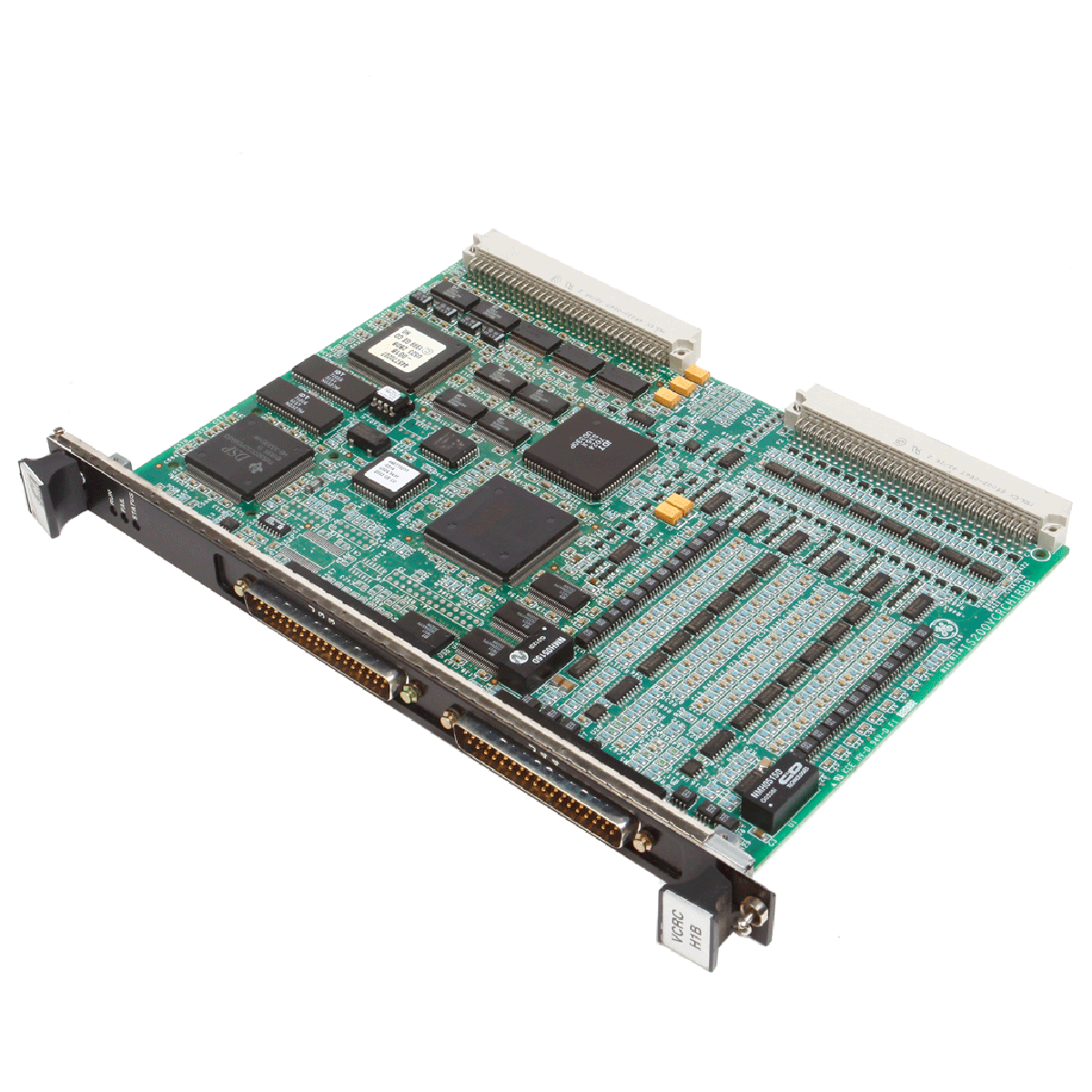
The IS200JPDCG1A functions as a component-dense power distribution board within the General Electric Mark VI Turbine Control System. It combines input and output distribution functions to deliver 125 V dc, 115/230 V ac, and 28 V dc to other terminal boards and packs within steam, gas, or wind turbine management setups. The IS200JPDCG1A acts as the primary hosting module for a Power Distribution System Feedback (PPDA) I/O pack, directly capturing and multiplexing diagnostic feedback signals from both local circuits and daisy-chained upstream distribution boards to facilitate system monitoring via the IONet.
| Module Version | Configuration Detail |
|---|---|
| IS2020JPDCG01 | Standard version for most power distribution applications |
| IS2020JPDCG02 | Special version including a wire jumper on the D1 diode assembly to enable JD2 Battery B input as an output |
| Item | Description / Value |
|---|---|
| Manufacturer | General Electric |
| Series | Mark VI Speedtronic |
| Part Number | IS200JPDCG1A |
| Functional Abbreviation | JPDC |
| 28 V dc Inputs (JR, JS, JT) | 19 A max each, 15 V max |
| 28 V dc Un-fused Outputs (J1, JP1, JCR, JCS, JCT, JRS, JSS, JTS) | 13 A max per pin; total current not to exceed 12.5 A |
| 28 V dc Fused Outputs (JR1-JR10, JS1-JS8, JT1-JT8) | 1.6 A polyfuse per connection |
| 115/230 V ac Input (JAC) | 13 A max, 115/230 V ac, 50/60 Hz (30 A circuit breaker protection) |
| 115/230 V ac Outputs (JAC1, JAC2) | 10 A max each, protected by 10 A 250 V time-delay fuses |
| 125 V dc Battery Inputs (JD1, JD2) | 20 A max total current, 90-145 V dc input voltage range |
| 125 V dc DACA Input (JZ2) | 10 A max, 125 V dc nominal, 145 V dc maximum |
| Impedance to Ground | >75 kOhm (JP1 jumper in place), >1500 kOhm (JP1 jumper removed) |
| Operating Temperature Range | -30 to 65 degC (-22 to 149 Fahrenheit) |
| Board Size | 17.2 cm Wide x 48.26 cm High (6.75 in x 19.0 in) |
| Module Size | 17.78 cm Wide x 51.81 cm High x 7.62 cm Deep (7.0 in x 20.4 in x 3 in) |
| Factory Location | Salem, Virginia, USA |
| Connector / Signal | Function |
|---|---|
| JR, JS, JT | 28 V dc Power Supply Inputs |
| JAC | 115/230 V ac Power Input |
| JAC1, JAC2 | 115/230 V ac Power Outputs (JAC1 is switched via SWAC1) |
| JD1, JD2 | 125 V dc Battery Inputs (OR'ed together via diode module D1) |
| JZ2 | 125 V dc DACA Module Connection |
| J1R, J1S, J1T | 125 V dc outputs to external dc/dc 28 V dc power supplies |
| J7A, J7B, J7C | 125 V dc outputs to TRLY Relay Output terminal boards |
| J8A, J8B, J8C | 125 V dc short-circuit limited outputs with 22 Ohm series resistors for TBCI boards |
| P2 | 50-pin ribbon cable connector for diagnostic daisy chain inputs |
| JA1 | 62-pin D-shell connection for the PPDA I/O feedback pack |
| TB1 | 5-screw terminal block for 28 V dc Bus Tie configuration |
| TB2, TB3, TB4 | Direct access terminal blocks for raw analog diagnostic feedback signals |

Global Express Shipping
Returns & Warranty
Global Express Shipping
Returns & Warranty
Orders are processed and delivered Monday-Friday (excluding public holidays).
For full eligibility, restocking fees, and international return details, please view our official Refund & Return Policy .
| Country of origin |
United States
|

A field-focused guide to commissioning three-phase power measurement: verify CT and voltage wiring, scaling, phase order, signal quality, PLC mapping, alarms, and safe maintenance before trusting...

Build and verify a first TwinCAT PLC project on a Beckhoff IPC. This checklist covers target selection, EtherCAT discovery, I/O mapping, safe activation, restart tests, and commissioning records.

A practical commissioning sequence for KEPServerEX OPC UA connections: define data ownership, test tags locally, configure endpoint and certificate trust, limit access, then verify failure recovery...

Commissioning an Ethernet-connected PLC often starts with the laptop, not the controller. Learn how to record existing settings, choose a temporary address, test connectivity, and restore the plant...

Combustible dust controls require more than alarms. Learn how to map dust generation, select instrumentation, design interlocks, handle failed feedback, test safe states, and maintain the full...

Hairpin windings raise slot fill and support compact traction motors, but conductor geometry, AC losses, insulation damage, weld quality, and cooling determine whether the design meets its targets.