


Derivative Action in PID Control Without Noise Problems
Learn what derivative action contributes to a PID loop, why it can amplify measurement noise and setpoint changes, and how filtering, sampling, and staged tests make D tuning safer.
Manufacturer: General Electric
Product No.: UR-6DV
Country of origin:United States
Product Type: Digital I/O Module
Barcode: 8537101190
Payment: T/T, Western Union
Weight: 850g
Dimensions: 8.2cm x 12.2cm x 6cm
Shipping port: Xiamen
Warranty: 12 months
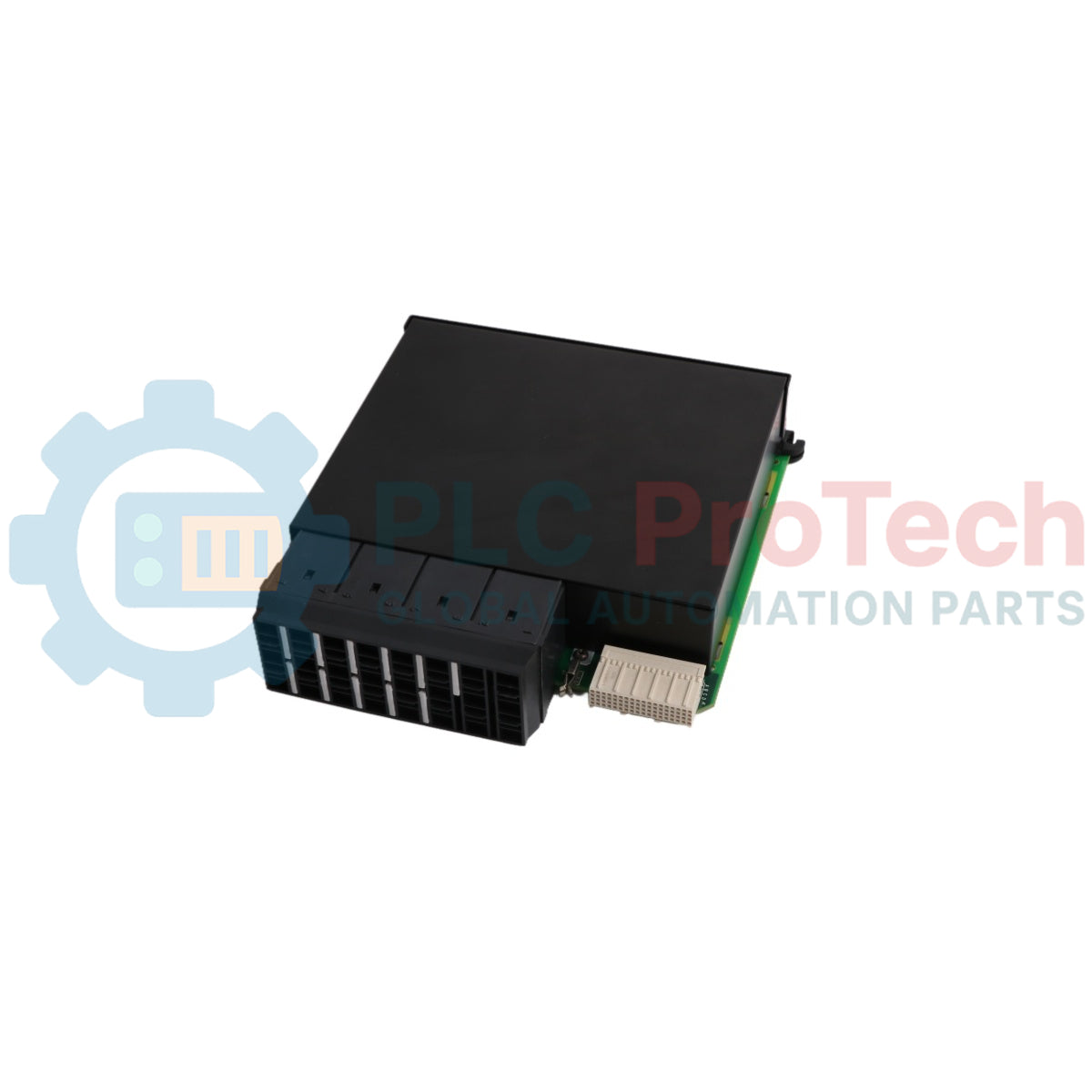
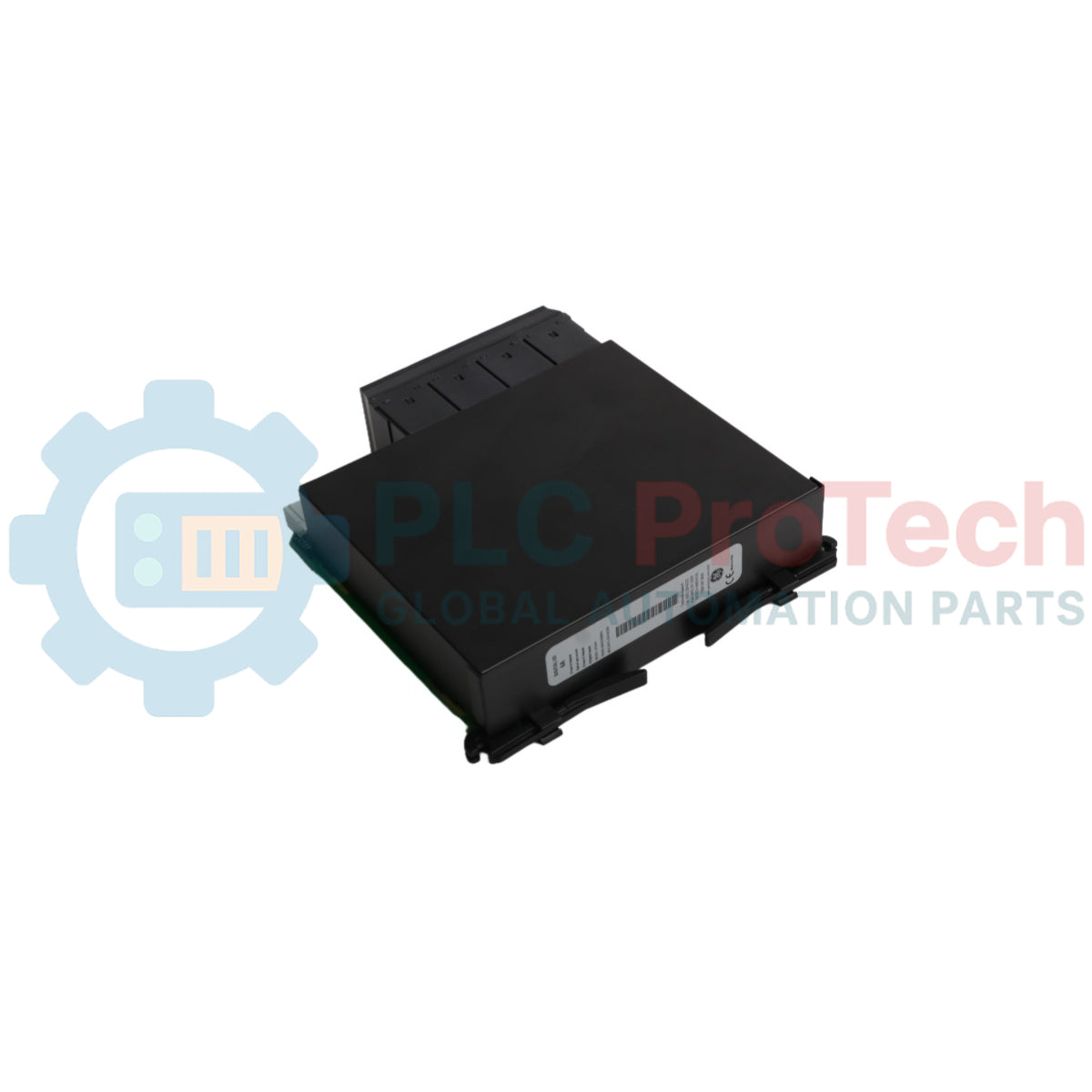
The UR6DV (UR-6DV) is a high-density digital input/output module engineered for the General Electric Universal Relay (UR) Series platform. This module serves as a critical hardware interface between external field switchgear devices and the internal processing environment of protection, control, and monitoring relays. It provides simultaneous discrete signal acquisition and heavy-duty control execution capabilities, facilitating high-speed communication over the internal backplane bus. Designed for deployment in utility substations, power generation facilities, and critical heavy industrial networks, the UR6DV ensures reliable monitoring of breaker status auxiliary contacts, disconnect switches, and external lockout systems while providing low-latency control outputs for protective tripping circuits. It functions seamlessly within modular UR chassis configurations, maintaining full compatibility with core processor modules and EnerVista orchestration software.
| Parameter | Specification |
|---|---|
| Manufacturer | GE Multilin |
| Country of Origin | Canada |
| Module Type | Digital Input / Output Module |
| Compatible Series | Universal Relay (UR) Series |
| Input Threshold Options | Configurable for 24 VDC, 48 VDC, 125 VDC, or 250 VDC utility control circuits |
| Operating Temperature | -40 deg C to 60 deg C |
| Storage Temperature | -40 deg C to 85 deg C |
| Relative Humidity | Up to 95% non-condensing |
| Surge Immunity Standard | Compliant with IEEE C37.90.1 and IEC 60255 |
| Weight | 0.85 kg |
| Approximate Dimensions | Standard UR Series rear slot plug-in card dimensions |
What is the primary function of the UR6DV module inside a Universal Relay chassis?
The module acts as the physical link between external discrete field components and the internal microprocessor logic, reading high-voltage status indications and executing hardware trip or close commands.
Does this module support hot-swapping while the relay is active?
No, complete isolation of the chassis power supply and external field wetting voltages is required prior to removal to avoid unintentional circuit breaker tripping or backplane communication damage.
How does the input circuitry manage high levels of electrical noise common in substations?
The digital inputs employ selectable hardware thresholds combined with programmable software debounce timers to filter out high-frequency transients, inductive coupling, and battery ground faults.
Are the contact outputs capable of directly breaking inductive circuit breaker trip currents?
Yes, the internal relays are designed with high inductive current ratings and arc suppression properties to reliably control standard utility switchgear trip coils.


Global Express Shipping
Returns & Warranty

Global Express Shipping
Returns & Warranty
Orders are processed and delivered Monday-Friday (excluding public holidays).
For full eligibility, restocking fees, and international return details, please view our official Refund & Return Policy .
| Color pattern |
Black
|
| Country of origin |
United States
|
| Power source |
DC Power
|

Learn what derivative action contributes to a PID loop, why it can amplify measurement noise and setpoint changes, and how filtering, sampling, and staged tests make D tuning safer.

A practical guide to segmenting, documenting, and testing industrial Ethernet networks so plant teams can isolate faults quickly, control change, and expand without creating fragile dependencies.

Commission IO-Link systematically from master addressing and port modes through IODD selection, PLC byte mapping, parameter backups, device validation, and failure-injection tests.

A practical PowerFlex braking guide covering regenerative energy, resistor resistance and duty cycle, thermal protection, model-specific parameters, and measured commissioning tests.

An industrial joystick is only the first element in a safe motion command chain. This guide covers sensing choices, wiring, signal validation, PLC logic, restart behavior, and commissioning for...

PID tuning becomes safer when engineers can see how proportional, integral, and derivative actions reshape error, output, and response over time. This guide turns live trends into a disciplined...