


First TwinCAT PLC Project on a Beckhoff IPC
Build and verify a first TwinCAT PLC project on a Beckhoff IPC. This checklist covers target selection, EtherCAT discovery, I/O mapping, safe activation, restart tests, and commissioning records.
Manufacturer: General Electric
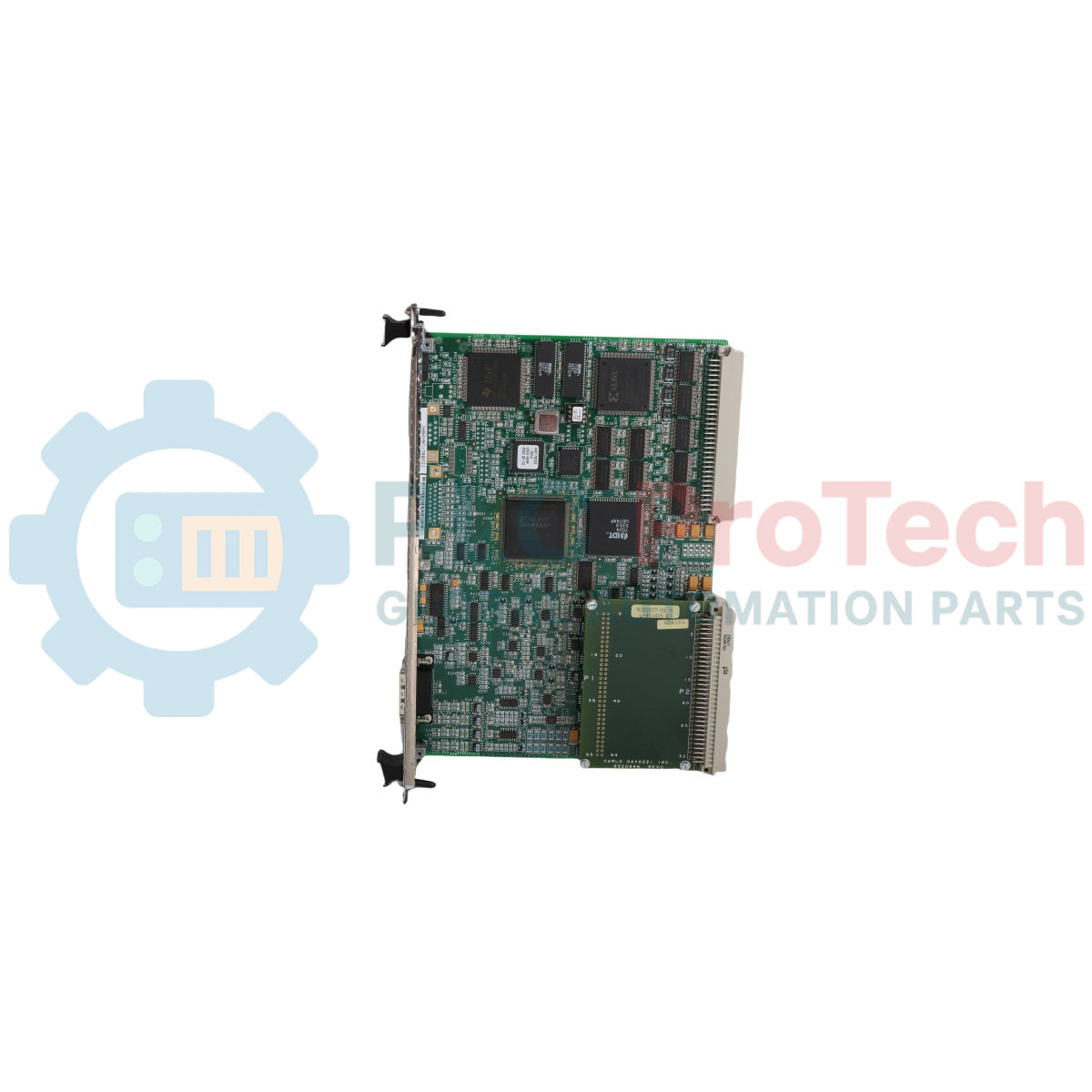
Product No.: IS200VTURH2BAC
Country of origin:United States
Product Type: Vibration Transducer Interface Module
Barcode: 8537101190
Payment: T/T, Western Union
Weight: 290g
Dimensions: 11.00 x 9.00 x 3.00 inches
Shipping port: Xiamen
Warranty: 12 months
The IS200VTURH2BAC functions as a high-density vibration transducer interface module manufactured by General Electric as part of the Mark VI Speedtronic turbine control platform. This module interfaces with terminal boards like the TTUR to bring critical shaft speed and sensor data into the controller environment. It serves a key role in the primary overspeed protection loop, routing trip signals through to the TRPG board when fault conditions are identified, which are subsequently resolved through three-relay voting circuits to systematically isolate power from the trip solenoids.
Beyond dynamic sensing inputs, the IS200VTURH2BAC executes the system auto-synchronization algorithm. The board monitors dual Potential Transformer (PT) inputs from both the generator and bus lines to actively track phase and slip variations. When armed by the application runtime code, it leverages an interrupt-driven zero-voltage crossing technique to modulate phase, slip, and acceleration metrics, subsequently triggering the K25 breaker relay closure while maintaining adaptive compensation parameters for physical breaker time lags.
| Item | Description / Value |
|---|---|
| Manufacturer | General Electric |
| Series | Mark VI |
| Part Number | IS200VTURH2BAC |
| Product Type | Vibration Transducer Interface Module |
| Instruction Manual | GEH-6421 |
| Number of Analog Voltage Inputs | 6 |
| Common Mode Voltage Range | +/-5 V |
| Board Rating | 125 V dc |
| Operating Temperature | 0 to 60 Celsius |
| Dimensions | 11.00 x 9.00 x 3.00 inches |
| Country of Origin | United States |


Global Express Shipping
Returns & Warranty


Global Express Shipping
Returns & Warranty
Orders are processed and delivered Monday-Friday (excluding public holidays).
For full eligibility, restocking fees, and international return details, please view our official Refund & Return Policy .
| Color pattern |
Black
|
| Country of origin |
United States
|
| Power source |
DC Power
|

Build and verify a first TwinCAT PLC project on a Beckhoff IPC. This checklist covers target selection, EtherCAT discovery, I/O mapping, safe activation, restart tests, and commissioning records.

A practical commissioning sequence for KEPServerEX OPC UA connections: define data ownership, test tags locally, configure endpoint and certificate trust, limit access, then verify failure recovery...

Commissioning an Ethernet-connected PLC often starts with the laptop, not the controller. Learn how to record existing settings, choose a temporary address, test connectivity, and restore the plant...

Combustible dust controls require more than alarms. Learn how to map dust generation, select instrumentation, design interlocks, handle failed feedback, test safe states, and maintain the full...

Hairpin windings raise slot fill and support compact traction motors, but conductor geometry, AC losses, insulation damage, weld quality, and cooling determine whether the design meets its targets.

Use Ansible to standardize SCADA server changes without expanding OT risk. This guide covers inventories, idempotent playbooks, staged testing, credentials, logging, and practical rollback controls.