Product Overview
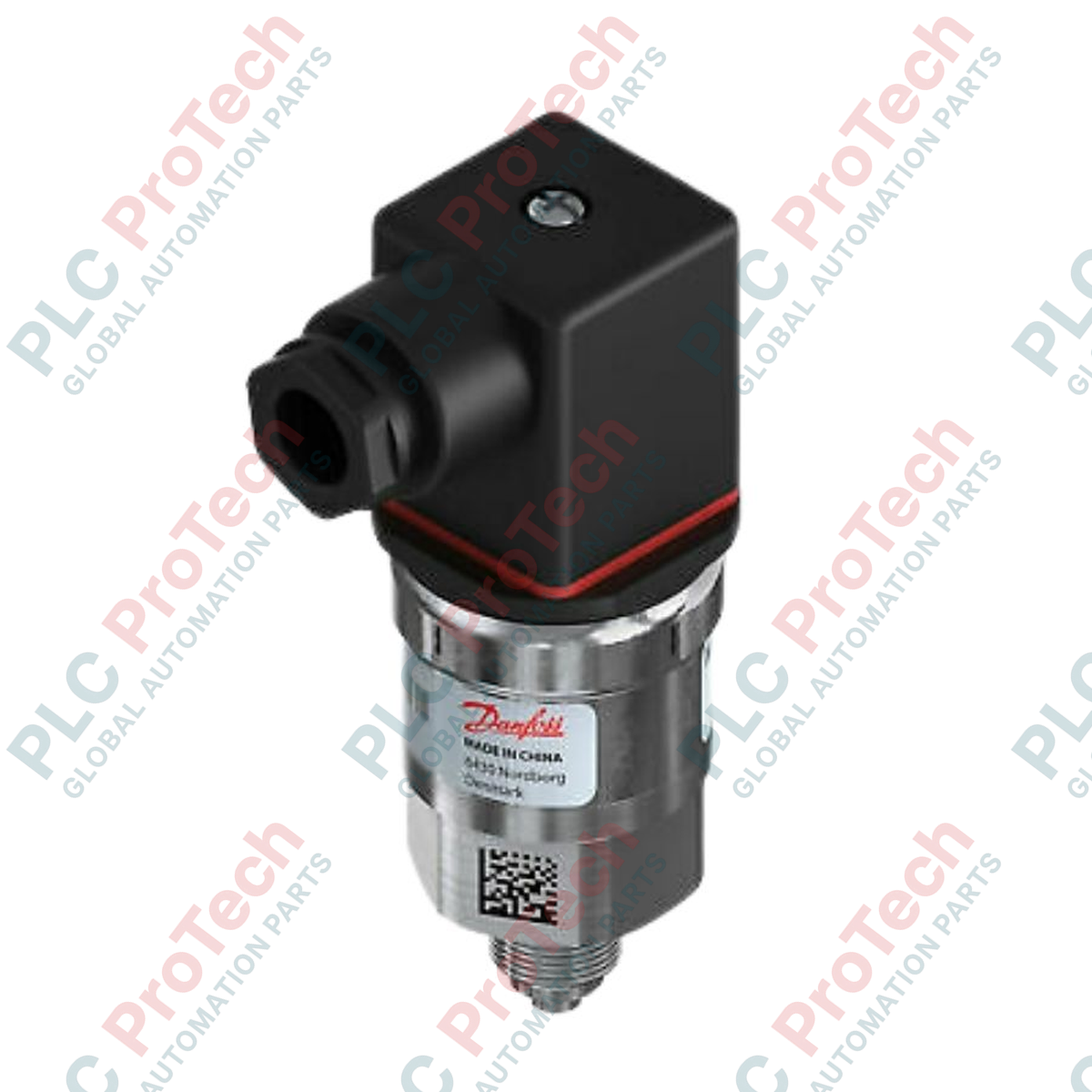
The 060G1105 (060G1105) is a compact yet heavy-duty MBS 3000 series pressure transmitter engineered by Danfoss to provide reliable pressure measurement in almost all industrial applications. This model is designed to withstand harsh environmental conditions, including severe medium temperatures and high levels of electromagnetic interference. By converting a 0 - 40 bar gauge pressure range into a standardized 4 - 20 mA output signal, the 060G1105 ensures high-fidelity data transmission to remote PLC or DCS systems. Its robust design is optimized for hydraulic systems, air compressors, and general industrial machinery where accuracy and vibration resistance are critical to preventing system failure and reducing maintenance overhead.
Technical Configuration
The MBS 3000 platform utilizes a piezo-resistive sensing element, which offers superior stability and protection against pressure peaks. The 060G1105 configuration specifically features a G 1/4 A (EN 837) pressure connection, a standard in European hydraulic and pneumatic interfaces, ensuring a leak-proof mechanical fit. For electrical integration, it employs the widely recognized Pg 9 (EN 175301-803) plug, facilitating quick installation and service. As a "Gauge" (relative) pressure transmitter, it references the ambient atmospheric pressure, making it perfectly suited for open-loop systems where monitoring the internal pressure relative to the environment is the primary control objective. The internal electronics are laser-calibrated to maintain high linearity throughout the 40 bar measuring span.
Technical Specifications
| Feature |
Specification |
| Model |
060G1105 |
| Brand |
Danfoss |
| Type |
MBS 3000 - 2611 - 1 AB04 |
| Measuring Range |
0 - 40 bar |
| Output Signal |
4 - 20 mA |
| Pressure Reference |
Gauge (Relative) |
| Pressure Connection |
G 1/4 A (EN 837) |
| Electrical Connection |
Plug Pg 9 (EN 175301-803-A) |
| Operating Temp |
-40 to 85 deg C |
| Net Weight |
0.3 kg |
| Shipping Weight |
1.5 kg |
Technical FAQs
How does the 060G1105 handle hydraulic spikes or cavitation?
The MBS 3000 series is designed with high overpressure capabilities. However, for systems with frequent hydraulic shocks, it is recommended to use the MBS 3050 variant (which includes an integrated pulse-snubber) or install a separate damping orifice to protect the piezo-resistive sensor from mechanical fatigue.
What is the maximum cable length for the 4 - 20 mA signal?
Because the 060G1105 uses a current loop signal, it can typically transmit data over distances exceeding 500 meters without significant signal loss, provided the loop resistance (including cable and controller input resistance) does not exceed the transmitter's maximum load capability at the specific supply voltage.
Can the Pg 9 plug be replaced with a different electrical interface?
The 060G1105 is built with a fixed Pg 9 housing. To change the electrical interface (e.g., to an M12 connector), you would need to specify a different sub-model within the MBS 3000 series, as the housing and internal wiring are factory-sealed to maintain its industrial IP rating.
Engineering & Installation Guide
-
Mechanical Torque & Sealing: When mounting the G 1/4 A thread, use a copper or bonded seal washer to ensure a pressure-tight connection. Tighten to the specified torque (typically 20-30 Nm for this thread type) to avoid stripping the threads or damaging the internal sensing element through excessive mechanical stress.
-
Environmental Sealing: To maintain the IP65 protection rating of the Pg 9 plug, ensure the included rubber gasket is seated correctly between the plug and the transmitter body. Ensure the cable gland is tightened sufficiently around the cable jacket to prevent moisture ingress through capillary action.
-
Signal Shielding: In environments with high-frequency noise (such as near Variable Frequency Drives), use a shielded cable for the 4 - 20 mA loop. The shield should be connected to the functional ground at the control cabinet end only to prevent ground loops that could introduce offset errors in the pressure reading.