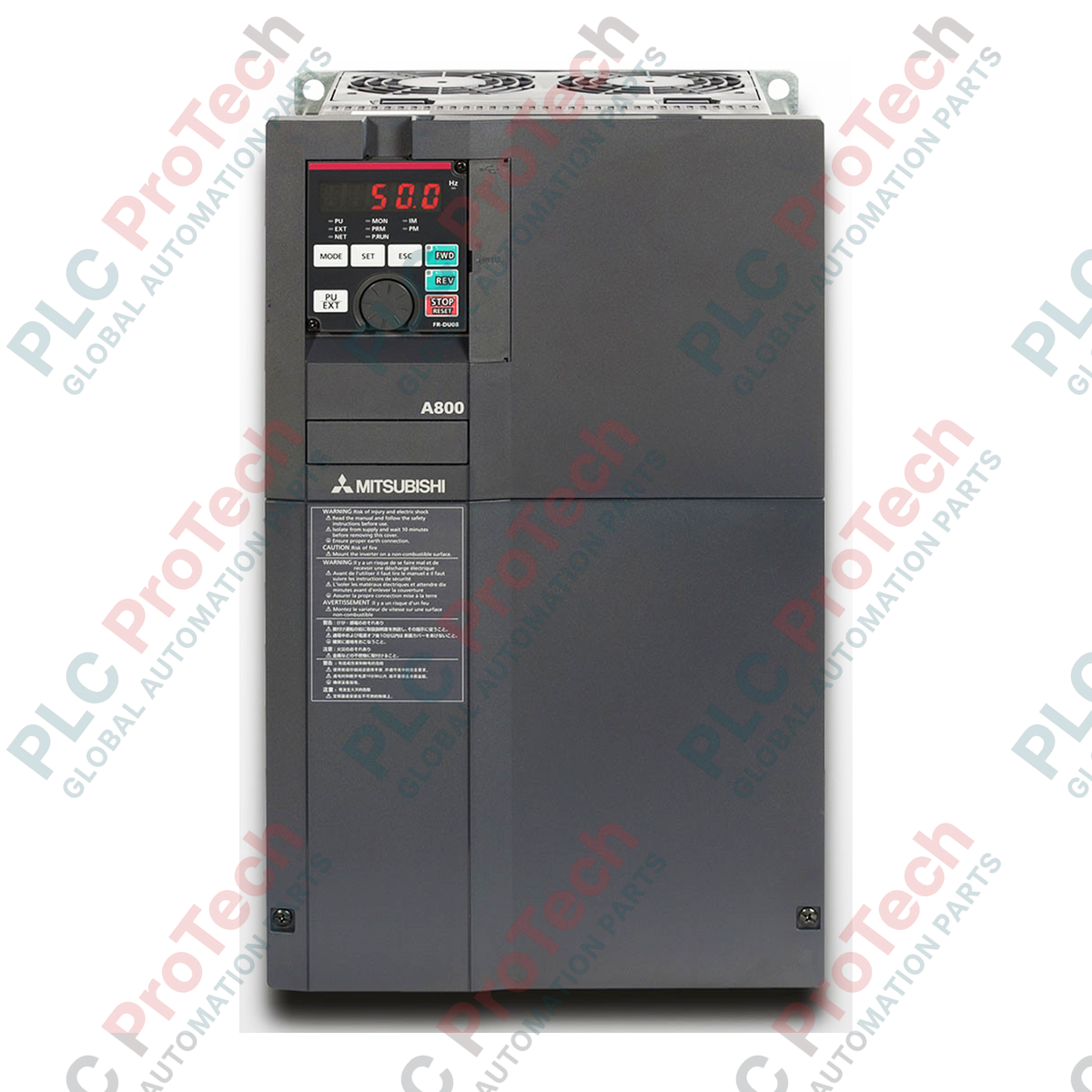
Description
Optimized for high-performance motor control, the FR-A840-00052-2-60 variable frequency drive belongs to the premium Mitsubishi Electric FR-A800 series. This three-phase 400V class inverter delivers precise speed and torque regulation for industrial automation systems. Featuring a protective circuit board coating (3C2) and a self-cooling design, this unit is engineered for reliable operation in demanding environments. The drive is configured as a standard CA type model, offering robust integration capabilities with external control systems and backplanes.
Features
- Three-phase 400V class input voltage compatibility.
- Integrated 3C2 conformal circuit board coating for enhanced environmental protection against corrosive gases and moisture.
- IP20 enclosed protective structure suitable for control cabinet installation.
- Self-cooling thermal management system eliminating the need for external fan maintenance on smaller frame sizes.
- Standard CA type configuration designed for global industrial standards.
Applications
- Conveyor systems and material handling.
- Industrial pumps, fans, and blowers.
- Packaging and textile machinery.
- General machine tool and process automation.
Technical Specifications
| Manufacturer |
Mitsubishi Electric |
| Part Number/Model |
FR-A840-00052-2-60 |
| Series |
FR-A800 |
| Voltage Class |
400V class |
| Rated Input AC Voltage/Frequency |
Three-phase 380 to 500V AC, 50Hz/60Hz |
| Permissible AC Voltage Fluctuation |
323 to 550V AC, 50Hz/60Hz |
| SLD Rated Inverter Current |
5.2 A (indicated by 00052) |
| Structure/Functionality |
Standard model (0) |
| Type Designation |
CA (-2) |
| Circuit Board Coating |
Conformal coating (3C2) |
| Plated Conductor |
Without plated conductor |
| Protective Structure (IEC 60529) |
Enclosed type (IP20) |
| Cooling System |
Self-cooling |
| Weight |
2.8 kg |
Installation Guidelines
For optimal performance and safety, mount the inverter vertically on a flat, non-flammable surface inside an IP20-rated or higher control cabinet. Ensure adequate clearance around the unit to allow natural convection for the self-cooling system. All power and control wiring must be routed separately to prevent electromagnetic interference. Ground the inverter properly in accordance with local electrical codes, and use shielded cables for motor connections to minimize high-frequency noise emissions.