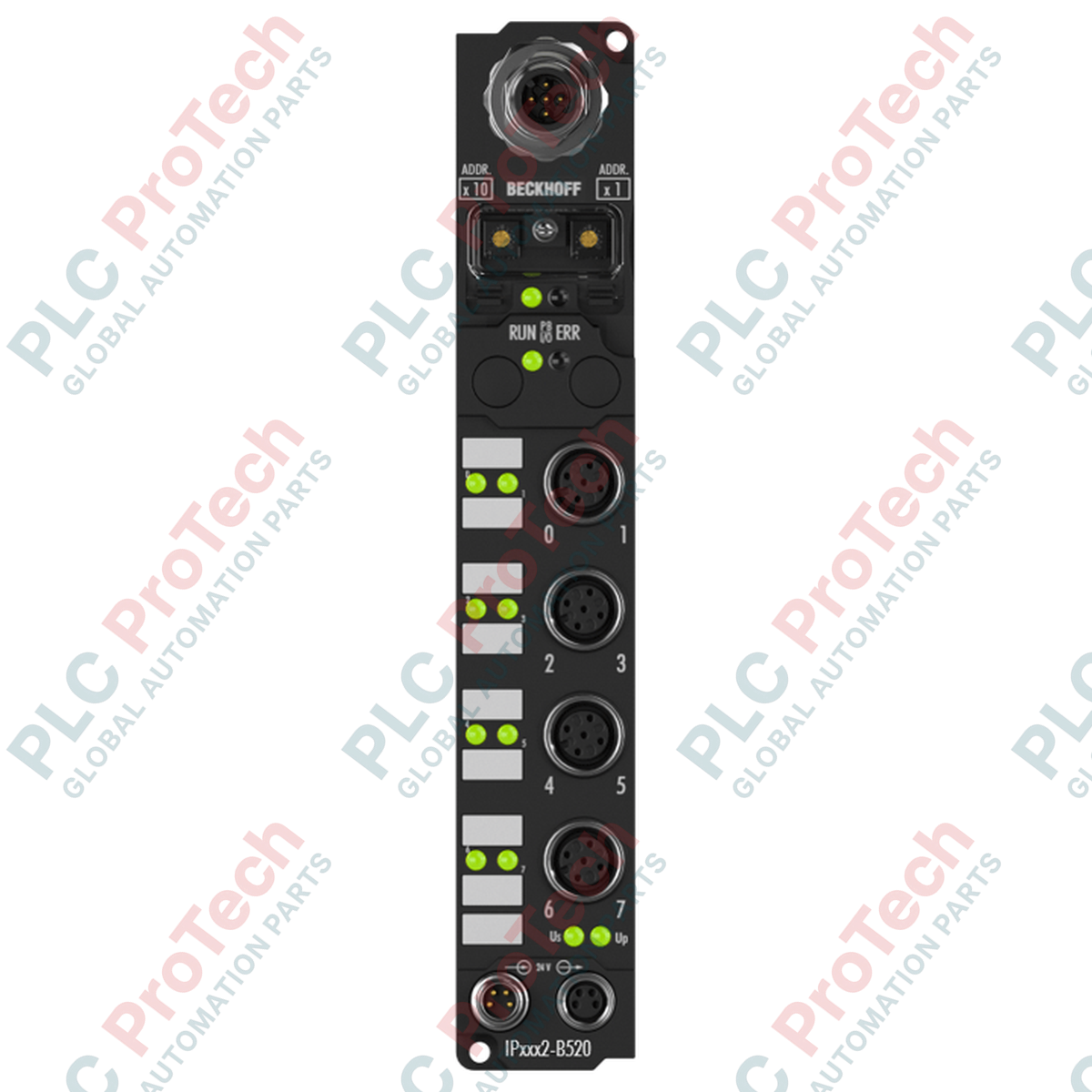
Descrição
Projetado para instalação direta em campo em ambientes de processamento severos, o Beckhoff IP3312-B520 funciona como uma estação distribuída de E/S industrial que se comunica diretamente pelo protocolo DeviceNet. Esse módulo Fieldbus Box integra recursos de medição de temperatura com suporte para até duas entradas de termopar, eliminando a necessidade de gabinetes de controle protetores. O dispositivo conta com detecção automática da taxa de transmissão de até 500 kbaud e utiliza interfaces de conectores M12 e M8 de alta qualidade para garantir transmissão confiável de sinais e conectividade física robusta sob alta tensão mecânica. A configuração é gerenciada perfeitamente pelo ambiente de software KS2000 ou diretamente por meio de mensagens explícitas baseadas no controlador.
Recursos
-
Montagem direta em campo: Os graus de proteção IP65, IP66 e IP67 permitem a instalação diretamente em máquinas, sem gabinetes de controle.
-
Integração com DeviceNet: Compatível com os modos de comunicação bit strobe, polling, cíclico e mudança de estado (COS).
-
Detecção automática da taxa de transmissão: Identifica e sincroniza automaticamente com velocidades de rede de até 500 kbaud.
-
Isolamento elétrico robusto: Fornece isolamento galvânico de 500 V entre a tensão de controle e a rede fieldbus.
-
Recursos de diagnóstico: Monitoramento em tempo real e retorno de status por meio do software de configuração KS2000.
Aplicações
-
Sistemas de processamento térmico: Monitoramento da temperatura em fornos industriais, fornos de alta temperatura e linhas de tratamento térmico.
-
Máquinas de moldagem por injeção: Montagem direta na máquina para aquisição da temperatura do bico e do cilindro.
-
Fabricação industrial pesada: Aquisição distribuída de temperatura no chão de fábrica onde não há espaço disponível em painéis.
-
Montagem automotiva: Sensoriamento distribuído ao longo de linhas transportadoras com infraestrutura DeviceNet.
Especificações técnicas
| Parâmetro de especificação |
Valor / classificação |
| Fabricante |
Beckhoff Automation |
| Identificador do modelo |
IP3312-B520 |
| Interface do fieldbus |
DeviceNet (1 x conector M12, de 5 pinos) |
| Taxa de transferência de dados |
Detecção automática de até 500 kbaud |
| Alimentação da tensão de controle |
24 V CC (-15% / +20%) |
| Consumo de corrente da caixa |
45 mA + carga do sensor (máximo de 0,5 A) |
| Isolamento elétrico |
500 V (tensão de controle para o fieldbus) |
| Grau de proteção contra ingresso |
IP65 / IP66 / IP67 (em conformidade com EN 60529) |
| Faixa de temperatura operacional |
0 a +55 °C |
| Faixa de temperatura de armazenamento |
-25 a +85 °C |
| Resistência a vibração/choque |
Em conformidade com EN 60068-2-6 / EN 60068-2-27 |
| Normas de EMC |
Em conformidade com EN 61000-6-2 / EN 61000-6-4 |
| Aprovações |
CE, UL |
| Peso de envio (calculado) |
2,0 kg |
Conexões e interfaces
| Porta / Conexão |
Tipo de conector |
Atribuição funcional |
| Interface de barramento DeviceNet |
1 x conector M12, de 5 pinos |
Linha blindada de comunicação da rede |
| Entrada de alimentação |
1 x soquete M8 macho, 4 pinos |
Tensão de controle de entrada de 24 V CC e aterramento |
| Alimentação downstream |
1 x soquete M8 fêmea, 4 pinos |
Loop de distribuição de energia para módulos subsequentes |
Insights empíricos de engenharia
Modelos alternativos e compatibilidade
O módulo IP3312-B520 opera em configurações DeviceNet. Ao atualizar redes antigas ou substituir módulos em anéis industriais legados, certifique-se de que os arquivos de configuração (EDS) do Master/Scanner correspondam corretamente às revisões do firmware. Se converter um sistema para EtherCAT ou PROFINET, devem ser escolhidos módulos Fieldbus Box equivalentes das séries EP ou EQ, respectivamente, pois as camadas físicas da série IP são dedicadas às suas opções específicas de fieldbus (B520 para DeviceNet, B310 para PROFIBUS).
Armadilhas de aplicação e observações de engenharia
Os sinais de termopar são altamente vulneráveis à interferência eletromagnética (EMI). Embora o IP3312-B520 ofereça robusta imunidade EMC em conformidade com a EN 61000-6-2, passar cabos de extensão de termopares junto a cabos de saída de inversores de frequência (VFD) de alta potência pode distorcer as leituras de temperatura. Evite formar laços com os cabos dos sensores e mantenha trajetos de cabeamento separados. Além disso, certifique-se de que todas as portas M12 e M8 não utilizadas estejam vedadas com tampas protetoras industriais para preservar o grau de proteção IP67 contra ingresso.
Dicas de comissionamento e cabeamento
Durante a instalação inicial, certifique-se de que os resistores de terminação DeviceNet estejam corretamente instalados em ambas as extremidades físicas do cabo tronco (normalmente 121 ohms, 1/4 de watt). Ao encaminhar a alimentação pela porta M8 downstream, calcule a corrente cumulativa total de todos os sensores e módulos conectados. Exceder o limite de 0,5 A pode causar quedas de tensão, acionando falhas de diagnóstico de baixa potência nos sensores downstream.
Diretrizes de instalação
AVISO CRÍTICO: Desconecte todas as fontes de alimentação antes de iniciar a instalação do hardware ou a montagem dos cabos. O contato com componentes energizados pode causar danos ao equipamento ou choque elétrico grave. Certifique-se de que a alimentação de controle de 24 V CC esteja totalmente desenergizada e verifique a ausência de energia antes de trabalhar na rede.
1
Monte o Fieldbus Box em uma superfície plana e resistente a vibrações usando dois parafusos M4 através das abas de montagem integradas.
2
Conecte a fonte de alimentação de entrada de 24 V CC ao conector M8 macho de 4 pinos. Certifique-se de que as polaridades correspondam precisamente.
3
Se for fazer a distribuição de energia para outros nós, conecte a porta M8 fêmea downstream usando um cabo blindado de 4 vias.
4
Conecte o cabo tronco da rede DeviceNet ao conector de fieldbus M12 de 5 pinos. Verifique se os resistores de terminação estão ativos caso esta unidade esteja na extremidade da rede.
5
Configure o endereço do nó e os parâmetros do barramento usando a ferramenta de software KS2000 ou o ambiente de configuração do PLC.