


Projetando redundância de energia e comunicação
Projete a redundância do sistema de controle mapeando as dependências compartilhadas, separando os caminhos de energia e de rede, definindo o comportamento de failover, sinalizando a operação...
Fabricante: Bently Nevada
Nº do Produto: 3500/60-01-00
País de origem:Estados Unidos
Tipo de Produto: Módulos de sistemas de proteção de máquinas
Pagamento: T/T, Western Union
Peso: 320g
Porto de embarque: Xiamen
Garantia: 12 meses
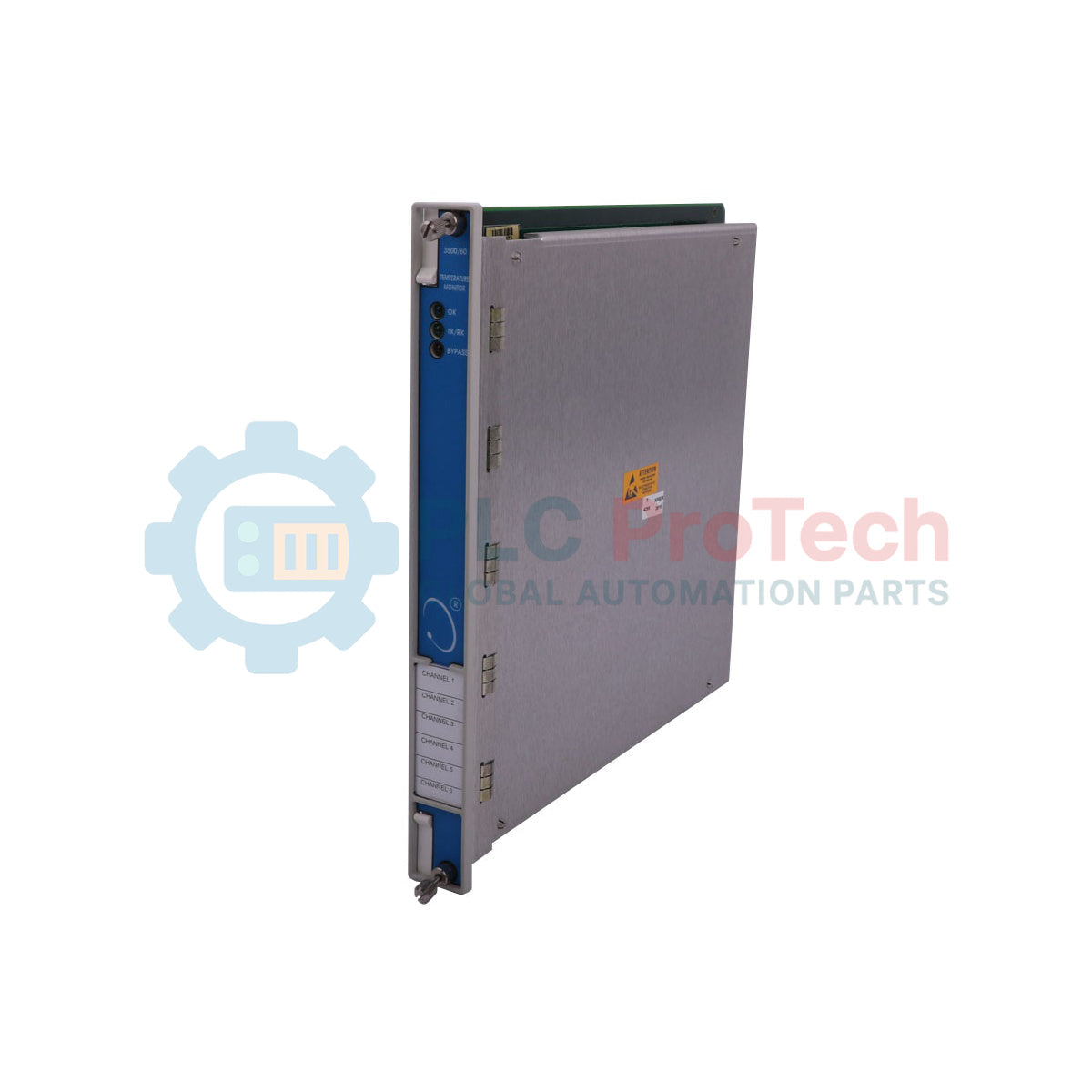
O processamento e o monitoramento contínuo das entradas de temperatura em sistemas críticos de proteção de máquinas são realizados pelo Bently Nevada 3500/60-01-00, uma configuração dedicada de módulo da série 3500. Esse módulo especializado processa sinais de detectores de temperatura por resistência (RTDs) e termopares (TC) para fornecer acompanhamento contínuo e de alta precisão da temperatura. Projetado sem saídas de registrador, o 3500/60-01-00 utiliza um módulo de E/S não isolado RTD/TC com terminações internas para maximizar a densidade de canais e simplificar as arquiteturas de fiação diretamente no rack do monitor. Opera com um consumo nominal de 7 watts, garantindo carga térmica mínima dentro do gabinete e desempenho estável para a proteção de máquinas.
| Fabricante | Bently Nevada |
| Número do modelo | 3500/60-01-00 |
| Série | Sistema de proteção de máquinas da série 3500 |
| Tipo de módulo de E/S | 01 - Módulo de E/S não isolado RTD/TC |
| Tipo de terminação | Terminações internas |
| Consumo de energia | 7 watts (nominal) |
| Opção de aprovação por agência | 00 - Nenhum |
| Saídas do registrador | Nenhum |
| País de origem | Estados Unidos (EUA) |
| Peso de envio | 2,0 kg |
A configuração 3500/60-01-00 utiliza uma interface de E/S não isolada. Se o projeto elétrico da sua instalação exigir isolamento para proteção contra altas tensões de modo comum ou ruído intenso de campo, considere a variante 3500/60-02-00, que integra módulos de E/S isolados. Certifique-se de que qualquer substituição do módulo de E/S seja acompanhada por uma atualização correspondente na configuração do 3500 Rack Configuration Software para evitar falhas de configuração do sistema (erros de incompatibilidade de slot).
Como este módulo utiliza E/S não isolada (Opção 01), ele compartilha um terra comum entre os canais. É fundamental que as pontas dos sensores RTD ou termopares instalados no equipamento estejam eletricamente isoladas da estrutura da máquina. Se a ponta de um sensor entrar em contato com a estrutura da máquina, loops de terra e tensões de modo comum degradarão as leituras de temperatura, causarão medições erráticas ou acionarão alarmes falsos. Sempre verifique a resistência de isolamento dos sensores durante os ciclos de manutenção de rotina.
Ao fazer a fiação do bloco de terminais interno, use cabos blindados de par trançado para todas as conexões dos sensores de temperatura. Conecte o fio de drenagem da blindagem somente ao terminal designado no módulo de E/S 3500/60. Não conecte a blindagem na caixa de junção do sensor, pois isso criará um loop de terra. Mantenha a fiação de sinal fisicamente separada das linhas de alimentação CA de alta tensão para evitar interferência eletromagnética nas leituras sensíveis dos termopares.
Desenergize o rack 3500 e todos os circuitos de campo conectados antes de instalar ou remover módulos. A conexão ou desconexão com o equipamento energizado sob carga, especialmente nas conexões de E/S de campo, apresenta risco de danos elétricos aos circuitos do módulo e pode causar o acionamento inesperado dos circuitos de proteção das máquinas conectadas.

Global Express Shipping
Returns & Warranty


Envio Expresso Global
Devoluções e Garantia
Os pedidos são processados e entregues de segunda a sexta-feira (exceto feriados).
Para elegibilidade completa, taxas de reposição e detalhes de devolução internacional, por favor, consulte nosso site oficial Política de Reembolso e Devolução .
| Country of origin |
Estados Unidos
|

Projete a redundância do sistema de controle mapeando as dependências compartilhadas, separando os caminhos de energia e de rede, definindo o comportamento de failover, sinalizando a operação...

Um método estruturado de diagnóstico de falhas em painéis de controle, abrangendo trabalho seguro, diagramas, caminhos de alimentação, proteção de ramais, fontes CC, circuitos de retorno, saídas de...

Um guia prático para testar a tensão em painéis de controle industriais, abrangendo pontos de referência, seleção do multímetro, verificações de tensão presente–ausente–presente, queda de tensão,...

Um guia prático de bloqueio e etiquetagem que abrange a identificação de energias perigosas, o isolamento, o controle de energia armazenada, a verificação, o trabalho em grupo, os testes temporários,...

Um guia prático para a preparação do ar comprimido no ponto de uso, abrangendo filtros, reguladores, drenos, secadores, lubrificação, perda de pressão, isolamento, monitoramento, comissionamento e...

Um guia prático sobre válvulas pneumáticas manuais, piloto e solenoide, abordando as funções das portas, o comportamento monoestável e biestável, as saídas do CLP, os estados seguros, o...