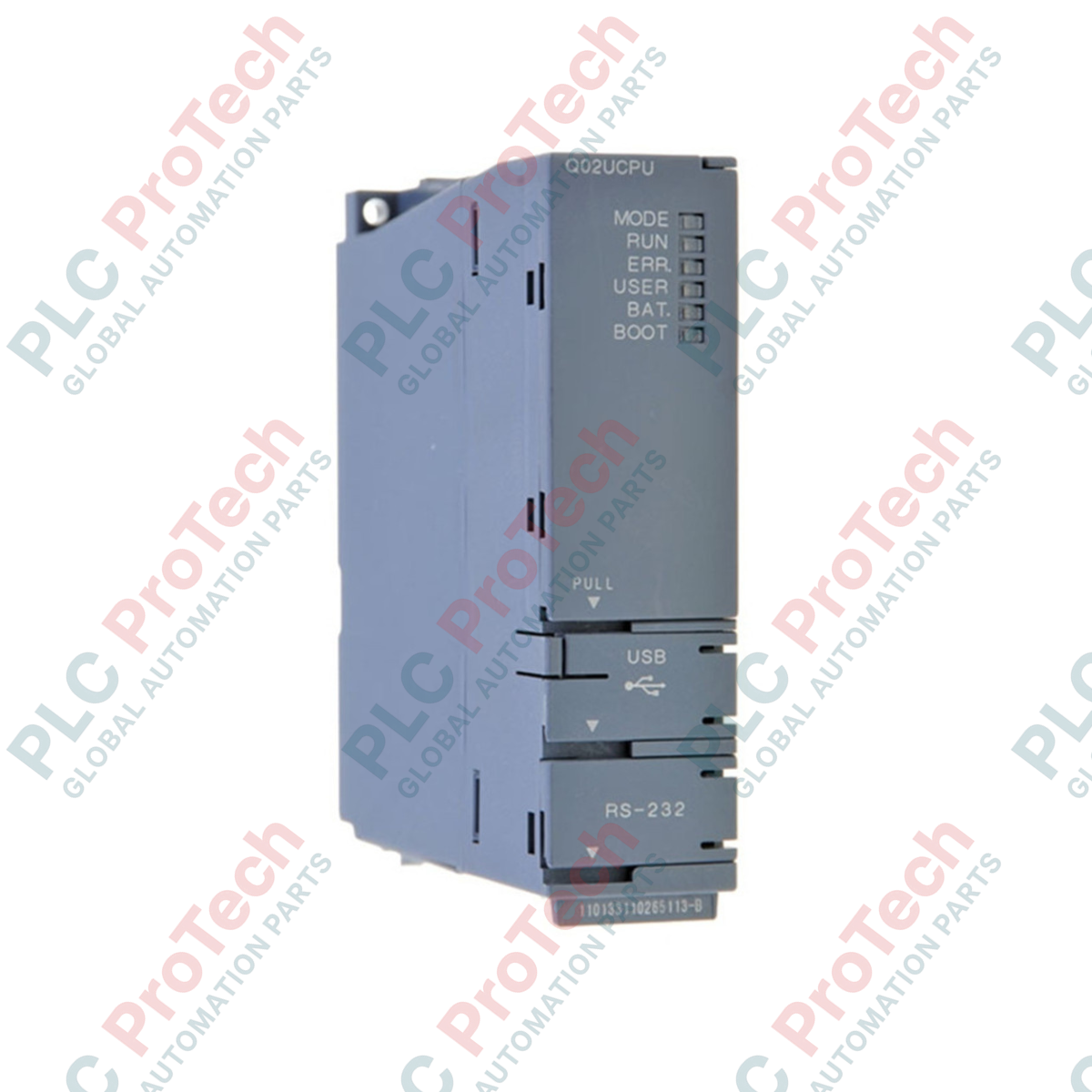
Được thiết kế để thực thi các trình tự điều khiển phức tạp trong kiến trúc MELSEC QnAS nhỏ gọn, Mitsubishi Electric Q02ASHCPU-S1 là bộ xử lý trung tâm hiệu suất cao được thiết kế cho các môi trường tự động hóa công nghiệp đòi hỏi khắt khe. Mô-đun này cung cấp nền tảng điều khiển mạnh mẽ với bộ nhớ chương trình 60K bước, tốc độ xử lý lệnh được tối ưu hóa và chức năng chẩn đoán tích hợp, nhằm đảm bảo thời gian hoạt động tối đa của hệ thống và thực thi đáng tin cậy logic điều khiển tuần tự.
Tính năng chính
-
Bộ nhớ chương trình dung lượng cao: Hỗ trợ tối đa 60K bước, cho phép lưu trữ logic điều khiển mở rộng, công thức và các phép toán số học phức tạp.
-
Chẩn đoán tích hợp: Liên tục tự giám sát trạng thái phần cứng, tính toàn vẹn của bộ nhớ và các vòng lặp thực thi để ngăn ngừa sự cố hệ thống bất ngờ.
-
Kiểu dáng QnAS nhỏ gọn: Cung cấp khả năng xử lý tiên tiến của các bộ điều khiển dòng Q cỡ lớn trong kiểu dáng tiết kiệm không gian của dòng AnS.
-
Giao diện RS-232C chuyên dụng: Cổng nối tiếp tích hợp để lập trình trực tiếp, kết nối HMI hoặc trao đổi dữ liệu với thiết bị ngoại vi.
Ứng dụng
- Dây chuyền lắp ráp ô tô và điều phối các cell robot.
- Điều khiển trình tự trong nhà máy xử lý nước và nước thải.
- Máy đóng gói nhiều trục và hệ thống xử lý vật liệu.
- Hệ thống HVAC và kiểm soát môi trường trong các cơ sở sản xuất công nghiệp nặng.
Thông số kỹ thuật
| Thông số |
Thông số kỹ thuật |
| Nhà sản xuất |
Mitsubishi Electric |
| Mã model |
Q02ASHCPU-S1 |
| Dòng sản phẩm |
Dòng MELSEC-A QnAS |
| Dung lượng chương trình |
60K bước |
| Dòng điện tiêu thụ bên trong (5V DC) |
300 mA (điển hình) |
| Nhiệt độ môi trường khi vận hành |
0 đến 55 °C |
| Nhiệt độ bảo quản |
-20 đến 75 °C |
| Nước xuất xứ |
Nhật Bản |
| Khối lượng tịnh (ước tính) |
0,35 kg |
| Khối lượng vận chuyển (tính toán) |
2,0 kg (bao gồm bao bì bảo vệ) |
Kết nối và giao diện
| Cổng giao diện |
Loại đầu nối |
Phân công chức năng |
| Cổng RS-232C |
D-Sub 9 chân (cái) |
Lập trình, giao tiếp HMI và liên kết dữ liệu nối tiếp đa dụng. |
| Cổng lập trình |
Mini-DIN 6 chân |
Kết nối trực tiếp với các thiết bị lập trình ngoại vi và thiết bị giám sát cầm tay. |
Thông tin chuyên sâu về kỹ thuật thực nghiệm
Mô hình thay thế & khả năng tương thích
Q02ASHCPU-S1 là biến thể chuyên dụng, tốc độ cao trong dòng MELSEC QnAS. Khi chuyển đổi từ các hệ thống AnS cũ, hãy đảm bảo các bộ đế hiện có (chẳng hạn A1S38B hoặc A1S35B) tương thích với tốc độ xử lý cấp QnAS. Lưu ý rằng mặc dù các mô-đun AnS tiêu chuẩn thường có thể được giữ lại, cấu trúc bộ nhớ và tập lệnh của CPU QnAS yêu cầu GX Developer hoặc GX Works2 (hoạt động ở chế độ cổ điển) để biên dịch và ánh xạ tham số chính xác.
Những điểm cần tránh & lưu ý kỹ thuật
Một vấn đề thường gặp tại hiện trường là vượt quá khả năng dòng điện của bus nội bộ 5V DC. Q02ASHCPU-S1 tiêu thụ khoảng 300 mA. Khi thiết kế cấu hình I/O mật độ cao hoặc bổ sung các mô-đun giao tiếp (chẳng hạn mô-đun Ethernet hoặc mô-đun master CC-Link), hãy kiểm tra mô-đun nguồn (ví dụ A1S61PN) có đủ công suất dự phòng để tránh sụt áp trên bảng nối lưng, vì điều này có thể kích hoạt lỗi CPU reset chập chờn.
Mẹo chạy thử & đấu dây
Luôn sử dụng cáp RS-232C chất lượng cao, có hai lớp chống nhiễu (chẳng hạn QC30R2), để lập trình và giao tiếp với HMI. Đi cáp nối tiếp cách xa dây dẫn động cơ điện áp cao và bộ biến tần (VFD) để tránh nhiễu điện từ, vốn có thể làm gián đoạn việc giám sát trực tuyến và truyền chương trình. Đảm bảo đầu nối đất (LG/FG) của bộ đế được nối trực tiếp với đất có trở kháng thấp.
Hướng dẫn lắp đặt
CẢNH BÁO QUAN TRỌNG
Trước khi lắp đặt, tháo hoặc đấu dây mô-đun CPU, hãy đảm bảo tất cả nguồn điện bên ngoài cấp cho bộ đế và các giá I/O được kết nối đều đã được ngắt hoàn toàn. Nếu không, có thể gây điện giật, hư hỏng mô-đun hoặc khiến hệ thống hoạt động không thể dự đoán.
1
Căn móc phía dưới của mô-đun CPU với lỗ dẫn hướng trên bộ đế.
2
Ấn mạnh phần trên của mô-đun vào bộ đế cho đến khi mô-đun khớp chắc chắn vào vị trí.
3
Siết vít lắp mô-đun (M3) với mô-men xoắn từ 0,36 đến 0,48 N-m để đảm bảo tiếp đất chắc chắn và khả năng chống rung.
4
Lắp thẻ nhớ (nếu cần) và cố định nắp bảo vệ phía trước trước khi cấp nguồn.