Beschreibung
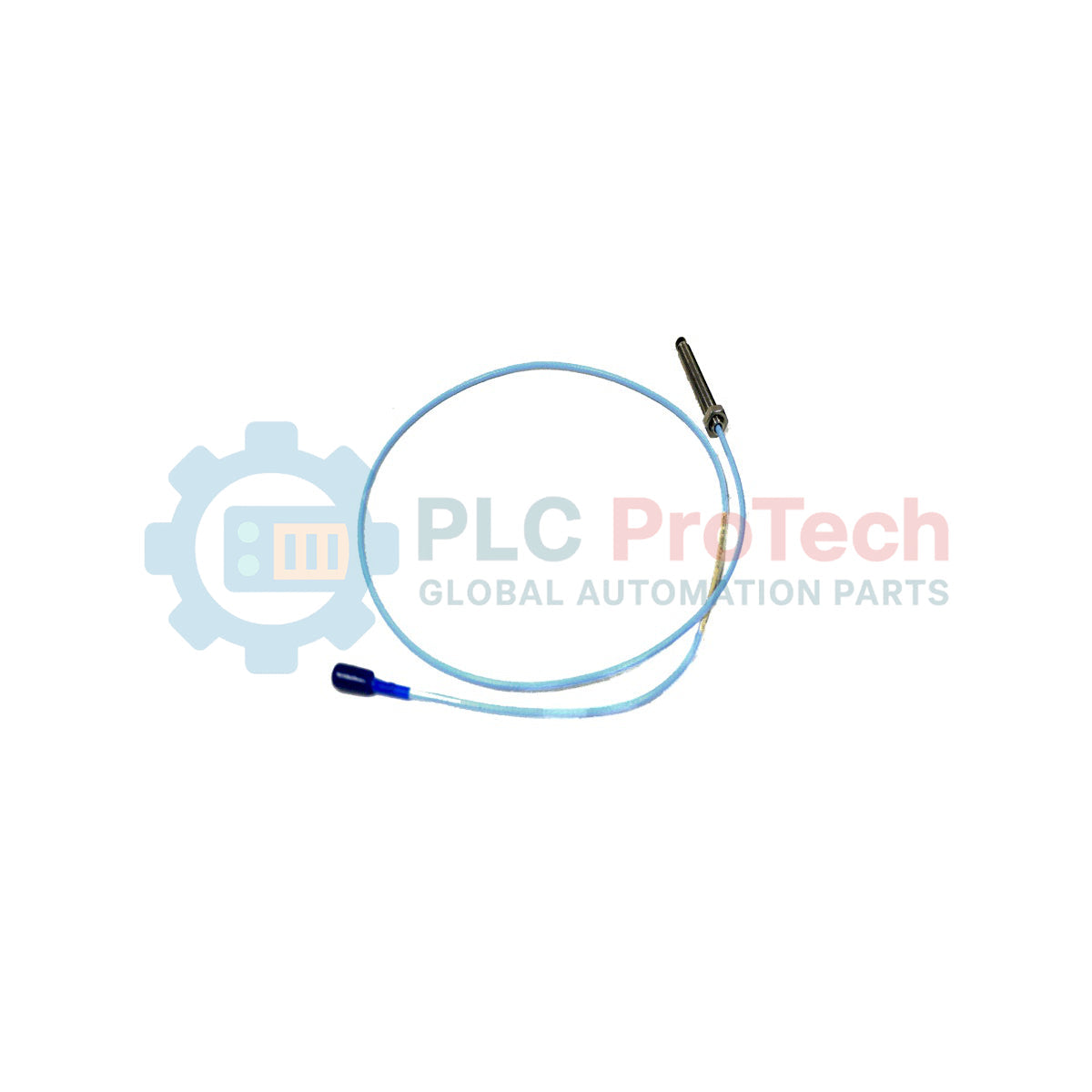
Für hochpräzise Weg- und Schwingungsmessungen nutzt die industrielle Näherungssonde Bently Nevada 330101-00-36-10-02-00 die Wirbelstromtechnologie zur kontinuierlichen Maschinenüberwachung. Als zentrale Komponente des 3300 XL 8-mm-Wegaufnehmersystems misst dieser berührungslose Sensor statische und dynamische Abstände zwischen der Sondenspitze und dem überwachten Ziel, typischerweise einer rotierenden Welle. Die physische Konfiguration umfasst eine gewindelose Länge von 0.0 Zoll, eine Gehäusegesamtlänge von 3.6 Zoll, eine physische Gesamtlänge von 1.0 Meter und ein standardmäßiges, nicht armiertes Kabel mit einem Miniatur-Koaxialsteckverbinder ClickLoc. Diese für den Einsatz in rauen Maschinengehäusen mit hohen Temperaturen entwickelte Sonde bietet außergewöhnliche Stabilität und Linearität in anspruchsvollen industriellen Umgebungen.
Merkmale
-
Ungeschirmte 8-mm-Spitze: Bietet eine optimale Magnetfeldverteilung für die hochauflösende Wirbelstrommessung.
-
ClickLoc-Koaxialsteckverbinder: Verfügt über ein robustes, feuchtigkeitsbeständiges mechanisches Verriegelungssystem, das ein versehentliches Trennen verhindert.
-
Gewindelose Sondenspitze: Mit einem 0.0 Zoll langen gewindelosen Abschnitt für die präzise Positionierung in speziellen Montagehalterungen.
-
Robuste Kabelkonstruktion: Leistungsstarkes Standard-Koaxialkabel, geeignet für langfristige Vibrationsbeständigkeit in Generator- und Verdichtergehäusen.
Anwendungen
- Überwachung von radialer Wellenschwingung und -position in Dampf- und Gasturbinen.
- Messung der Axialposition in Hochdruck-Kreiselverdichtern.
- Verfolgung von Exzentrizität und Phasenreferenz (Keyphasor) an kritischen rotierenden Maschinen.
- Erkennung der Gehäuseausdehnung und der Differenzausdehnung zwischen Rotor und Stator.
Technische Daten
| Parameter |
Wert |
| Hersteller |
Bently Nevada |
| Modell-/Teilenummer |
330101-00-36-10-02-00 |
| Systemtyp |
3300 XL 8-mm-Näherungssensorsystem |
| Gewindegröße |
3/8-24 UNF (Zollgewinde) |
| Option für die gewindelose Länge |
0.0 Zoll |
| Option für die Gehäusegesamtlänge |
3.6 Zoll |
| Option für die Gesamtlänge |
1.0 Meter (3.3 Fuß) |
| Steckverbinder- und Kabeltyp |
Miniatur-Koaxialsteckverbinder ClickLoc, Standardkabel |
| Zulassungen |
Nicht erforderlich (Option 00) |
| Betriebstemperaturbereich |
-51 bis +177 °C |
| Linearitätsbereich |
Typischerweise 2.0 mm (80 mil) |
| Nenn-Skalierungsfaktor |
7.87 V/mm (200 mV/mil) |
| Herstellungsland |
Vereinigte Staaten |
| Versandgewicht (berechnet) |
0.15 kg |
| Verpackungsabmessungen (berechnet) |
200 x 150 x 50 mm |
Anschlüsse und Schnittstellen
| Steckverbinder-Element |
Funktions-/Schaltungszuordnung |
| Mittelstift |
Hochfrequenz-HF-Signalpfad (verbindet sich mit dem Proximitor-Sensor) |
| Äußerer Koaxialring |
Rückleitung und Schirm (gemeinsame Erdungsreferenz) |
Empirische technische Erkenntnisse
Alternative Modelle und Kompatibilität
Diese 3300 XL-Sonde ist vollständig abwärtskompatibel mit standardmäßigen 3300-8-mm-Proximitor-Sensoren und Verlängerungskabeln (nicht XL). Bei der Kombination von Nicht-XL-Komponenten mit der 3300 XL-Reihe entspricht die Genauigkeit des Gesamtsystems jedoch standardmäßig den Leistungsdaten der Nicht-XL-Komponenten. Stimmen Sie die gesamte mechanische Länge (diese 1,0-Meter-Sonde in Kombination mit einem 4,0-Meter- oder 8,0-Meter-Verlängerungskabel) stets auf die kalibrierte Längenkonfiguration Ihres 5,0-Meter- oder 9,0-Meter-Proximitor-Sensors ab.
Anwendungsfehler und technische Hinweise
Vermeiden Sie Biegungen des Koaxialkabels mit einem Radius von weniger als 25,4 mm (1,0 Zoll), um physische Impedanzänderungen im Kabel zu verhindern, die sich direkt als Kalibrierungs- und Messdrift bemerkbar machen. Da dieses Modell keinen Schutz gegen Flüssigkeitsleckagen besitzt (Option 00 für ungewindete Länge und Standard-Außenmantel), muss es bei starker mechanischer Abrasion oder hochkorrosiven Chemikalien im Maschinengehäuse innerhalb eines Schutzrohrs oder spezieller interner Kanäle verlegt werden.
Tipps zur Inbetriebnahme und Verdrahtung
Halten Sie die Schnittstellen der Miniatur-ClickLoc-Steckverbinder während der Inbetriebnahme vollständig sauber und trocken. Verwenden Sie bei Verunreinigungen einen speziellen Kontaktreiniger. Ziehen Sie die ClickLoc-Steckverbinder nach dem ersten Widerstandsklick von Hand weiter fest; verwenden Sie keine Zange. Um den Steckverbinder von den Erdungen des Maschinengehäuses zu isolieren, schieben Sie Silikon-Steckverbinderprotektoren über die Verbindungsstelle und bringen Sie selbstverschmelzendes Isolierband an.
Installationsrichtlinien
KRITISCHER WARNHINWEIS
Vergewissern Sie sich vor dem Einsetzen oder Einstellen von Näherungssonden, dass die Maschine vollständig abgeschaltet und gemäß den Lockout/Tagout-Verfahren sicher isoliert ist. Bewegliche Maschinenteile können zu katastrophalen Schäden an der Hardware und schweren Verletzungen führen, wenn die Sonde während der Einrichtung direkt mit einer rotierenden Welle in Kontakt kommt.
1
Berechnen Sie die gewünschte physische Eindringtiefe, indem Sie vom Montagebügel bis zur Zieloberfläche der Welle messen.
2
Schrauben Sie den Sondenkörper in die Halterung und achten Sie sorgfältig auf den Widerstand. Stoppen Sie sofort, wenn ein Klemmen auftritt, um ein Überdrehen der feinen 3/8-24-Gewinde zu verhindern.
3
Verbinden Sie die Sonde mit einem kalibrierten Proximitor-Sensor und überwachen Sie den Gleichspannungs-Ausgang des Spalts, während Sie den Sondenkörper drehen, bis die nominale mechanische Spaltspannung erreicht ist (typischerweise -10,0 VDC in der Mitte des linearen Bereichs).
4
Sichern Sie die Sonde mit einer Standard-Kontermutter und wenden Sie das angegebene Drehmomentlimit an, um ein Zusammendrücken der internen Rohrbaugruppe der Sonde zu verhindern.