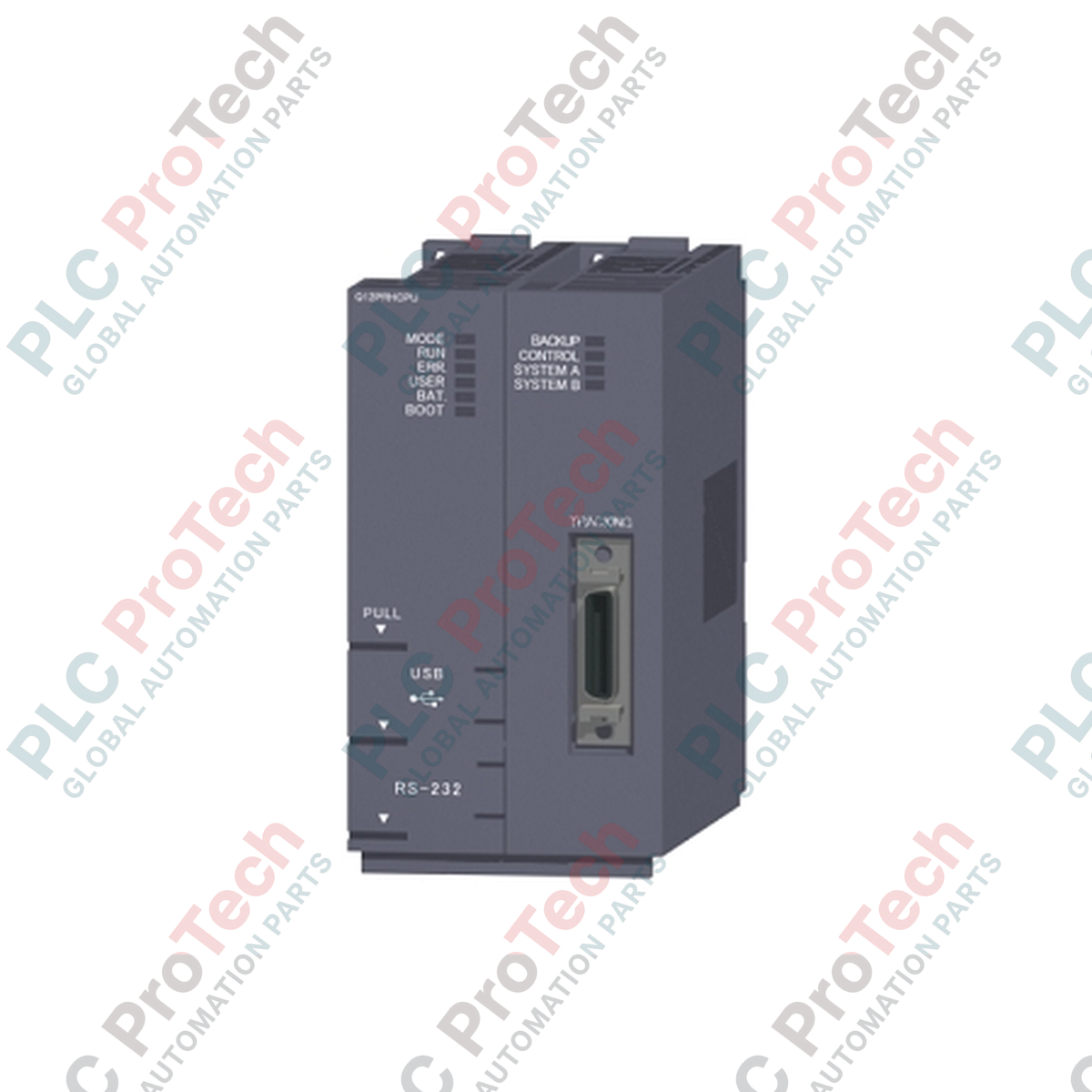
Das Mitsubishi Electric Q12PRHCPU wurde entwickelt, um eine hochverfügbare Steuerung in kritischen Automatisierungsumgebungen sicherzustellen. Es arbeitet als leistungsstarkes redundantes CPU-Modul innerhalb der MELSEC Q Serie. Dieses Modul ist darauf ausgelegt, Systemausfälle zu verhindern, indem eine dual-redundante Architektur verwendet wird, bei der eine Backup-CPU im Falle eines Ausfalls der Haupt-CPU sofort die Steuerung übernimmt. Es verfügt über eine Programmkapazität von 120k Schritten und unterstützt bis zu 4096 physische I/O-Punkte, was es für groß angelegte, fehlertolerante Industrieanwendungen geeignet macht.
Hauptmerkmale
-
Redundante Systemarchitektur: Unterstützt Hot-Standby-Redundanz mit automatischem, unterbrechungsfreiem Umschalten zur Vermeidung von Prozessunterbrechungen.
-
Hochgeschwindigkeitsverarbeitung: Bietet eine LD-Befehlsausführungsgeschwindigkeit von 34 Nanosekunden (0,034 Mikrosekunden) für schnelle Aufgabenbearbeitung.
-
Hot-Swappable-Fähigkeit: Ermöglicht den Online-Austausch von Standby-CPU, Netzteil und Netzwerkmodule ohne Unterbrechung des aktiven Steuerungsprozesses.
-
Duale Programmierschnittstellen: Ausgestattet mit USB (Mini-B) und RS-232 (Mini-DIN) Anschlüssen für flexible Programmierung, Diagnose und Überwachung.
-
Umfangreiche Speicherkapazität: Bietet 120k Programmschritte sowie dedizierten Tracking-Speicher für nahtlose Datensynchronisation zwischen aktiven und Standby-Einheiten.
Anwendungen
- Wasseraufbereitung und kommunale Abwasseranlagen.
- Kontinuierliche chemische, petrochemische und pharmazeutische Produktionslinien.
- Stromerzeugung, Schaltanlagenautomatisierung und Versorgungsnetze.
- Tunnelbelüftung, Stromversorgungssysteme im öffentlichen Verkehr und kritische Infrastrukturen.
Technische Spezifikationen
| Parameter |
Spezifikationswert |
| Hersteller |
Mitsubishi Electric |
| Modellnummer |
Q12PRHCPU |
| Serie |
MELSEC Q Serie |
| Modultyp |
Redundantes PLC-CPU-Modul |
| Programmkapazität |
120k Schritte (480 KB) |
| I/O-Punkte (physisch) |
4096 Punkte |
| I/O-Punkte (Gerät) |
8192 Punkte |
| LD-Befehlsgeschwindigkeit |
0,034 Mikrosekunden (34 ns) |
| Stromaufnahme (5 VDC) |
0,89 A |
| Betriebstemperatur |
0 bis 55 °C |
| Lagertemperatur |
-25 bis 75 °C |
| Relative Luftfeuchtigkeit |
5 bis 95 % relative Luftfeuchtigkeit (nicht kondensierend) |
| Nettogewicht |
0,30 kg |
| Versandgewicht (berechnet) |
2,00 kg |
| Abmessungen (B x H x T) |
27,4 mm x 98 mm x 115 mm |
| Herkunftsland |
Japan |
Anschlüsse und Schnittstellen
| Schnittstellenanschluss |
Anschlusstyp |
Funktionale Zuordnung |
| RS-232-Anschluss |
Mini-DIN 6-polig |
Serielle Programmierung, Peripherieverbindung und Systemdiagnose. |
| USB-Anschluss |
Mini-B |
Hochgeschwindigkeitsprogrammierung, Überwachung und Parametereinstellung über GX Works2. |
| Tracking-Anschluss |
Dedizierter redundanter Anschluss |
Hochgeschwindigkeits-Tracking-Kabelverbindung zur Synchronisation des Speichers mit der Standby-CPU. |
Empirische technische Erkenntnisse
Alternative Modelle & Kompatibilität
Das Q12PRHCPU muss zusammen mit redundanten Basiseinheiten (wie Q38RB oder Q68RB) und redundanten Netzteilmodulen (Q61P-D) verwendet werden. Es darf nicht mit Standard-Q-Serien-CPUs auf einer Standard-Basiseinheit für redundante Operationen gemischt werden. Beim Austausch älterer Q12HCPU-Module ist zu beachten, dass Standard-Nicht-Redundante Basiseinheiten mit der physischen Tracking-Schnittstelle und der Dual-Bus-Verkabelung der redundanten Serie nicht kompatibel sind.
Anwendungsfallen & technische Hinweise
Die Länge des Tracking-Kabels ist eine kritische Einschränkung. Standard-Tracking-Kabel (QC10TR oder QC30TR) sind auf 3 Meter begrenzt. Eine Überschreitung dieser Länge oder die Verwendung nicht abgeschirmter Sonderkabel kann elektromagnetische Störungen verursachen, die zu Synchronisationsfehlern beim Tracking führen (wie „SP.UNIT LAY. ERR“ oder „CONTROL CPU ERROR“). Optimieren Sie außerdem die Tracking-Datengrößeinstellungen in GX Works2, um übermäßige Scanzeitverlängerungen während der Synchronisationszyklen zu vermeiden.
Inbetriebnahme- & Verdrahtungstipps
Überprüfen Sie vor dem Einschalten des redundanten Systems, dass sowohl das primäre (System A) als auch das Standby-CPU-Modul (System B) identische Firmware-Versionen haben. Firmware-Unterschiede können verhindern, dass das Standby-CPU-Modul in den „BACKUP“-Zustand wechselt, wodurch das System im nicht-redundanten Einzel-CPU-Betrieb verbleibt. Laden Sie immer identische Parameterdateien und Programmblöcke auf beide Einheiten, bevor Sie die erste Systemsynchronisation ausführen.
Installationsrichtlinien
KRITISCHE WARNUNG:
Stellen Sie sicher, dass alle externen Stromquellen, die die Basiseinheit und die zugehörigen I/O-Racks versorgen, vor dem Montieren oder Entfernen der CPU-Module vollständig spannungsfrei sind. Das Nicht-Isolieren der Stromversorgung kann zu elektrischem Lichtbogen, Schäden am internen Backplane-Bus oder unerwarteten Zustandsänderungen des Steuerungssystems führen.
1
Montieren Sie das CPU-Modul sicher auf der redundanten Basiseinheit (Q38RB oder Q68RB) und stellen Sie sicher, dass die untere Verriegelungslasche fest einrastet.
2
Verbinden Sie das dedizierte Tracking-Kabel zwischen den Tracking-Anschlüssen der beiden Q12PRHCPU-Module, um die Synchronisationsverbindung herzustellen.
3
Sichern Sie die Tracking-Kabelstecker mit den integrierten Halteschrauben, um ein versehentliches Trennen durch Vibrationen am Bedienfeld zu verhindern.
4
Stellen Sie eine solide funktionale Erdverbindung von den LG- und FG-Anschlüssen der Basiseinheit zum Haupterdungsschienenanschluss des Steuerungsschranks her.