Beschreibung
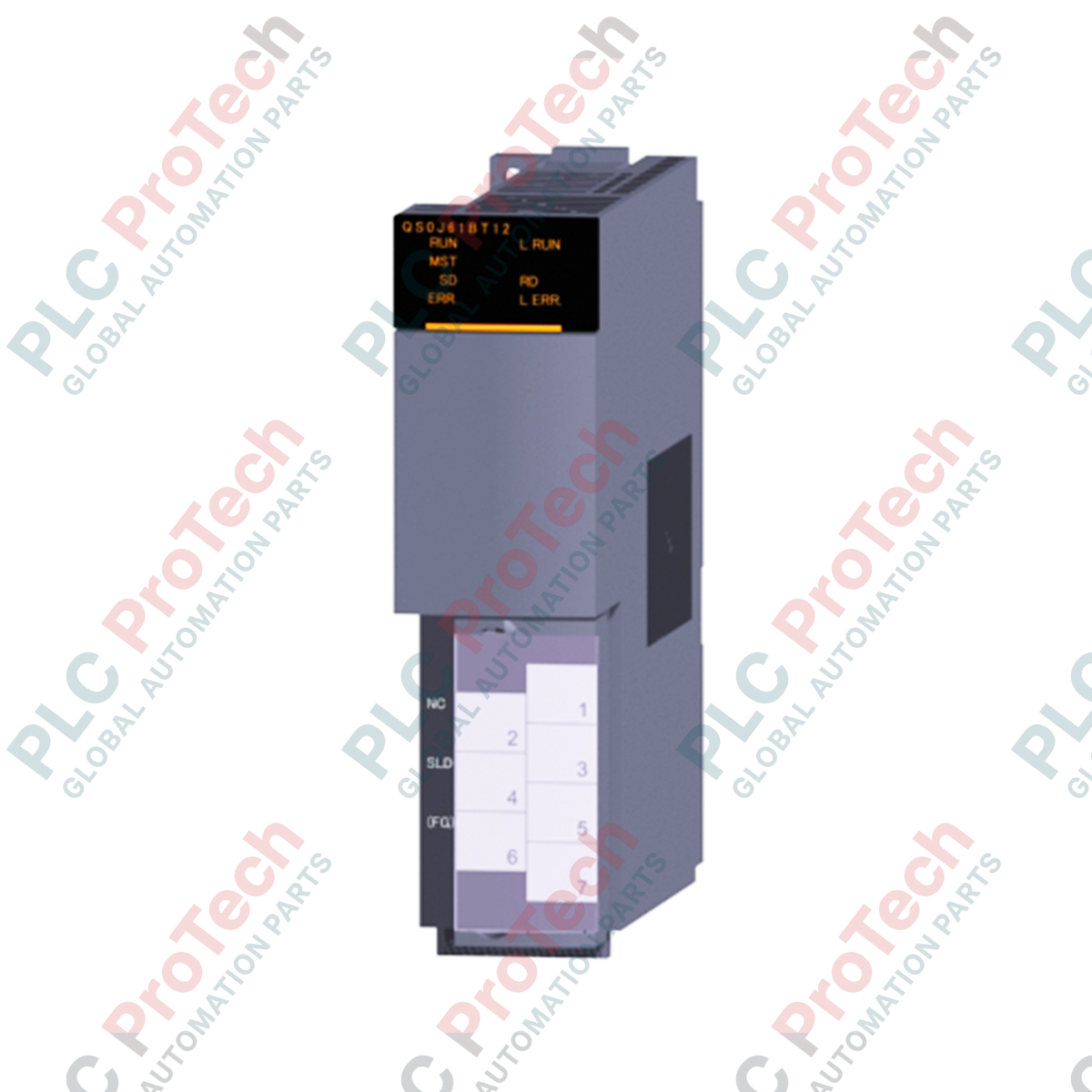
Der Mitsubishi Electric QS0J61BT12 ermöglicht als dedizierte CC-Link-Sicherheits-Masterstation eine deterministische Kommunikation für funktionale Sicherheit in Umgebungen mit hohem Gefährdungspotenzial über MELSEC-QS-Steuerungsplattformen. Dieses Sicherheits-Mastermodul koordiniert sichere Remote-E/A-Stationen und führt eine umfassende Diagnose sowie eine Sicherheitsprotokollprüfung über eine standardmäßige physikalische Bustopologie aus. Es wurde für die Integration in Sicherheits-CPUs entwickelt und ermöglicht SIL3- sowie Kategorie-4-konforme Kommunikationsnetzwerke, ohne eine separate, dedizierte Verkabelung für Sicherheits- und Nicht-Sicherheitsdatensignale zu benötigen.
Wichtige Merkmale
-
Wählbare Baudraten: Konfigurierbare Übertragungsgeschwindigkeiten von 156 kbit/s bis zu 10 Mbit/s passend zu bestimmten Buslängen und Systemzykluszeiten.
-
Hochkapazitäts-Knotenverwaltung: Verbindet bis zu 64 Remote-Sicherheitsstationen oder allgemeine Remote-Stationen in einem einzigen Netzwerksegment.
-
Zweistufige Protokollsteuerung: Verwendet eine unabhängige CRC-Prüfung mit CRC32 für sichere Remote-Stationen und CRC16 für allgemeine Remote-Stationen.
-
Flexible Topologien: Unterstützt Fernverbindungen über Hauptleitungen bis zu 1200 Metern bei 156 kbit/s unter Verwendung einer standardmäßigen, mit Ver.1.10 kompatiblen CC-Link-Spezialverkabelung.
-
Intelligente Signalverarbeitung: Weist dem Backplane des Sicherheitscontrollers direkt 32 Punkte intelligenter E/A-Zuweisung pro Master-Steckplatz zu.
Industrielle Anwendungen
-
Automobilmontagelinien: Verteilte Not-Halt-Schaltkreise, Lichtvorhänge und verriegelnde Schutztürschalter.
-
Roboterarbeitszellen: Koordination der Überwachung sicherer Geschwindigkeiten und der Umzäunung mehrachsiger Robotergruppen.
-
Materialhandhabungssysteme: Sicherheitsintegration von Förderanlagen, Notfallsysteme für Sortierlinien und Hubstationen für schwere Lasten.
-
Verpackungsmaschinen: Hochgeschwindigkeitsausführung funktionaler Sicherheit an Mehrstationen-Indexiermaschinen.
Technische Spezifikationen
| Parameter |
Spezifikationswert |
| Hersteller |
Mitsubishi Electric |
| Modellbezeichnung |
QS0J61BT12 |
| Modultyp |
CC-Link-Sicherheitssystem-Mastereinheit |
| Stationstyp |
Sicherheits-Masterstation |
| Unterstützte Baudraten |
156 kbit/s / 625 kbit/s / 2,5 Mbit/s / 5 Mbit/s / 10 Mbit/s (wählbar) |
| Max. Kommunikationsentfernung |
1200 m (bei 156 kbit/s) bis 100 m (bei 10 Mbit/s) |
| Max. Anzahl verbundener Stationen |
64 Stationen |
| Max. Link-Punkte pro System |
RX/RY: 2048 Punkte; RWr: 256 Punkte; RWw: 256 Punkte |
| Kommunikationsschema |
Broadcast-Polling mit Rahmensynchronisierung |
| Leitungscodierung |
NRZI-Code |
| Physikalische Schicht |
RS-485-Bustopologie |
| Fehlerkontrolle (Sicherheitsknoten) |
CRC32-Standardalgorithmus |
| Fehlerkontrolle (Standardknoten) |
CRC16-Standardalgorithmus |
| Belegte E/A-Punkte |
32 Punkte (intelligente E/A-Zuweisung) |
| Interne Stromaufnahme (5 V DC) |
0,46 A |
| Nettomasse pro Einheit |
0,12 kg |
| Versandgewicht (berechnet) |
1,10 kg |
| Ursprungsland |
Japan |
Anschlüsse und Schnittstellen
| Klemmenbezeichnung |
Funktions- und Signalzuordnung |
| DA |
CC-Link-Kommunikationsleitung A |
| DB |
CC-Link-Kommunikationsleitung B |
| DG |
Signalerde |
| SLD |
Abschirmklemme (intern über ein Kondensator-/Widerstandsnetzwerk mit FG verbunden) |
| FG |
Funktionserde (Gehäuseerdung) |
Alternative Modelle und Kompatibilität
Dieses Modul ist ausschließlich für die Montage auf einer physischen Rückwand der MELSEC-QS-Serie ausgelegt. Es muss zusammen mit einem QS001CPU-Safety-CPU-Modul betrieben werden. Obwohl es auf ähnlicher RS-485-Hardware wie standardmäßige CC-Link-Module der Q-Serie (z. B. das QJ61BT11N) funktioniert, können Standardmodule nicht als Safety-Station-Master eingesetzt werden, da ihnen die zwei Mikrocontroller und CRC32-Verarbeitungseinheiten fehlen, die zum Ausführen von Sicherheitsdatenframes erforderlich sind.
Anwendungsfehler und technische Hinweise
Stellen Sie sicher, dass alle Kabelsegmente den physikalischen Schichtstandards von CC-Link Ver.1.10 entsprechen. Das Mischen von CC-Link-Kabeln verschiedener Generationen oder Hersteller innerhalb derselben Stammleitung verändert die charakteristische Impedanz und führt zu Signalreflexionen. Diese Reflexionen lösen vorübergehende CRC32-Übertragungsfehler aus, die die Safety-CPU des Hosts zum Wechsel in den Zustand „STOP“ zwingen, um die funktionalen Sicherheitsprotokolle aufrechtzuerhalten. Stellen Sie sicher, dass die Abschlusswiderstände an beiden Enden exakt der charakteristischen Impedanz des Kabels entsprechen (typischerweise 110 Ohm).
Tipps für Inbetriebnahme und Verdrahtung
Verbinden Sie die Abschirmleitung (SLD) immer direkt mit dem Klemmenblock und überprüfen Sie, dass die Funktionserde (FG) mit einer Kupfer-Erdungsschiene mit niedriger Impedanz im Schaltschrank verbunden ist. Ordnen Sie bei der Softwarekonfiguration in GX Developer oder GX Works2 sichere E/A-Punkte nicht dem regulären E/A-Bereich für allgemeine Zwecke zu; sie müssen speziell über die Registerkarte „Safety Connection Parameter“ zugeordnet werden, um strenge Softwareprüfungen aufrechtzuerhalten.
Installationsrichtlinien
WICHTIGER WARNHINWEIS: Stellen Sie sicher, dass die primäre Schaltschrank-Stromversorgung vollständig spannungsfrei geschaltet und verriegelt (LOTO) ist, bevor Sie Module in die Rückwand einsetzen oder daraus entfernen. Wird das Rack nicht spannungsfrei geschaltet, kann dies zu Lichtbogenüberschlägen in der internen Rückwand führen, den ASIC des Prozessors zerstören, Sicherheitsparameter beschädigen oder unbeabsichtigte Maschinenbewegungen verursachen.
1
Montage: Haken Sie die untere Positionierlasche des Moduls in die Führungsöffnung der Basiseinheit ein und drücken Sie fest, bis der obere Schnappverschluss einrastet.
2
Sichern: Ziehen Sie die obere Befestigungsschraube des Moduls (M3 x 12) mit einem Drehmoment von 0,36 bis 0,48 N-m an, um eine stabile Rückwandverbindung und Vibrationsfestigkeit zu gewährleisten.
3
Verdrahtung: Befestigen Sie den vorbereiteten Klemmenblock mit den CC-Link-Leitungen und dem Abschlusswiderstand (falls dies ein Endknoten ist) am Klemmenblock.
4
Erdung: Verbinden Sie die FG-Klemme mit einem Leiter mit einem Querschnitt von mindestens 2 mm² direkt mit dem zentralen Erdungspunkt des Maschinengehäuses.