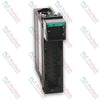
Présentation du produit
Le Yokogawa ADV551-P50 S2 (ADV551-P50 S2) est un module de sortie numérique haute densité à 32 canaux, conçu pour le système de contrôle-commande distribué CENTUM VP (DCS). Ce module à sortie par absorption de courant est largement utilisé dans les grandes installations industrielles, notamment les raffineries pétrochimiques, les centrales de production d’énergie et les stations de traitement de l’eau, où l’actionnement continu et fiable des vannes, la commutation des relais et le contrôle des indicateurs sont essentiels. Grâce à la prise en charge de fonctions avancées telles que la sortie à largeur d’impulsion et la sortie proportionnelle au temps, le module offre un contrôle très polyvalent des éléments de terrain. La barrière d’isolation robuste entre les signaux de terrain et la logique interne du système empêche les surtensions électriques de se propager jusqu’au fond de panier du contrôleur, réduisant ainsi les défaillances matérielles, protégeant les équipements de procédé et garantissant une disponibilité maximale lors des opérations critiques.
Décomposition du suffixe
Le code de désignation système du module ADV551-P50 S2 identifie précisément sa configuration matérielle, ses capacités fonctionnelles et sa révision de conception :
-
ADV551 : modèle de base du module de sortie numérique isolé à 32 canaux et 24 V CC.
-
-P : équipé de fonctions de sortie à largeur d’impulsion et de sortie proportionnelle au temps, en plus des sorties d’état standard.
-
5 : configuration standard sans voyants d’état locaux sur le panneau avant et sans protection antidéflagrante spécialisée.
-
0 : type de conception de base.
-
S2 : code de style représentant le niveau de révision matérielle, garantissant la mise à jour des composants et une compatibilité descendante fluide dans les armoires CENTUM VP.
Caractéristiques techniques
| Paramètre |
Valeur certifiée |
| Modèle |
ADV551-P50 S2 |
| Marque |
Yokogawa Electric Corporation |
| Origine |
Japon |
| Nombre de canaux de sortie |
32 canaux (isolés, 16 canaux par commun) |
| Format de sortie |
Sortie par absorption de courant |
| Tension appliquée nominale |
24 V CC |
| Courant de charge maximal |
100 mA par canal (à 26,4 V CC) |
| Temps de réponse de sortie |
3 ms ou moins (sortie d’état) ; 10 ms ou moins (sortie mixte) |
| Tension d’isolation |
Sortie vers système : 2 kV CA pendant 1 minute ; entre communs : 500 V CA pendant 1 minute |
| Consommation de courant |
700 mA (à 5 V CC) ; 60 mA (depuis une alimentation externe de 24 V CC) |
| Options de raccordement |
Borne à ressort, câble dédié (AKB331) ou câble à connecteur MIL |
| Poids net |
Environ 0,20 kg |
FAQ techniques
-
Q : Quelles sont les différences entre les fonctions de sortie de l’ADV551-P50 S2 ?
R : Le module prend en charge trois modes de sortie : la sortie d’état standard (commande simple MARCHE/ARRÊT), la sortie à largeur d’impulsion (génération d’impulsions uniques de 8 ms à 7200 s) et la sortie proportionnelle au temps (sortie modulée selon le rapport cyclique, utilisée pour la commande proportionnelle de systèmes de chauffage ou de dosage).
-
Q : Comment les 32 canaux de sortie sont-ils regroupés et isolés dans le module ?
R : Les 32 canaux sont répartis en deux groupes isolés de 16 canaux, chaque groupe partageant une ligne de retour commune négative (-). Cette architecture à double commun fournit une isolation galvanique de 500 V CA entre les deux groupes, protégeant le module contre les parasites électriques entre canaux ou les défauts de boucle de masse.
-
Q : Une alimentation externe est-elle nécessaire pour piloter les sorties numériques ?
R : Oui. Comme le module utilise un format de sortie par absorption de courant, vous devez raccorder une alimentation externe de 24 V CC (fonctionnant dans une plage de 20,4 à 26,4 V CC) pour alimenter les charges de terrain. L’électronique interne consomme jusqu’à 60 mA provenant de cette alimentation de terrain externe.
Guide d’ingénierie et d’installation
-
Redondance de l’alimentation externe : Lors du câblage de l’alimentation externe de terrain 24 V CC sur le bornier, utilisez une configuration d’alimentations redondantes avec diodes montées en OR. Cela empêche la défaillance d’une seule alimentation de désactiver les 32 canaux de sortie numérique, ce qui pourrait provoquer le déclenchement des verrouillages de procédé.
-
Protection par diode de roue libre pour les charges inductives : Lorsque vous utilisez les sorties par absorption de courant de l’ADV551-P50 S2 pour commuter des éléments de terrain inductifs (tels que des électrovannes ou des relais mécaniques), installez toujours une diode de roue libre en parallèle sur la charge. Celle-ci limite les pointes inductives haute tension générées lors de la désactivation, empêchant la dégradation progressive des transistors de sortie internes du module.
-
Raccordement et cheminement corrects des câbles : Assurez-vous que le câble dédié AKB331 ou le câble à connecteur MIL est correctement verrouillé dans le connecteur avant du module. Faites passer ces câbles de signaux à l’intérieur de l’armoire dans des goulottes dédiées, séparées d’au moins 10 cm des jeux de barres de distribution CA haute tension, afin d’éliminer le couplage de parasites capacitifs.