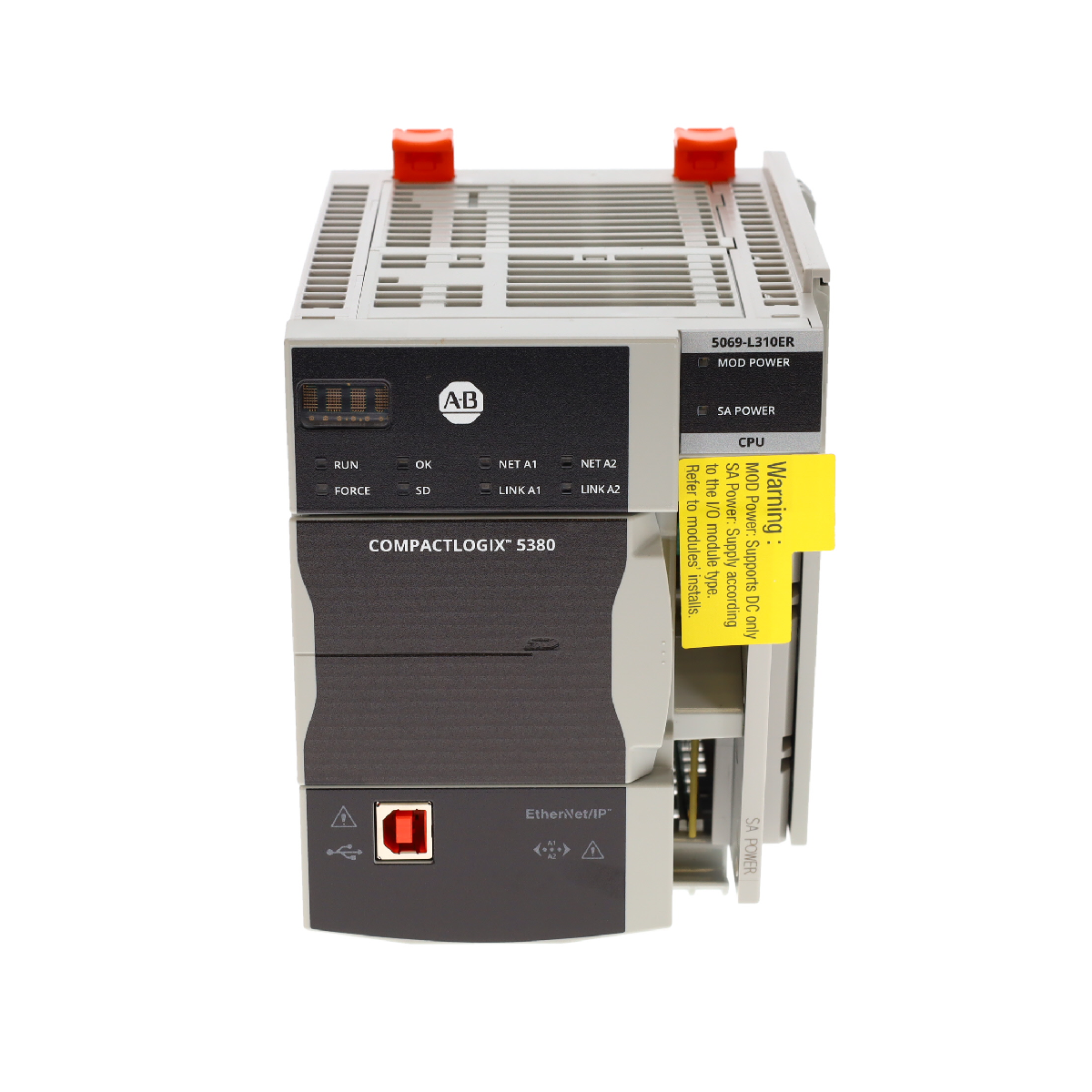
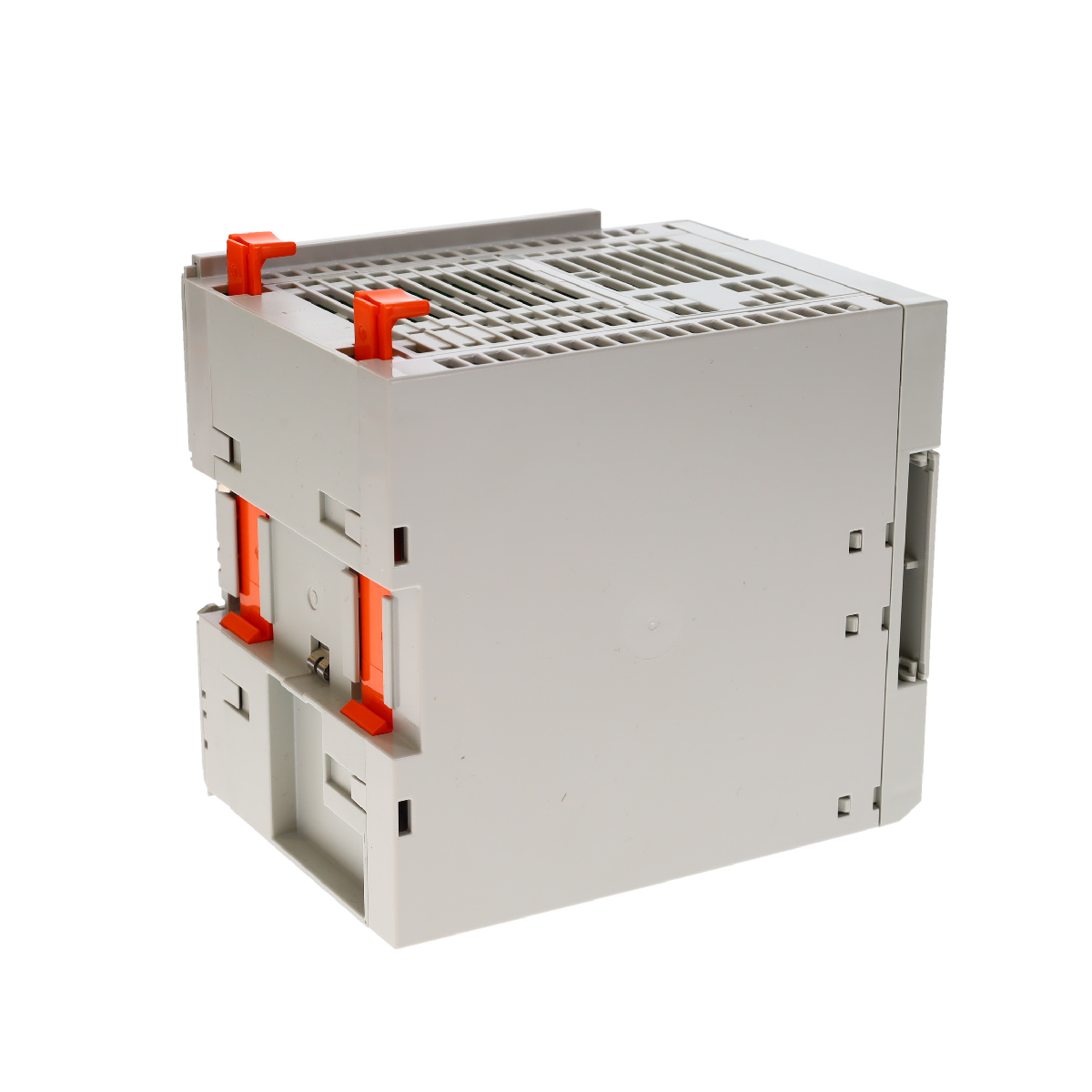
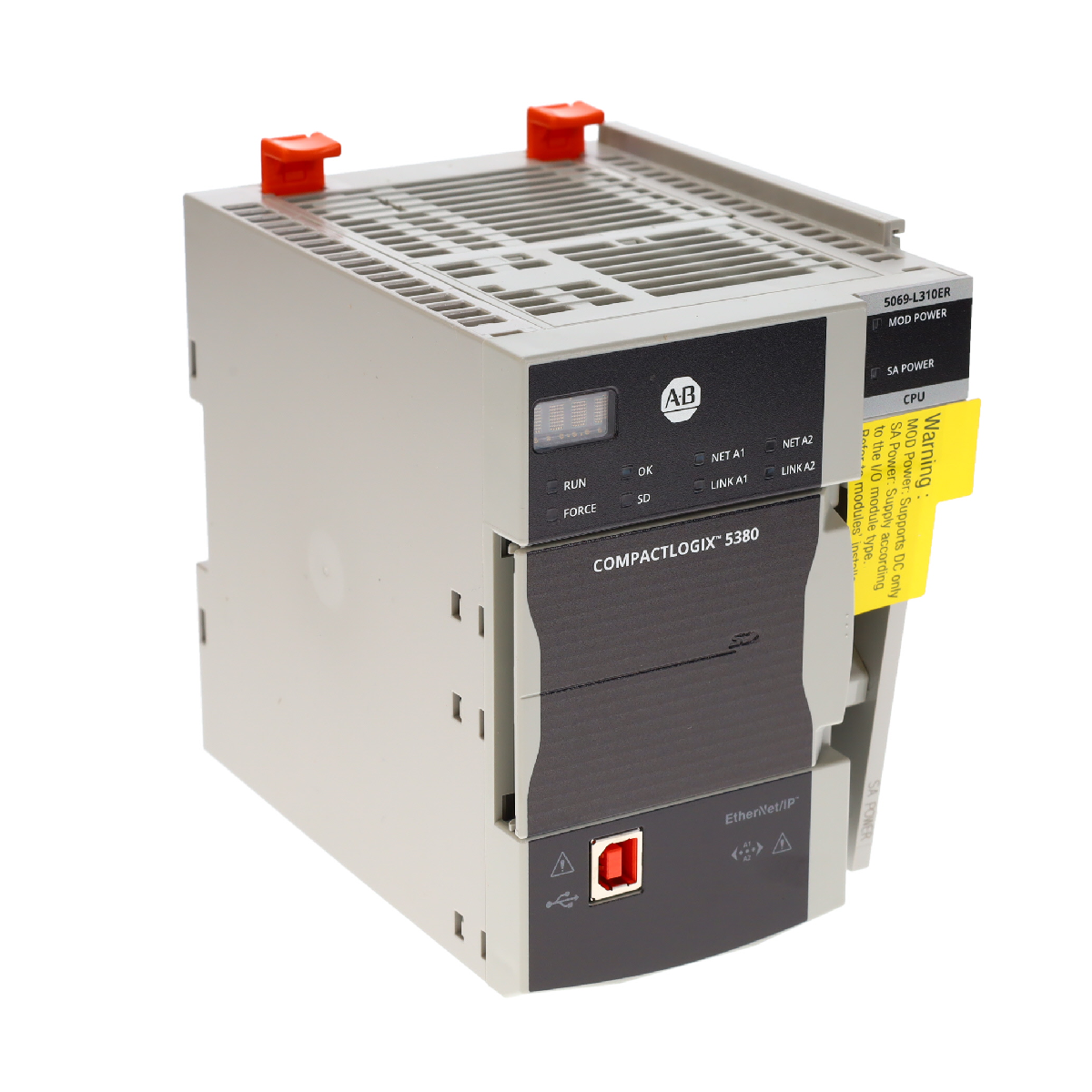
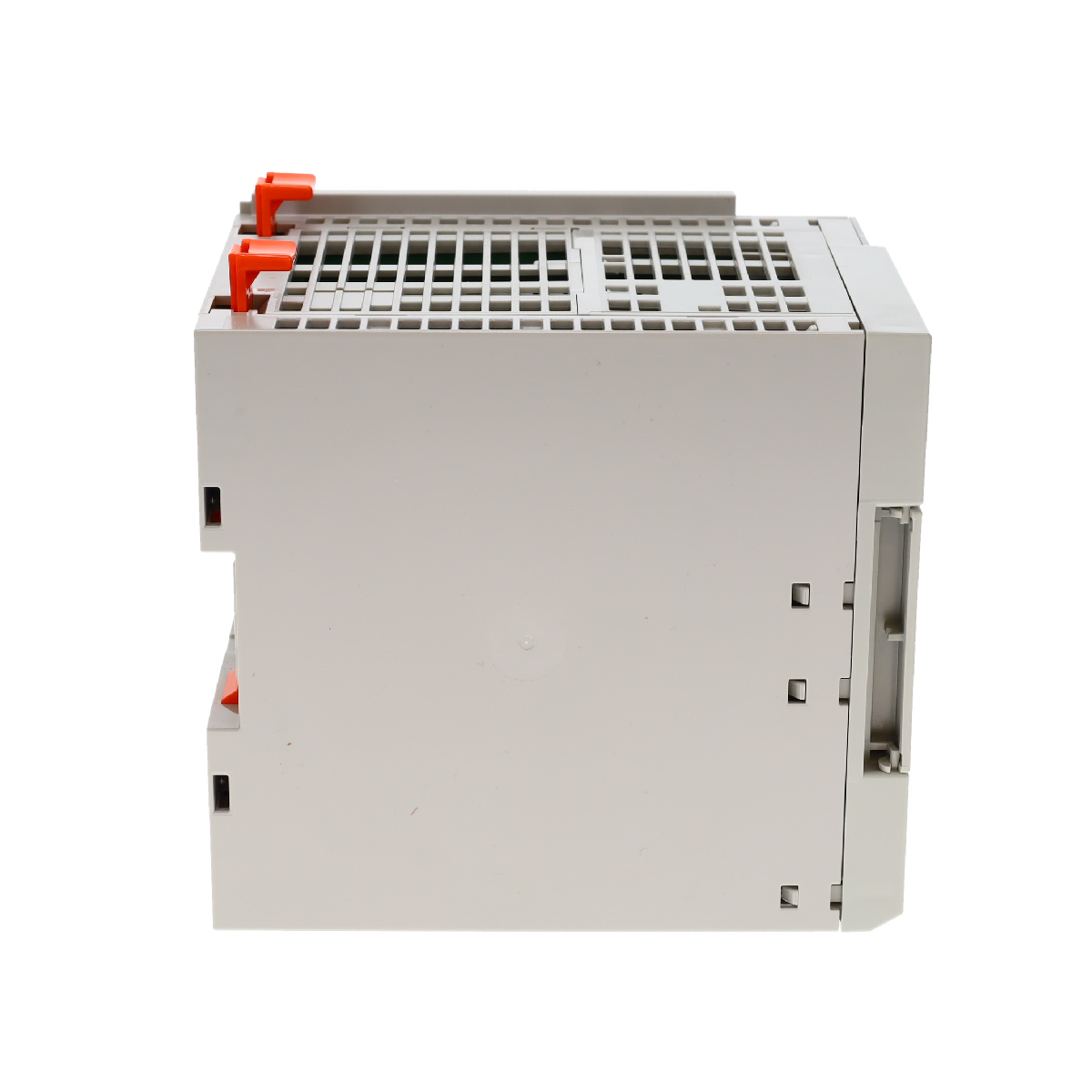
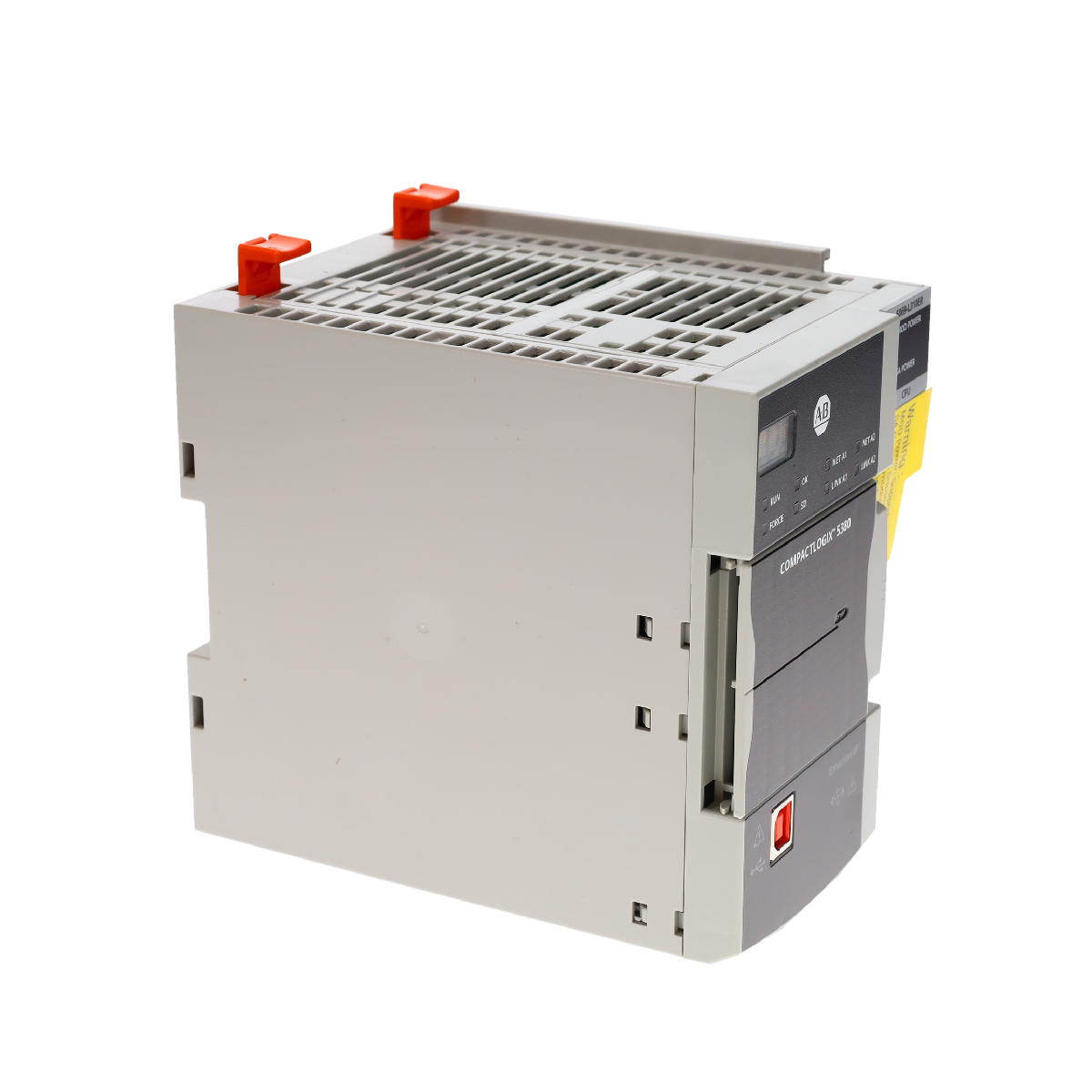
Le 5069-L310ER est un contrôleur industriel haute performance de la famille CompactLogix 5380. Il est conçu pour fonctionner comme le « cerveau » des systèmes d'automatisation modernes de taille moyenne, offrant la vitesse de traitement et la capacité de données nécessaires aux applications Industrial IoT (IIoT). Bien qu'il partage la même architecture de traitement que les modèles « ERM » capables de mouvement, le L310ER est optimisé pour le contrôle discret et de processus où un mouvement servo intégré n'est pas requis.
Spécifications techniques clés
| Paramètre |
Détails de la spécification |
| Modèle |
5069-L310ER |
| Marque |
Allen-Bradley (Rockwell Automation) |
| Mémoire utilisateur |
1 MB |
| Nœuds Ethernet |
Prend en charge jusqu'à 24 nœuds Ethernet/IP |
| Capacité I/O locale |
Jusqu'à 8 modules 5069 Compact I/O locaux |
| Ports de communication |
2 Ethernet (Gigabit) / 1 USB 2.0 (programmation) |
| Architecture d'alimentation |
Double entrée (alimentation MOD et SA) |
| Programmation |
Studio 5000 Logix Designer (v28 ou ultérieure) |
Fonctionnalités principales
1. Exécution logique à haute vitesse
La série 5380 dispose d'un bus arrière dédié à haute vitesse qui augmente considérablement les taux de balayage I/O par rapport à la série 1769 plus ancienne. Avec 1 MB de mémoire, le 5069-L310ER peut gérer des opérations logiques complexes, des calculs arithmétiques et des manipulations de chaînes de données avec une latence extrêmement faible.
2. Options avancées de mise en réseau
Le contrôleur comprend deux ports Ethernet 1 Gbps offrant deux modes de configuration principaux :
-
Mode Dual-IP : Cela permet de séparer le trafic réseau au niveau machine (capteurs/variateurs) du réseau d'entreprise à l'échelle de l'usine, améliorant la sécurité et évitant la congestion réseau.
-
Device Level Ring (DLR) : En mode DLR, les ports assurent la résilience du réseau ; si un câble unique dans l'anneau est endommagé, la communication continue sans interruption.
3. Intégration Compact 5000 I/O
Le contrôleur agit en tant que maître pour la plateforme 5069 Compact I/O. Cette plateforme est reconnue pour son design haute densité et ses diagnostics avancés, permettant plus de points I/O dans un encombrement réduit.
FAQ techniques
Quelle est la différence entre 5069-L310ER et 5069-L310ERM ?
Le « M » dans la version ERM signifie Motion. Le L310ERM prend en charge jusqu'à 4 axes de mouvement CIP intégré (contrôle servo). Le L310ER est destiné aux applications standard et ne supporte pas le mouvement servo coordonné via EtherNet/IP.
Ce contrôleur nécessite-t-il une batterie ?
Non. La série CompactLogix 5380 utilise un module de stockage d'énergie interne (condensateurs) pour sauvegarder le programme utilisateur dans une mémoire non volatile en cas de coupure de courant. Il n'est pas nécessaire de remplacer ou d'entretenir des batteries lithium.
Quel bloc de bornes d'alimentation dois-je utiliser ?
Le contrôleur nécessite un bloc de bornes 5069-RTB22-SCREW ou 5069-RTB22-SPRING pour connecter les alimentations MOD (Module) et SA (Capteur/Actionneur).
Guide d'ingénierie et d'installation
-
Partitionnement de l'alimentation : Assurez-vous de câbler à la fois l'alimentation MOD (pour le CPU) et l'alimentation SA (pour le côté terrain I/O). Même si le CPU fonctionne, vos modules I/O locaux ne fonctionneront pas sans une alimentation SA valide.
-
Gestion thermique : La série 5380 contient un processeur haute vitesse qui génère de la chaleur. Montez toujours l'unité horizontalement sur un rail DIN et maintenez au moins 50 mm (2 pouces) de dégagement au-dessus et en dessous pour un refroidissement passif.
-
Mises à jour du firmware : Vérifiez toujours le Product Compatibility and Download Center (PCDC) pour le dernier firmware. Ce contrôleur nécessite souvent une mise à jour du firmware dès la sortie de la boîte avant de pouvoir être utilisé avec votre version spécifique de Studio 5000.
Avantages pour l'ingénierie
Le 5069-L310ER est le « point idéal » pour les ingénieurs qui ont besoin de plus que la mémoire d'entrée de gamme de 0,6 MB mais ne veulent pas payer le supplément pour des axes de mouvement qu'ils n'utiliseront pas. Sa capacité de 24 nœuds le rend idéal pour intégrer plusieurs racks I/O distants, variateurs PowerFlex et panneaux HMI dans une architecture de contrôle unique et cohérente.