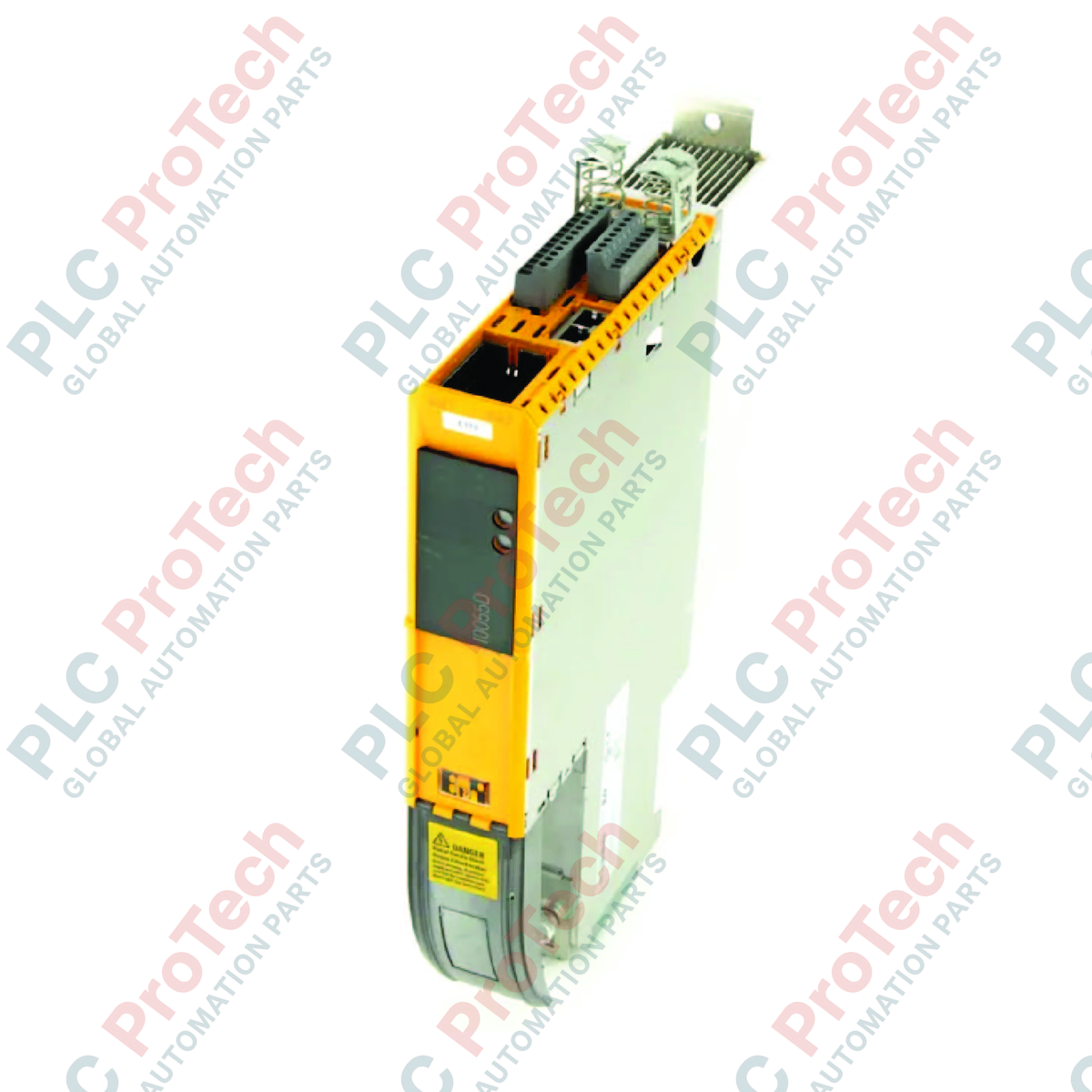
Présentation du produit
Le 8BVI0055HWD0.000-1 (8BVI0055HWD0.0001) est un module onduleur haute précision appartenant à la série B&R ACOPOSmulti, conçu pour le contrôle avancé des mouvements et des solutions d'entraînement écoénergétiques. Cette unité est conçue pour gérer la conversion d'énergie au sein de systèmes d'entraînement multi-axes, couramment utilisés dans l'emballage à grande vitesse, l'usinage CNC et les lignes d'assemblage automatisées. En utilisant la plateforme ACOPOSmulti, le 8BVI0055HWD0.000-1 contribue à réduire l'encombrement des armoires et à optimiser la distribution d'énergie via un bus CC commun. Sa conception robuste garantit un fonctionnement stable dans des secteurs industriels exigeants tels que la fabrication textile et le traitement des métaux, où un contrôle précis du couple et de la vitesse est essentiel pour maintenir la disponibilité de la production.
Configuration technique
En tant que composant intégré de l'écosystème ACOPOSmulti, cet onduleur se caractérise par son architecture matérielle modulaire et sa compatibilité avec un bus CC haute tension.
-
Intégration au bus CC : Optimisé pour fonctionner dans un environnement de bus CC partagé, supportant des tensions jusqu'à 900 VCC afin de maximiser la récupération et la distribution d'énergie entre les axes moteurs et de freinage.
-
Alimentation de contrôle de précision : Fonctionne avec une tension d'entrée stabilisée de 25 VCC (plus ou moins 1,6 %) pour les circuits logiques et de contrôle internes, garantissant une immunité contre les fluctuations de l'alimentation principale.
-
Protection des circuits internes : Dispose d'une faible résistance interne (0,5 Ohm) et d'un potentiel d'extinction défini (environ 30 V) pour protéger les composants électroniques sensibles lors des cycles de commutation rapides ou des séquences de coupure d'alimentation.
-
Protection thermique et environnementale : Classé IP20 (face avant), le module est conçu pour une installation dans des armoires de commande avec conditions ambiantes contrôlées, offrant une protection contre les corps étrangers solides.
Caractéristiques techniques
| Caractéristique |
Détails |
| Modèle |
8BVI0055HWD0.000-1 |
| Marque |
B&R Industrial Automation |
| Type de produit |
Variateur / Module onduleur |
| Tension max. du bus CC |
900 VCC |
| Tension d'entrée de contrôle |
25 VCC (plus ou moins 1,6 %) |
| Courant continu |
1,1 A |
| Résistance interne |
0,5 Ohm |
| Potentiel d'extinction |
Environ 30 V |
| Indice de protection |
IP20 |
| Poids à l'expédition |
4,5 kg |
FAQ
Quelle est l'importance de l'entrée 25 VCC pour ce variateur ?
Le 8BVI0055HWD0.000-1 nécessite une alimentation spécifique de 25 VCC pour son électronique interne. Cette tension légèrement supérieure à la norme (par rapport à 24 VCC) compense les chutes de tension potentielles sur le backplane et garantit que la logique du variateur reste active même lors de transitoires de charge importants sur le bus CC.
Ce module peut-il être utilisé en configuration autonome ?
Non, les modules onduleurs ACOPOSmulti sont conçus pour faire partie d'un système d'entraînement plus vaste. Ils doivent être montés sur le backplane approprié et connectés à un bus CC commun alimenté par un module d'alimentation (série 8BVP).
Comment est assurée la dissipation thermique pour cet onduleur spécifique ?
Le poids de 4,5 kg reflète un dissipateur thermique conséquent et un système de gestion thermique interne. Selon la configuration du backplane, le refroidissement est généralement assuré par un flux d'air forcé à l'intérieur de l'armoire ou par montage sur plaque froide.
Directives d'ingénierie et protocoles de sécurité
-
Décharge de sécurité du bus CC : ATTENTION : Une haute tension (jusqu'à 900 VCC) peut rester présente sur les bornes du bus CC longtemps après la coupure de l'alimentation principale. Utilisez toujours un multimètre calibré pour vérifier que la tension du bus CC est descendue en dessous de 50 V avant toute intervention de câblage ou maintenance.
-
Alignement du backplane : Lors de l'installation du module dans la baie ACOPOSmulti, assurez-vous que les connecteurs d'alimentation et de signal sont parfaitement alignés avant d'exercer une pression. Un mauvais alignement peut endommager les contacts haute intensité du bus CC, entraînant des arcs électriques et une surchauffe localisée en fonctionnement.
-
Blindage et mise à la terre : Pour minimiser les interférences électromagnétiques (EMI), assurez-vous que les câbles moteurs sont correctement blindés et que le blindage est fixé à la plaque de mise à la terre en bas du variateur. Maintenez une séparation entre les câbles haute tension du bus CC et les lignes de communication basse tension.
-
Couple de serrage : Tous les terminaux d'alimentation doivent être serrés selon les spécifications du fabricant. Des connexions lâches sur le bus CC ou les phases moteur peuvent provoquer une défaillance catastrophique du pont onduleur due à la résistance de contact.