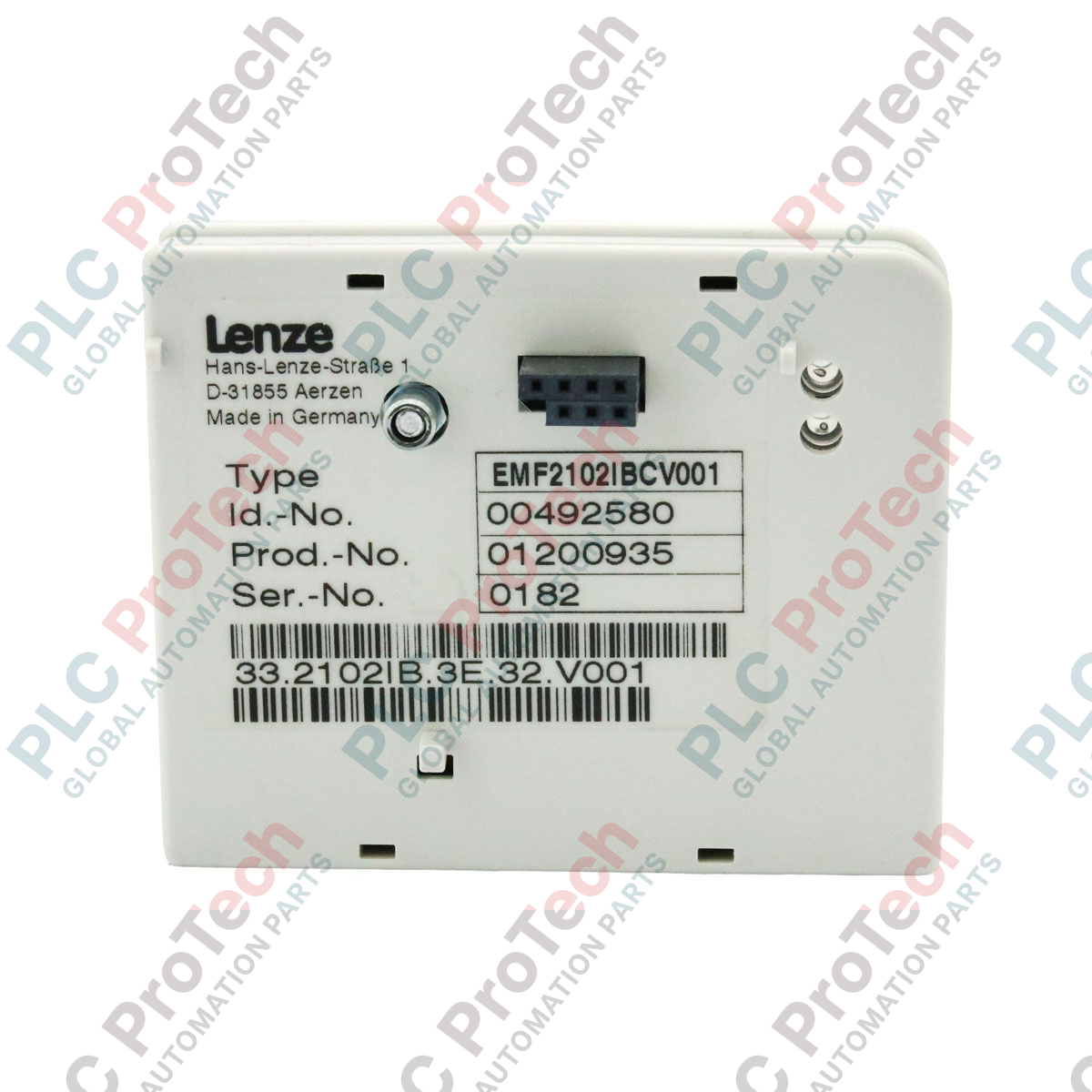
Présentation du produit
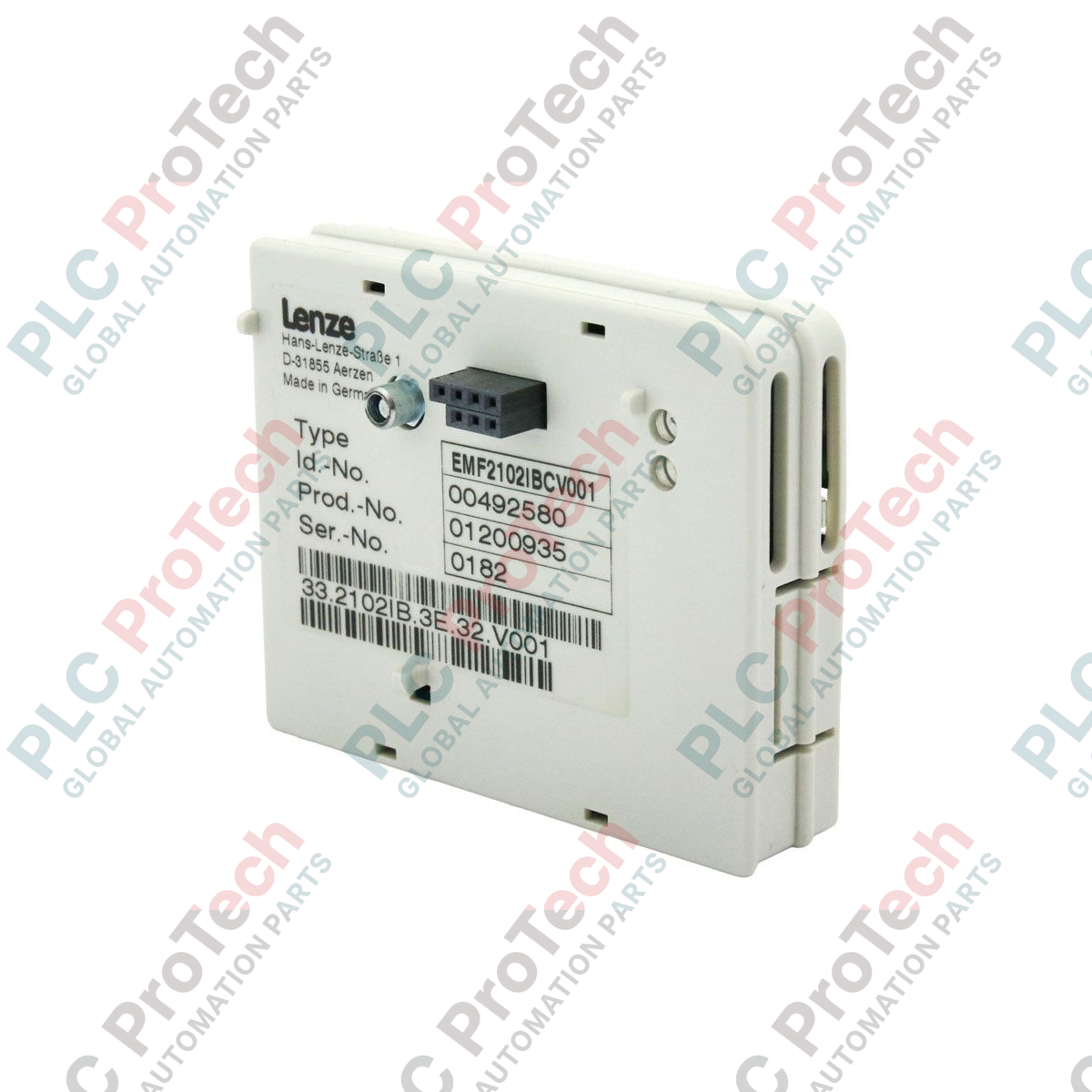
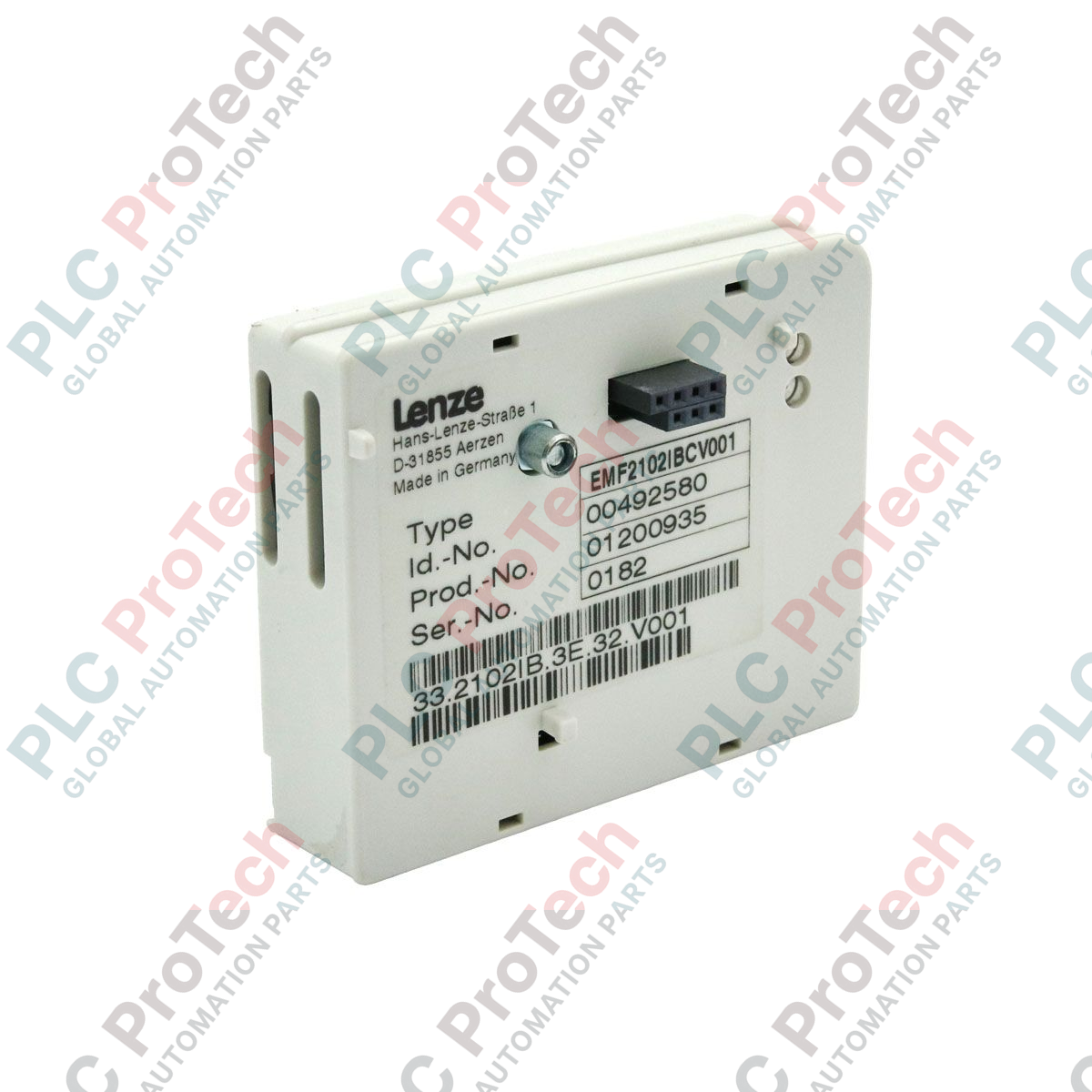
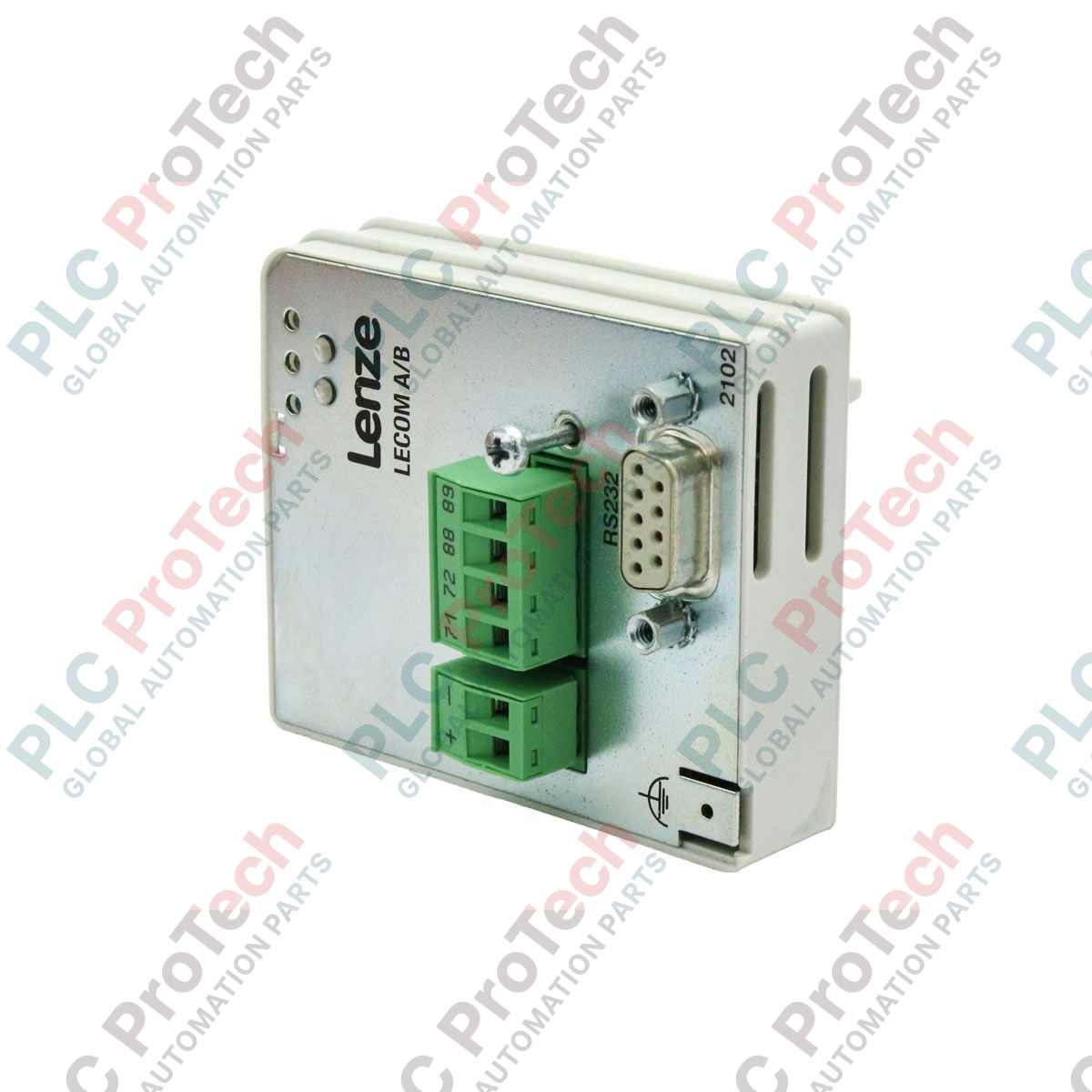
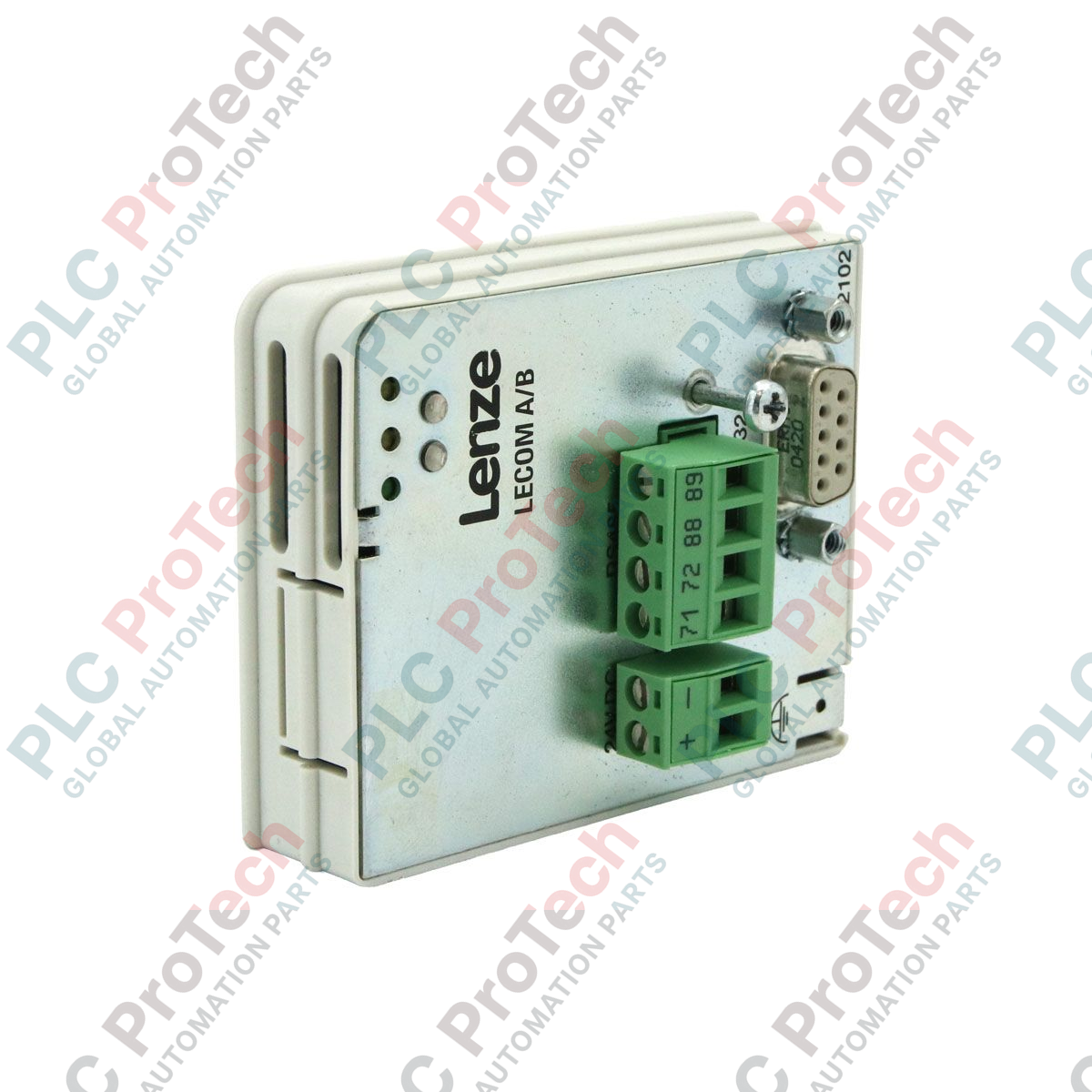
Le EMF2102IBCV001 (2102IBCV001) est un module d'interface de communication spécialisé conçu pour les variateurs de fréquence de la série 8200 de Lenze. Fonctionnant comme un adaptateur LECOM A/B, cet accessoire permet au variateur de communiquer via des interfaces série RS232 ou RS485, offrant un contrôle centralisé, une paramétrisation et une surveillance en temps réel via un système PLC ou PC. Il constitue un composant essentiel pour les environnements d'automatisation industrielle nécessitant un accès à distance aux données du moteur ou une coordination multi-variateurs. Malgré son statut de « Phase-Out », le EMF2102IBCV001 reste une nécessité mécanique pour maintenir les systèmes existants, fournissant le lien de données critique requis pour l'intégration du logiciel « L-force Engineer » et garantissant que les installations plus anciennes de la série 8200 restent visibles et contrôlables dans les architectures numériques modernes.
Configuration technique
Le EMF2102IBCV001 est conçu comme un module enfichable qui se monte directement sur le slot de communication frontal du variateur vectoriel de la série 8200. Il offre une interface série double standard, supportant à la fois les connexions point à point RS232 et le réseau multi-points RS485. Le matériel est optimisé pour une transmission de données à haute vitesse et dispose d'une isolation galvanique pour protéger l'électronique interne du variateur contre les boucles de masse ou les surtensions sur la ligne de communication. Pesant seulement 0,09 kg et mesurant 15,20 x 18,80 x 5,50 cm, le module s'intègre parfaitement sans augmenter l'encombrement du variateur. Le protocole LECOM (Lenze Communication) garantit l'accès à tous les registres du variateur, facilitant un flux complet de données de diagnostic et la réinitialisation à distance des codes d'erreur.
Caractéristiques techniques
| Caractéristique |
Détails de la spécification |
| Modèle |
EMF2102IBCV001 |
| Marque |
Lenze |
| Série |
8200-series |
| Type d'interface |
LECOM A/B (RS232 / RS485) |
| Connexion |
D-Sub ou bornier (selon modèle) |
| Poids |
0,09 kg |
| Dimensions |
15,20 x 18,80 x 5,50 cm |
| Statut |
Phase-Out / Support des systèmes anciens |
| Origine |
Allemagne |
| Code douanier |
85044095 |
| ECCN |
N (Non restreint) |
FAQ techniques
Comment basculer entre les modes RS232 et RS485 sur le EMF2102IBCV001 ?
La sélection se fait généralement via des interrupteurs DIP internes ou en utilisant des assignations spécifiques des broches sur le connecteur d'interface. Le RS232 est recommandé pour la configuration locale sur PC (jusqu'à 15 mètres), tandis que le RS485 doit être utilisé pour le réseau de plusieurs variateurs sur de plus longues distances (jusqu'à 1200 mètres).
Ce module est-il compatible avec les variateurs décentralisés 8200 motec ?
Le EMF2102IBCV001 est principalement conçu pour la série vectorielle 8200 montée en armoire. Pour la série 8200 motec (décentralisée), il faut vérifier la compatibilité physique des connecteurs, car les unités motec utilisent souvent des boîtiers d'interface mécanique différents.
Quel logiciel est nécessaire pour communiquer avec le variateur via ce module ?
Vous pouvez utiliser les logiciels « Lenze Global Drive Control (GDC) » ou « L-force Engineer ». Ces outils permettent de charger, télécharger et archiver des jeux de paramètres, ainsi que de surveiller en direct les données d'oscilloscope du fonctionnement du moteur.
Guide d'ingénierie et d'installation
Terminaison réseau et polarisation RS485 :
Lors de l'utilisation du EMF2102IBCV001 dans un réseau multi-points RS485, assurez-vous que le dernier module de la chaîne dispose d'une résistance de terminaison de 120 ohms. Le non-respect de cette terminaison correcte entraînera des réflexions de signal, provoquant des fautes « CE0 » (Erreur de communication) et une corruption intermittente des données, surtout à des débits élevés.
Câblage et protection contre les interférences :
Les câbles de communication doivent être de haute qualité, de type paire torsadée blindée. Ces câbles doivent être acheminés à au moins 20 cm des câbles d'alimentation moteur et des lignes secteur 400 V. En cas de croisement, celui-ci doit se faire à un angle de 90 degrés. La masse du blindage du câble de communication doit être reliée à la terre au point d'entrée de l'armoire de commande afin de détourner efficacement les parasites haute fréquence générés par l'étage de puissance du variateur.
Restrictions de branchement à chaud :
Ne pas insérer ni retirer le EMF2102IBCV001 tant que le variateur de fréquence est sous tension. Les broches de communication sont sensibles aux pics transitoires lors de la connexion. Couper l'alimentation du variateur garantit que l'ASIC interne (circuit intégré spécifique à l'application) du module n'est pas soumis à un verrouillage de tension, ce qui pourrait désactiver définitivement le transceiver RS232/485.