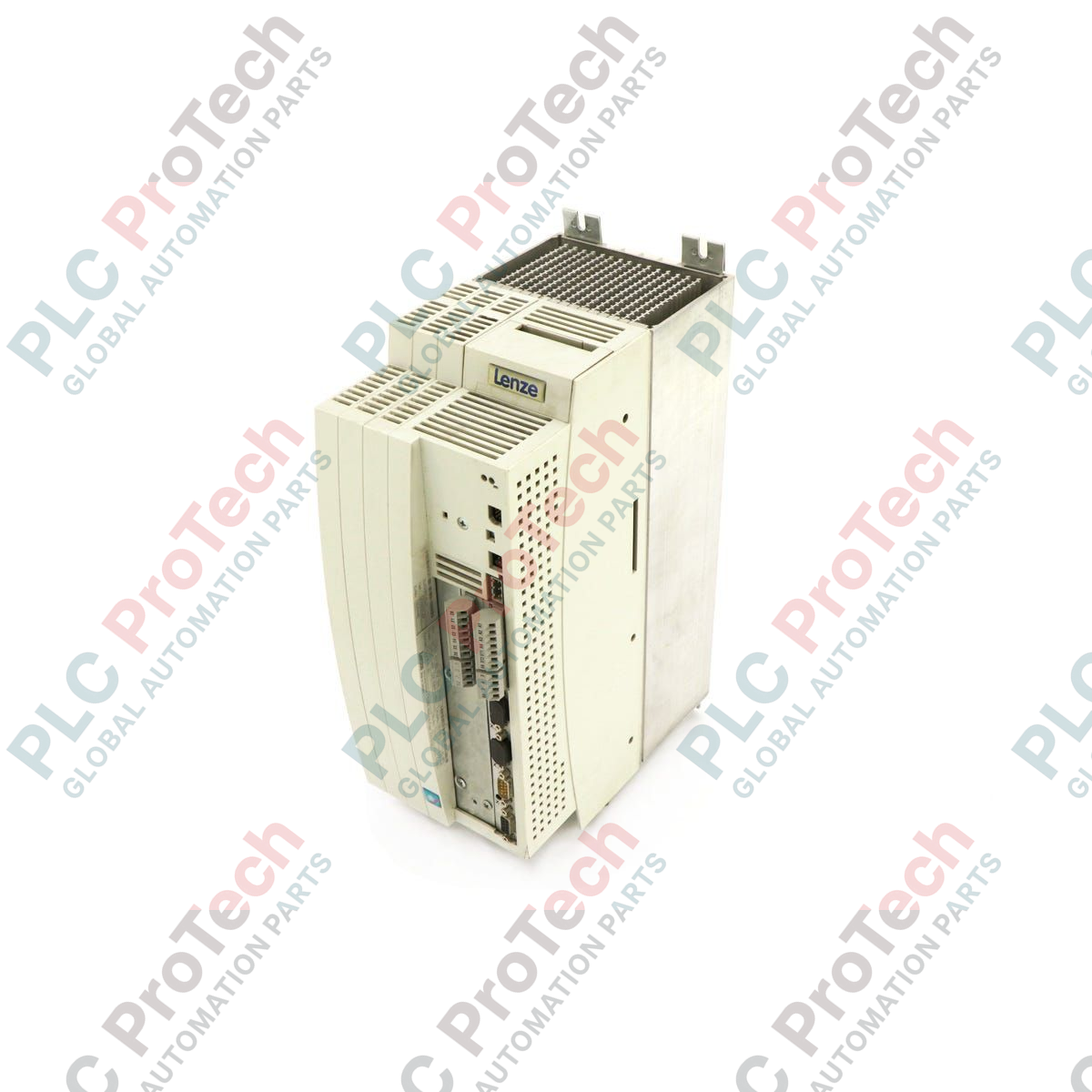
Présentation du produit
Le EVS9325-ESV004 (EVS9325-ESV004) est un variateur servo haute précision de la série reconnue Lenze 9300, conçu pour offrir un contrôle dynamique et précis des moteurs synchrones à aimants permanents et des servomoteurs asynchrones. Avec une puissance nominale de 5,5 kW, ce contrôleur est un composant essentiel pour les applications industrielles moyennes à lourdes telles que l’assemblage automatisé à grande vitesse, les centres d’usinage CNC et les équipements textiles sophistiqués. Le EVS9325-ESV004 est optimisé pour un montage en armoire à haute densité avec un degré de protection IP20 et une largeur de châssis compacte de 13,50 cm. En utilisant des boucles de rétroaction haute résolution et des algorithmes avancés de contrôle de mouvement, ce variateur garantit une linéarité de couple exceptionnelle et une précision de positionnement, indispensables pour réduire les temps de cycle et améliorer la qualité de la production. Bien que cette série ait été arrêtée en 2017, sa réputation de fiabilité d’ingénierie allemande en fait un choix privilégié pour la maintenance critique et le support à long terme des systèmes hérités.
Configuration technique
L’architecture du EVS9325-ESV004 est conçue pour la fonctionnalité servo standard « ESV », facilitant une large gamme de tâches de contrôle de mouvement, de la régulation simple de vitesse au positionnement multi-axes complexe. Le matériel intègre une surveillance de la température du moteur, des défauts de terre et des courts-circuits sur le bus DC pour assurer la longévité du système. Il prend en charge divers modules de communication enfichables, notamment CANopen (standard), PROFIBUS et INTERBUS, permettant une intégration fluide dans des systèmes de contrôle distribués (DCS) ou des architectures pilotées par automate programmable (PLC). L’étage de puissance est conçu pour une grande capacité de surcharge, autorisant des cycles d’accélération et de décélération agressifs, tandis que la conception modulaire de l’interface permet l’ajout de systèmes de rétroaction spécialisés comme les encodeurs SinCos ou absolus pour répondre à des exigences de précision spécifiques.
Caractéristiques techniques
| Attribut |
Détails de la spécification |
| Modèle |
EVS9325-ESV004 |
| Marque |
Lenze |
| Origine |
Allemagne |
| Gamme de produits |
Série Servo 9300 |
| Puissance nominale |
5,5 kW |
| Degré de protection |
IP20 |
| Poids |
7,50 kg |
| Dimensions |
35,00 x 25,00 x 13,50 cm |
| Statut du produit |
Arrêt de production |
| Type de refroidissement |
Ventilateur interne |
| Communication |
Bus système (CAN) / Bus de terrain modulaire |
| Code douanier |
85044095 |
FAQ techniques
Le EVS9325-ESV004 prend-il en charge le freinage régénératif ?
Oui. Pour les applications avec des charges à forte inertie ou des décélérations fréquentes, le variateur est équipé d’un hacheur de frein interne. Une résistance de frein externe doit être connectée pour dissiper l’énergie et éviter les défauts de surtension sur le bus DC lors de cycles de freinage agressifs.
Comment est géré le système de refroidissement sur une unité de 5,5 kW ?
Le EVS9325-ESV004 utilise un système de refroidissement par air forcé avec un ventilateur interne. Il est essentiel de maintenir un dégagement adéquat dans l’armoire de commande pour garantir que la chaleur générée lors du fonctionnement à 5,5 kW soit efficacement évacuée des composants électroniques de puissance.
Puis-je transférer les paramètres d’une ancienne unité vers un EVS9325-ESV004 de remplacement ?
Oui. Les paramètres peuvent être transférés à l’aide du clavier enfichable (EMZ9371BC) via sa fonction de copie interne, ou en utilisant un PC avec le logiciel Lenze Global Drive Control (GDC) et l’adaptateur de communication approprié.
Guide d’ingénierie et d’installation
Pour le EVS9325-ESV004, une orientation de montage verticale est obligatoire afin d’assurer que le ventilateur interne puisse efficacement faire circuler l’air à travers l’étage de puissance. Maintenez un dégagement minimum de 100 mm au-dessus et en dessous du châssis. Pour respecter les directives CEM, tous les câbles moteurs doivent être blindés, et le blindage doit être mis à la terre à l’aide d’une pince à 360 degrés sur la plaque CEM de l’onduleur. Évitez de faire passer les câbles de commande parallèlement aux câbles haute tension dans le même conduit afin de prévenir les interférences de signal. Si le variateur est intégré dans un système multi-axes, envisagez de relier les bus DC pour partager l’énergie entre les axes moteurs et de freinage, ce qui améliore significativement l’efficacité énergétique globale. Lors de la mise en service, effectuez une identification automatique des paramètres du moteur (auto-réglage) pour garantir que les boucles de contrôle de courant de l’onduleur soient parfaitement adaptées aux caractéristiques électriques du moteur.