Product Overview
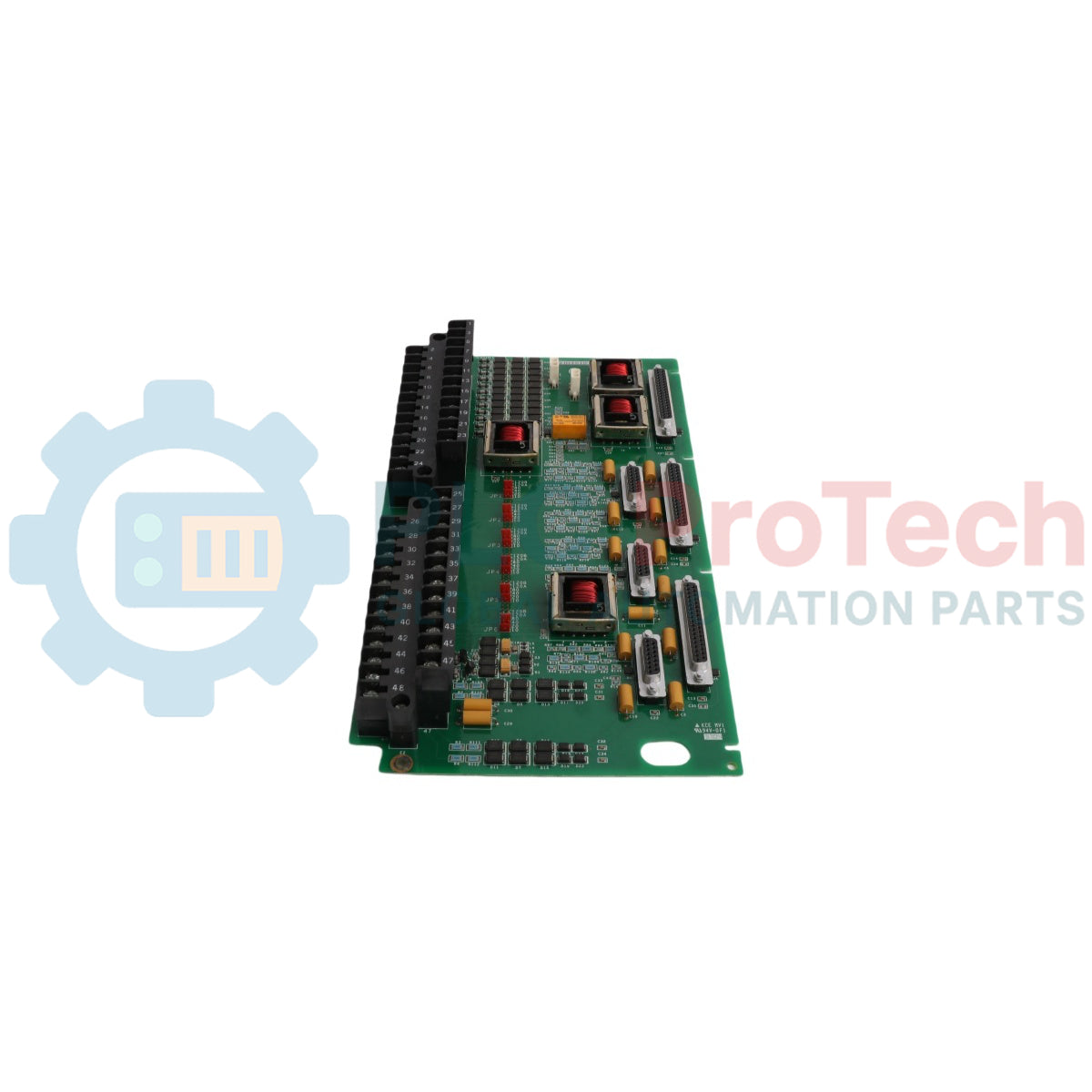
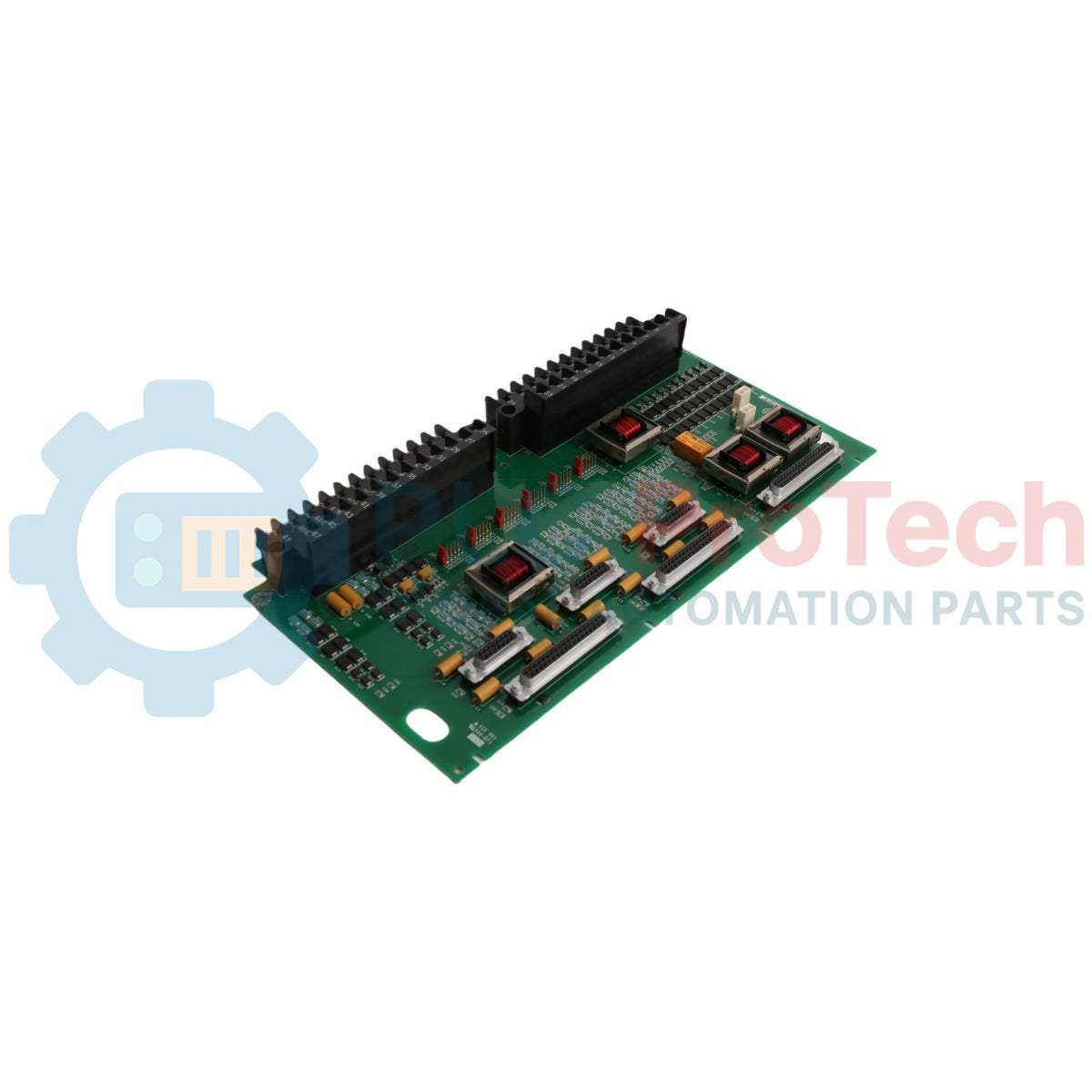
The General Electric IS200TSVOH1B serves as the essential Servo Terminal Board (TSVO) within the Speedtronic Mark VI turbine control system. This module provides the physical and electrical interface between the control processors and the hydraulic servo actuators used to position critical fuel valves and steam valves.
The TSVO board manages the high-precision current signals required to drive electro-hydraulic servo valves and facilitates the return path for position feedback sensors, such as LVDTs (Linear Variable Differential Transformers) or RVDTs. By bridging the gap between digital control logic and mechanical actuation, the IS200TSVOH1B ensures the rapid, stable, and accurate valve response necessary for frequency regulation and load control in gas and steam turbines.
Core Technical Advantages
The IS200TSVOH1B is engineered to handle the high-sensitivity requirements of closed-loop servo control in power generation environments.
Multi-Channel Servo Driving
The board typically supports two independent servo channels, providing the redundancy required for critical turbine operations. It converts the digital commands from the VSOY (Servo Control Board) into analog current outputs, tailored to the specific impedance and requirements of the field-mounted servo coils.
Precision Feedback Integration
To close the control loop, the TSVO board processes excitation and return signals from position transducers. High-quality isolation and noise-filtering circuits ensure that the feedback signal remains linear and accurate, even when routed through long cable runs near high-voltage equipment.
Passive Protection Design
As a terminal board, the IS200TSVOH1B incorporates passive components like metal oxide varistors (MOVs) and fuses to protect the upstream Mark VI control electronics from field-side electrical surges and ground faults. This protective barrier is vital for maintaining the "Mean Time Between Failures" (MTBF) of the entire control system.
Technical Specifications
| Parameter |
Specification Details |
| Model Series |
GE Speedtronic Mark VI |
| Board Type |
Servo Terminal Board (TSVO) |
| Channels |
Dual-channel Servo Output / Feedback |
| Feedback Support |
LVDT / RVDT Transducers |
| Input Connection |
Two 37-pin D-type Connectors (to VSOY) |
| Output Interface |
Industrial Barrier Terminal Blocks |
| Material |
High-density PCB with industrial-grade traces |
| Mounting |
DIN-rail or Cabinet Standoffs |
Engineering Installation Guide
A successful servo loop deployment depends on clean signal paths and correct terminal termination.
Terminal Termination
Connect the servo valve drive coils and feedback excitation/signal wires to the terminal blocks. Ensure all screw terminals are torqued to specification. Because servo signals are low-current and feedback signals are AC-modulated, use high-quality twisted-shielded pair (TSP) cabling. Terminate shields only at the specified grounding point on the terminal board to avoid ground loops that can cause "valve hunting."
Board Interconnection
The IS200TSVOH1B connects to the Mark VI VME rack via two 37-pin D-type cables. Ensure these cables are securely seated and the thumb screws are tightened. These cables carry the sensitive analog commands and feedback signals; route them away from high-power AC cables to prevent electromagnetic coupling.
Why Choose the IS200TSVOH1B
The "H1B" revision of the TSVO board represents the finalized hardware standard for the Mark VI servo interface, offering improved signal stability and component longevity over earlier versions. Using an original GE terminal board ensures that the impedance matching between the VSOY controller and the field actuators remains within the OEM's specified tolerances.
Non-original or poorly refurbished boards can introduce subtle phase shifts in the LVDT feedback signal, leading to control oscillations or difficulty in performing valve calibrations. The IS200TSVOH1B guarantees the signal integrity required for "Auto-Calibrate" routines within the GE Toolbox software.
Technical FAQs
Q1: What is the difference between the TSVOH1B and earlier TSVO versions?
A1: The H1B version typically incorporates updated component specifications for better thermal performance and improved surge protection on the feedback circuits. It is functionally backward compatible with most Mark VI servo applications.
Q2: Can I test the servo output directly from this board?
A2: Yes. Technicians can measure the DC milliamp current at the output terminals using a calibrated multimeter while the system is in "Manual" mode. This is a common troubleshooting step to determine if a positioning issue is in the control electronics or the hydraulic actuator.
Q3: How many LVDTs can be connected to the IS200TSVOH1B?
A3: The board is designed to support the feedback requirements of two servo loops. Depending on the specific Mark VI configuration (Simplex vs. TMR), it handles the necessary excitation and return lines for the associated position transducers.
Q4: Does this board require software configuration?
A4: The terminal board itself is a passive/interface component and does not have firmware. However, the servo loop parameters (gain, bias, and transducer limits) must be correctly configured in the GE Mark VI Toolbox software for the associated VSOY processor board.